(505) 280-5216
Indoor Air Safety Tips for a Healthier Home
TL;DR:
- Indoor air is significantly more polluted than outdoor air, making control and filtration essential for health. Strategies include source reduction, proper ventilation, and appropriately sized air purifiers to effectively lower indoor contaminants. Building consistent habits and professional cleaning further support long-term indoor air quality improvements.
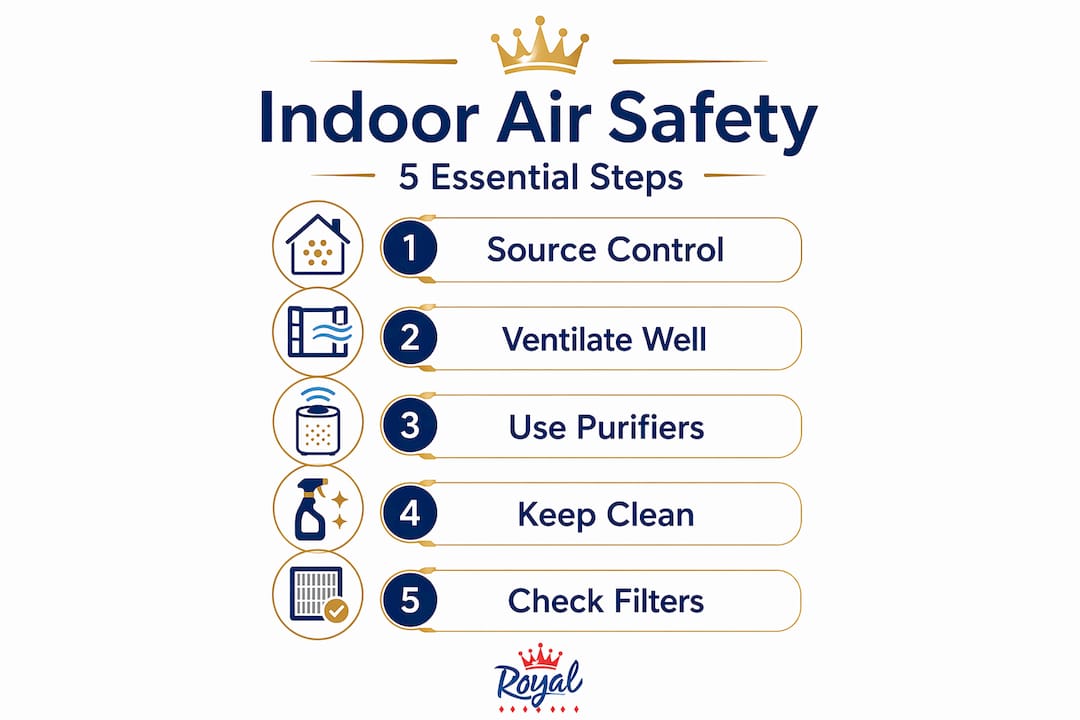
The air inside your home may be doing more harm than you realize. Indoor air is 2 to 5 times more polluted than outdoor air, and Americans spend up to 90% of their time indoors. That combination makes indoor air safety tips not just useful, but genuinely important for your family’s health. The good news is that you can significantly reduce exposure to harmful pollutants by following a layered approach: control sources first, then improve ventilation, then add filtration. This guide breaks down each step clearly so you can act today.
Table of Contents
- Key Takeaways
- Common indoor air pollutants and where they come from
- Effective source control strategies
- Ventilation: bringing in fresh air safely
- Choosing and using air purifiers effectively
- Building healthy indoor air habits
- My perspective on what actually works
- How professional cleaning supports your air quality goals
- FAQ
Key Takeaways
| Point | Details |
|---|---|
| Source control comes first | Removing or reducing pollutant sources delivers more impact than any air purifier alone. |
| Humidity control matters | Keeping indoor humidity between 30% and 50% prevents mold growth and reduces dust mite populations. |
| Ventilate at the right times | Check outdoor air quality before opening windows to avoid pulling pollution or wildfire smoke inside. |
| Size your air purifier correctly | Match the purifier’s CADR rating to your room volume for effective filtration results. |
| Build consistent habits | Regular damp cleaning, filter changes, and radon monitoring protect air quality long term. |
Common indoor air pollutants and where they come from
Most people assume their home is a safe refuge from outdoor pollution. The reality is more complicated. Your home generates its own pollution from dozens of everyday activities and materials, many of which you would never suspect.
The most common indoor air contaminants include:
- Particulate matter (PM2.5 and PM10): Tiny particles released by cooking, candles, incense, and tobacco smoke that penetrate deep into the lungs.
- Volatile Organic Compounds (VOCs): Gases emitted by paints, adhesives, cleaning products, air fresheners, and new furniture. Many VOCs cause headaches, eye irritation, and long-term organ damage.
- Mold spores: Released when moisture accumulates in bathrooms, basements, or behind walls. Mold directly worsens allergies and indoor air conditions for people with asthma.
- Dust mites and pet dander: Microscopic allergens that settle into carpets, bedding, and upholstery, then become airborne during activity.
- Radon: A colorless, odorless radioactive gas that seeps up through soil and into home foundations. Radon causes an estimated 21,000 deaths annually in the United States, making it the second leading cause of lung cancer.
- Carbon monoxide: A byproduct of gas appliances, fireplaces, and attached garages that is deadly at high concentrations.
Understanding these sources is the first step toward controlling them. Source control is the most effective way to improve indoor air quality, outperforming both ventilation and filtration as standalone strategies.
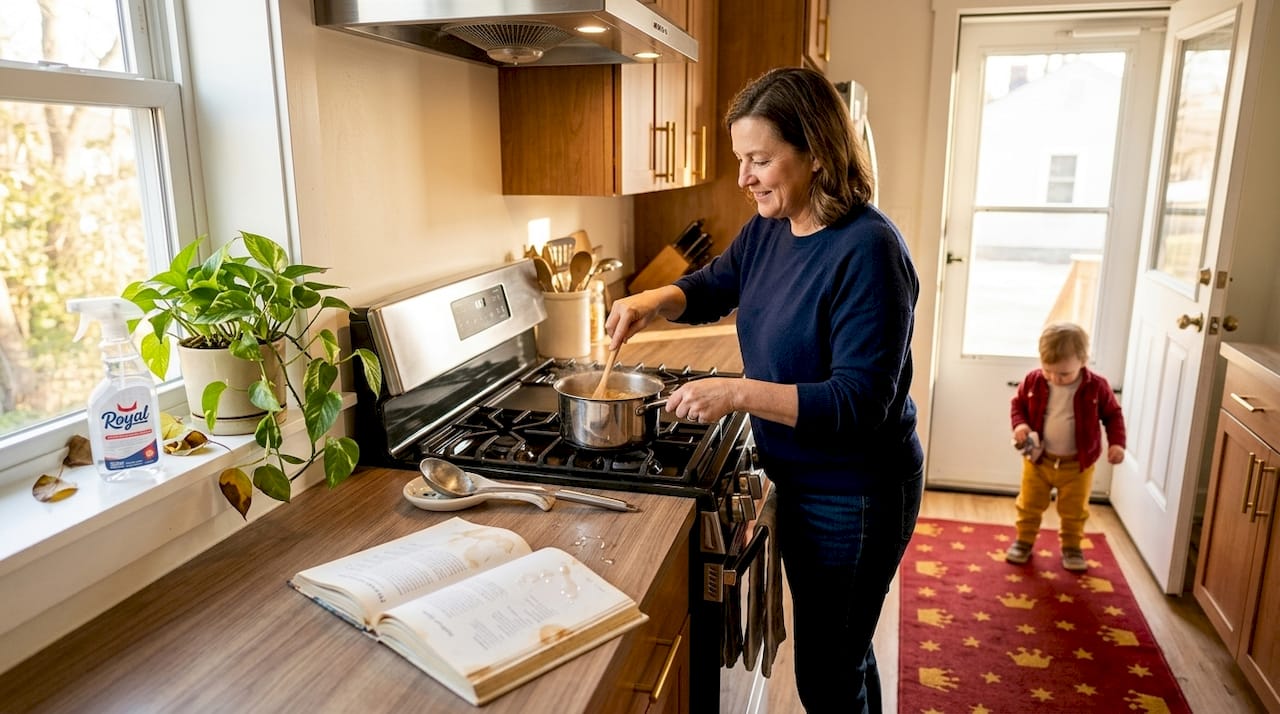
Pro Tip: If you cook frequently with gas or use a gas range, run your kitchen exhaust fan every single time. Gas burners release nitrogen dioxide and PM2.5 even during normal use.
Effective source control strategies
Getting to the root of the problem means going room by room and reducing what your home generates in the first place. These steps make every other air safety measure work better.
- Stop indoor smoking entirely. Tobacco smoke contains over 7,000 chemicals. No ventilation system fully removes its residue from surfaces and air.
- Switch to low-VOC or no-VOC products. When painting, refinishing floors, or buying new furniture, look for low-VOC certifications. Off-gassing from new materials can last weeks.
- Store chemicals properly. Cleaning products, paints, and solvents should be sealed tightly and kept in a ventilated garage or outdoor shed, not under the kitchen sink.
- Control household humidity. Experts recommend 30 to 50% humidity to prevent mold and dust mite growth. Use a dehumidifier in damp basements and an exhaust fan every time you shower.
- Damp clean instead of dry dusting. Damp microfiber cloths trap dust instead of sending it back into the air. Dry sweeping and feather dusters just redistribute particles.
- Test your home for radon. The EPA’s action level is 4.0 pCi/L. If your home tests above this, professional sub-slab depressurization systems are the standard fix, with a lifespan of 10 to 20 years.
- Eliminate or reduce synthetic fragrances. Plug-in air fresheners, scented candles, and dryer sheets all release VOCs. Unscented or naturally scented alternatives are a straightforward swap.
Removing or sealing VOC emitters consistently produces the greatest long-term improvement in indoor air safety, more than any single product purchase.
Pro Tip: Place a doormat at every entrance and adopt a no-shoes policy indoors. Studies show shoes track in pesticides, lead, and biological contaminants from outside. This single habit reduces indoor dust load dramatically.
Ventilation: bringing in fresh air safely
Ventilation dilutes indoor pollutants by replacing stale air with fresh outdoor air. But when and how you ventilate makes all the difference.
Natural ventilation through open windows works well under the right conditions. The problem is that many people open windows without checking what is outside. Indoor particulate counts can spike dramatically when you open windows during a wildfire event or on high-traffic days near a busy road. Before you open up your home, check your local Air Quality Index (AQI) using a free app or the AirNow.gov website.
Here is when ventilation works in your favor and when to hold off:
- Open windows early morning on low-AQI days, before traffic picks up and temperatures rise.
- Run bathroom exhaust fans for at least 20 minutes after every shower to control moisture and prevent mold.
- Use your kitchen range hood whenever you cook, regardless of whether the food is burning. Even routine cooking releases PM2.5 and steam.
- Avoid ventilating during wildfires, high pollen days, or smog alerts. These events temporarily make outdoor air worse than what you have indoors.
- Consider a Heat Recovery Ventilator (HRV) or Energy Recovery Ventilator (ERV) if you live in a tightly sealed modern home. These systems maintain three or more air changes per hour while recovering heating or cooling energy, solving the tension between energy efficiency and fresh air.
Ventilation is not always better. Bringing polluted outdoor air inside trades one problem for another. Always match your ventilation strategy to what is actually in the air outside that day.
For families managing allergies and indoor air quality together, timing your ventilation windows around pollen counts is a practical habit that pays off during allergy season. You can review more seasonal indoor air management approaches to stay ahead of those flare-ups.
Choosing and using air purifiers effectively
Air purifiers are a useful layer of protection. They are not a substitute for source control or ventilation, but when chosen and used correctly, they meaningfully reduce what you breathe.
| Feature | What to look for | Why it matters |
|---|---|---|
| Filter type | True HEPA | Removes 99.97% of 0.3 micron particles, including dust, mold spores, and pet dander |
| Gaseous pollutants | Activated carbon layer | Necessary to adsorb VOCs and odors that HEPA alone cannot capture |
| Room sizing | CADR rating matched to room | Undersized units run constantly and still miss pollutants |
| Safety certification | CARB certified | Confirms the unit does not emit harmful ozone as a byproduct |
| Filter maintenance | Manufacturer schedule | Overloaded filters reduce efficacy and can become pollutant sources |
One common misconception worth addressing directly: duct cleaning is often marketed as an indoor air quality fix, but it rarely addresses root IAQ issues and should not substitute for source control or proper filtration. Professional duct cleaning has value as part of routine maintenance, but it is not a solution to pollutant generation inside your home.
Placement matters too. Put your air purifier in the room where your family spends the most time, typically the bedroom or living room. Keep doors and windows closed when running it so the unit is not working against constant fresh infiltration. For more guidance on selecting systems for your specific home layout, home air purification options are worth reviewing before you buy.
Pro Tip: Achieving 4 to 8 air changes per hour in main living areas significantly reduces allergens and wildfire smoke exposure. Use your purifier’s highest effective setting during sleep for the best results.
Building healthy indoor air habits
One-time fixes fade. What actually protects your family is a consistent set of habits that keep pollutant levels low week after week. These do not need to be complicated.
- Replace HVAC filters every 60 to 90 days. Use a MERV 11 or MERV 13 rated filter for better particle capture without straining your system. Check your system specs first, since some older HVAC units cannot handle high-MERV filters.
- Damp mop hard floors weekly. This is especially effective at capturing the fine particles that settle after cooking or foot traffic.
- Wash bedding weekly in hot water. Dust mites thrive in mattresses and pillows. Hot water above 130°F kills them reliably.
- Place entryway mats inside and outside every door. Combined with a no-shoes policy, this cuts tracked-in soil and contaminants significantly.
- Monitor radon continuously. Consumer radon monitors give you ongoing data rather than a single snapshot. If you have already mitigated, real-time monitoring helps confirm the system is working and catches any changes over time.
- Respond to seasonal shifts. During wildfire season, keep windows closed and run your purifier. During high-pollen weeks, shower after being outside and change clothes before sitting on upholstered furniture.
For families dealing with allergies and indoor air sensitivities, even moderate improvements in these habits produce noticeable results in symptom frequency and severity. A deeper look at reducing home allergens can help you prioritize where to focus first.
My perspective on what actually works
I have spent years working with families on indoor air quality, and the pattern I keep seeing is the same. People invest in an air purifier, feel better for a week, and then wonder why symptoms come back. The purifier did not fail. The approach did.
What I have learned is that source control is where real change happens. When you stop generating the pollutant in the first place, you take pressure off every other system in your home. The purifier works better. The ventilation strategy works better. Your filters last longer. Everything downstream improves.
I have also seen people overcorrect on ventilation, throwing open every window without checking outdoor conditions, and inadvertently making things worse. This happens most during wildfire season in the Southwest, where outdoor air can be genuinely dangerous for days at a time.
My honest take: approach indoor air safety as a system, not a product category. No single device, plant, or cleaning product protects you on its own. The families I have seen improve their health the most are the ones who worked through the hierarchy methodically: reduce sources, then ventilate smartly, then filter what remains. Small, consistent steps beat any one-time purchase every time.
— Bernadette
How professional cleaning supports your air quality goals
Professional cleaning is one of the most direct ways to remove the accumulated pollutant reservoirs that daily habits cannot fully address. Carpets hold pounds of dust, allergens, pet dander, and tracked-in contaminants that regular vacuuming leaves behind. Upholstered furniture does the same. Over time, these surfaces become significant contributors to the particulate load in your air.
Royal Carpet and Tile Cleaning offers professional carpet cleaning and upholstery cleaning services for homeowners in Albuquerque, Rio Rancho, and surrounding areas, using advanced extraction equipment and eco-friendly options that pull contaminants out at the source. Scheduling regular professional cleanings complements your daily air safety habits and gives your purifier and ventilation system a lower baseline to work against. For families focused on long-term air quality, the benefits of air duct cleaning are also worth exploring as part of a full maintenance plan.
FAQ
What are the most effective indoor air safety tips for families?
Source control comes first: remove or reduce pollutant sources like VOC-emitting products and moisture. Add proper ventilation timed to outdoor air quality, then filtration with a correctly sized HEPA air purifier.
How often should I replace my HVAC filter for better air quality?
Replace your HVAC filter every 60 to 90 days, or monthly if you have pets or allergy sufferers at home. Use a MERV 11 to MERV 13 rated filter for effective particle capture.
Are indoor plants helpful for improving air quality?
The best indoor air plants like snake plants and peace lilies do remove some VOCs, but the effect in a real home is too small to rely on as a primary air purifying method. Use them as a supplement, not a solution.
When should I not open windows to ventilate my home?
Avoid opening windows during wildfires, smog alerts, high-pollen days, or any time the outdoor AQI exceeds 100. Check AirNow.gov before ventilating to avoid pulling outdoor pollutants inside.
How do I test my home for radon?
Use a certified charcoal kit for official testing or a consumer electronic monitor for ongoing tracking. If results exceed 4.0 pCi/L, contact a certified radon mitigation professional to install a remediation system.