(505) 280-5216
Indoor air quality guide for a healthier Albuquerque home
TL;DR:
- Indoor air pollution levels can be 2 to 5 times higher inside homes than outside, especially in Albuquerque’s dusty environment. Proper ventilation, source control, and regular HVAC and duct maintenance are essential for improving indoor air quality. Albuquerque residents should adopt region-specific practices, such as frequent filter changes and professional duct cleaning, for healthier indoor air.
People assume their home is a safe refuge from outdoor pollution. That assumption is wrong. Pollutant levels indoors can be 2 to 5 times higher than outside, and most of us spend about 90% of our time indoors. For Albuquerque homeowners, this is especially important. The desert climate brings unique challenges: fine dust, low humidity, and seasonal wind events that push particles straight into your living space. This guide breaks down what indoor air quality really means, what threatens it in local homes, and what you can do right now to protect your family.
Table of Contents
- What is indoor air quality and why does it matter?
- What pollutes your indoor air? Common contaminants and their sources
- Effective strategies to improve indoor air quality
- Why regular HVAC maintenance and duct cleaning are critical in Albuquerque
- Putting it all together: An integrated approach for healthier air at home
- The big picture: What most guides miss about IAQ in Albuquerque
- Professional help for healthier indoor air in Albuquerque
- Frequently asked questions
Key Takeaways
| Point | Details |
|---|---|
| Indoor air is risky | Indoor air can be much more polluted than outdoor air, and most people spend almost all their time inside. |
| Dust and dry air are challenges | Albuquerque’s dust and dryness mean special steps are needed for healthy indoor air. |
| No single fix | Maintaining clean air requires a mix of source control, ventilation, and filtration. |
| Professional help matters | Regular HVAC maintenance and expert duct cleaning are especially important for local air quality. |
What is indoor air quality and why does it matter?
Now that we’ve highlighted the surprising risks of indoor air, let’s define what indoor air quality really means.
Indoor air quality (IAQ) refers to the air quality within and around buildings and structures, especially as it relates to the health and comfort of building occupants. In plain terms, it measures how clean, safe, and breathable the air inside your home actually is.
Many homeowners believe indoor air is automatically cleaner than outdoor air. This is one of the most common misconceptions we encounter. In reality, indoor spaces trap pollutants released by furniture, cleaning products, cooking, and even the building materials themselves. Without proper ventilation, those pollutants accumulate.
“The air inside your home can be significantly more polluted than the air outside, even in cities with known outdoor air quality problems.” — U.S. Environmental Protection Agency
Poor IAQ affects your health in both the short term and the long term. Short-term effects include:
- Headaches and fatigue
- Eye, nose, and throat irritation
- Dizziness and nausea
- Worsening allergy or asthma symptoms
Long-term exposure to poor indoor air is linked to respiratory disease, heart disease, and even certain cancers. Children, the elderly, and anyone with existing respiratory conditions are especially vulnerable.
Albuquerque homes face a specific set of IAQ challenges. The region’s dry, dusty environment means fine particulate matter (tiny airborne particles) enters homes more easily than in wetter climates. Older adobe and stucco construction can harbor mold in hidden spaces. Seasonal dust storms, known locally as haboobs, push massive amounts of fine soil particles through window seals and door gaps. All of these factors combine to create IAQ conditions that national guidelines may not fully address.
Understanding what IAQ is gives you a foundation. The next step is knowing exactly what pollutes it.
What pollutes your indoor air? Common contaminants and their sources
With a clear understanding of why IAQ matters, it’s important to recognize what exactly pollutes the air inside your home.
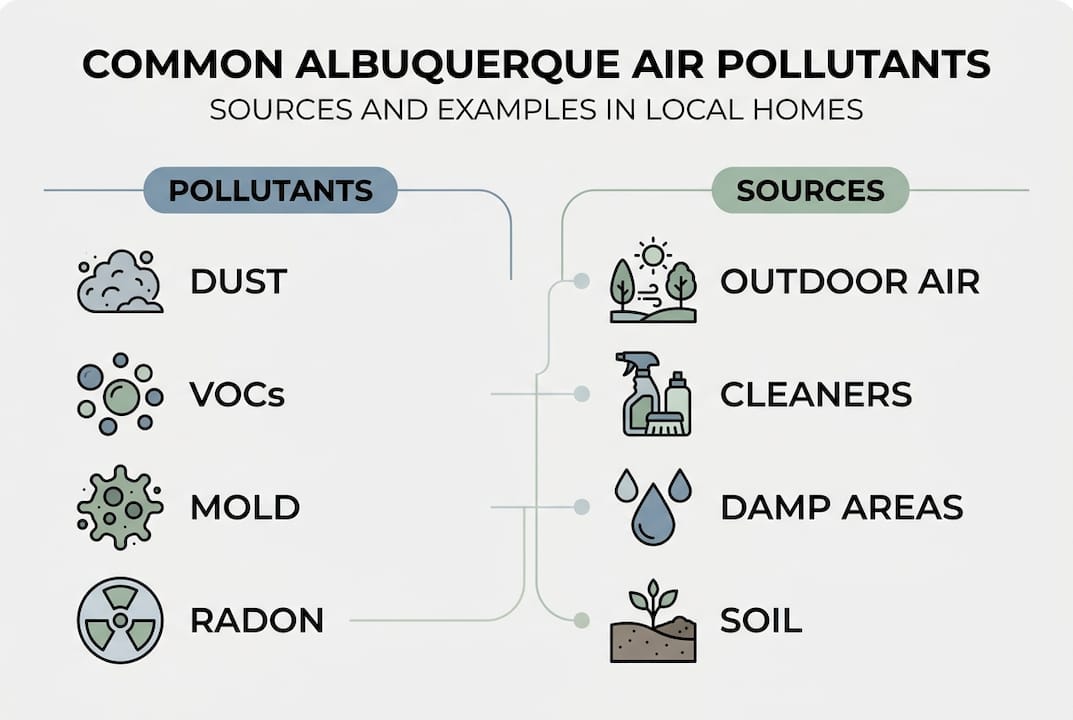
Common indoor pollutants include particulate matter (PM), volatile organic compounds (VOCs), carbon monoxide (CO), radon, mold, smoke, and biological allergens. Each of these has specific sources, many of which are found in everyday Albuquerque homes.
| Pollutant | Common sources in your home |
|---|---|
| Particulate matter (PM) | Outdoor dust infiltration, cooking, candles, fireplaces |
| VOCs | Paints, adhesives, cleaning products, new furniture |
| Carbon monoxide (CO) | Gas stoves, furnaces, attached garages |
| Radon | Soil beneath the home, foundation cracks |
| Mold spores | Bathrooms, basements, HVAC systems, hidden leaks |
| Biological allergens | Pet dander, dust mites, pollen tracked indoors |
In Albuquerque, outdoor dust infiltration is a particularly serious source of PM. The soil here contains fine silica particles and other minerals that become airborne during wind events. These particles are small enough to pass through standard door seals and window gaps, settling into carpets, upholstery, and duct systems.
Here are signs that each pollutant category may be affecting your home:
- Dust and PM: Visible gray film on surfaces shortly after cleaning, frequent sneezing
- VOCs: Chemical smell after painting or installing new flooring, persistent headaches
- CO: Unexplained fatigue or headaches that improve when you leave home
- Mold: Musty odor, visible dark spots near vents or in bathrooms
- Allergens: Symptoms that worsen indoors but improve outside
Pro Tip: Walk through each room and identify one potential pollutant source. Check under sinks for moisture, look at air vents for dust buildup, and smell for any chemical or musty odors. This simple audit takes 15 minutes and gives you a starting point.
Effective strategies to improve indoor air quality
Knowing what’s in your air, it’s time to talk about proven ways to make your indoor environment healthier.
Three core strategies address IAQ effectively: source control, ventilation, and filtration. Using all three together produces the best results.
- Source control: Remove or reduce the pollutant at its origin. Switch to low-VOC paints and cleaning products. Seal foundation cracks to reduce radon entry. Use exhaust fans while cooking. Vacuum carpets with a HEPA-filter vacuum to capture fine dust instead of recirculating it.
- Ventilation: Bring in fresh outdoor air to dilute indoor pollutants. ASHRAE 62.2 sets the standard for residential ventilation, recommending a whole-house ventilation rate calculated as 0.03 times the floor area (in square feet) plus 7.5 times the number of bedrooms plus one, measured in cubic feet per minute (cfm). For a 1,500 sq ft home with 3 bedrooms, that’s roughly 75 cfm of continuous fresh air.
- Filtration: Upgrade your HVAC filter to a MERV 13 or higher rating. MERV (Minimum Efficiency Reporting Value) measures how well a filter captures particles. Higher MERV ratings trap smaller particles, including allergens and fine dust. Portable air cleaners with true HEPA filters add an extra layer of protection in bedrooms or living areas.
| Strategy | Effectiveness | Ease for homeowners | Best for |
|---|---|---|---|
| Source control | High | Moderate | VOCs, moisture, radon |
| Ventilation | High | Moderate | General pollutant dilution |
| Filtration | Moderate to high | Easy | Dust, allergens, PM |
For duct maintenance for healthier air, keeping your system clean ensures that filtration actually works as intended.
Pro Tip: In dry Southwest regions like Albuquerque, avoid over-ventilating during dust storm season. Bringing in large amounts of outdoor air during high-wind days can actually worsen indoor PM levels. Check local air quality alerts before opening windows or running ventilation fans.
Why regular HVAC maintenance and duct cleaning are critical in Albuquerque
To make your air cleaning strategy stick, ongoing maintenance is essential. Here’s what matters most for local homes.
Your HVAC filter is your first line of defense. Replace or clean it every 1 to 3 months. In Albuquerque, where dust warrants frequent maintenance, many homeowners find that monthly checks are necessary, especially during spring wind season.
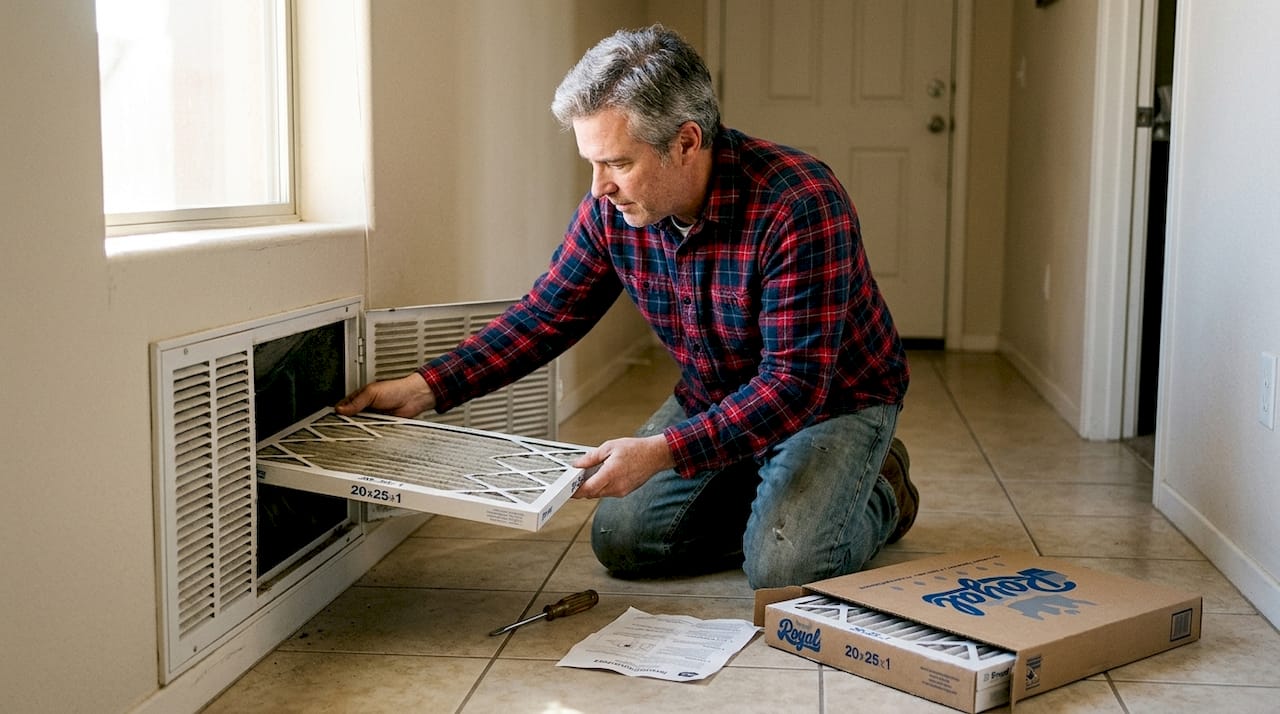
Albuquerque dust is different from what you’d find in more humid regions. The fine mineral particles here are drier, lighter, and smaller. They pass through lower-rated filters more easily, settle deeper into duct systems, and are harder to remove once they accumulate. This is not a problem that standard national maintenance schedules account for.
Signs your ducts may need cleaning:
- Visible dust blowing from registers when the system starts
- A musty or stale smell when the HVAC runs
- Increased allergy or asthma symptoms at home
- Dust accumulating on surfaces faster than usual
- Visible mold near vent covers or inside accessible duct sections
When choosing a duct cleaning company, look for NADCA-certified professionals. NADCA (National Air Duct Cleaners Association) sets industry standards for safe, effective duct cleaning. Certification means the company uses proper equipment and follows protocols that protect your system.
For more guidance, our Albuquerque air duct cleaning tips cover what to expect during a professional service. You can also review options for scheduling duct maintenance to stay on a regular schedule.
Pro Tip: Be cautious of duct cleaning companies offering extremely low flat-rate prices. Legitimate duct cleaning is labor-intensive and equipment-heavy. Before hiring, ask for proof of NADCA certification, a written scope of work, and references from local Albuquerque customers.
Putting it all together: An integrated approach for healthier air at home
With the pieces in place, here’s how you can take action now for a healthier, cleaner home.
No single fix solves every IAQ problem. The EPA and ASHRAE both emphasize an integrated approach, layering source control, ventilation, and filtration for the best outcomes. In dry Southwest climates, this also means balancing ventilation with filtration to avoid making dryness worse.
Here is a realistic step-by-step plan for a typical Albuquerque home:
- Audit your home for visible dust, moisture, and chemical odors. Note problem areas.
- Replace your HVAC filter with a MERV 13 or higher option immediately.
- Check and seal window gaps, door seals, and foundation cracks to reduce dust infiltration.
- Switch to low-VOC cleaning products and store chemicals in sealed containers.
- Schedule a duct inspection with a NADCA-certified professional, especially if it has been more than two years since the last cleaning.
- Add a portable HEPA air cleaner to the bedroom or main living area for additional filtration.
- Set calendar reminders for filter changes every 1 to 3 months and annual HVAC inspections.
- Monitor indoor air quality with a low-cost IAQ monitor that tracks PM, humidity, and CO2 levels.
Avoid the duct cleaning mistakes that can actually reduce your system’s efficiency or damage ductwork. Consulting a professional for both routine and deep cleaning needs ensures the work is done correctly and safely.
Consistency matters more than any single action. Homeowners who build IAQ maintenance into their regular home care routine see lasting improvements in comfort, health, and even energy efficiency.
The big picture: What most guides miss about IAQ in Albuquerque
National IAQ guides are written for a broad audience. They cover general principles well, but they rarely account for what it actually means to live in a high-desert city like Albuquerque. The dust here is finer, drier, and more persistent than in most U.S. regions. Standard filter change intervals of every 90 days are often not enough. Ventilation advice written for humid climates can backfire here by pulling in dusty outdoor air during wind events.
The “set and forget” mindset fails in the Southwest. We see it regularly: homeowners who follow national guidelines to the letter but still struggle with dust-covered vents and worsening allergy symptoms. The reason is almost always that their maintenance schedule doesn’t match local conditions.
Our advice is to treat IAQ as an ongoing practice, not a one-time fix. Check your filters monthly. Watch local air quality alerts. Schedule professional duct inspections more frequently than a national guide would suggest. Understanding duct contamination risks specific to this region helps you make smarter decisions year-round. Albuquerque homeowners who take a proactive, locally-informed approach consistently breathe easier.
Professional help for healthier indoor air in Albuquerque
Sometimes the best step you can take is calling in experienced professionals who know Albuquerque’s specific conditions.
At Royal Cleaning New Mexico, we offer a full range of professional cleaning services designed for local homeowners. From carpet and upholstery cleaning to thorough duct inspections, our team uses advanced equipment and follows proven protocols. Learn more about the benefits of air duct cleaning and how it directly improves your family’s health. When you’re ready to schedule, our air duct cleaning Albuquerque service page gives you everything you need to get started with a trusted local team.
Frequently asked questions
How do I know if my indoor air is unhealthy?
Signs include frequent allergy symptoms, visible dust buildup, musty odors, and worsening asthma indoors. If symptoms improve when you leave home, poor IAQ is likely a factor.
How often should I change my HVAC filter in Albuquerque?
Replace or clean your HVAC filter every 1 to 3 months, and check it monthly during Albuquerque’s windy spring season. Filter changes for IAQ are one of the highest-impact actions local homeowners can take.
Are portable air cleaners effective for local homes?
Yes, portable air cleaners with true HEPA filters are effective when sized correctly for the room. They work best as a supplement to your HVAC system, targeting filtration as a core strategy for cleaner indoor air.
What is the ASHRAE ventilation standard for homes?
ASHRAE 62.2 recommends a whole-house ventilation rate of 0.03 times the floor area plus 7.5 times the number of bedrooms plus one, measured in cfm. This formula helps ensure adequate fresh air without over-ventilating.
Do I need duct cleaning if I can’t see any dust?
Yes. Even without visible dust, Albuquerque’s environment means ducts can accumulate fine particles and allergens that aren’t visible to the naked eye. Regular professional checks are a smart precaution for local homeowners.