(505) 280-5216
Improve Indoor Air Quality With Smarter HVAC Airflow
TL;DR:
- Most Albuquerque homeowners believe their HVAC systems primarily provide comfort by heating and cooling, but airflow also significantly impacts indoor air quality. Proper ventilation and filtration prevent particle buildup and reduce airborne contaminants, which is vital in Albuquerque’s dusty environment; poor airflow can cause buildup and health issues. To optimize air quality, homeowners should maintain filters, balance duct systems, and combine filtration with proper ventilation rather than relying solely on upgrades or filters.
Most Albuquerque homeowners think their HVAC system exists for one reason: keeping the house comfortable. Too hot? Cool it down. Too cold? Heat it up. But temperature is only part of the story. The air moving through your ducts, filters, and vents also determines what you breathe every day. Ventilation and filtration strategies are central approaches to indoor air quality (IAQ), meaning airflow is directly tied to your family’s health, not just your comfort. This guide explains what airflow really does, what commonly goes wrong, and exactly what you can do about it in your Albuquerque home.
Table of Contents
- How HVAC airflow shapes indoor air quality
- Filtration versus ventilation: What most homeowners get wrong
- Common airflow problems and their impact on system efficiency
- How to optimize HVAC airflow in Albuquerque homes
- A practical expert perspective on HVAC airflow and your home
- Take the next step for cleaner, healthier air
- Frequently asked questions
Key Takeaways
| Point | Details |
|---|---|
| Airflow is central for IAQ | Moving air keeps your home healthier by circulating and filtering allergens and contaminants. |
| Filtration and ventilation differ | HVAC filters remove particles in recirculated air, but ventilation is needed to bring in fresh air. |
| Routine checks prevent problems | Regular duct maintenance and airflow measurements catch efficiency and comfort issues early. |
| Optimize before upgrading | Balanced, clean HVAC systems often give better results than installing new gadgets or parts. |
How HVAC airflow shapes indoor air quality
Now that we see why airflow goes beyond just heating or cooling, let’s unpack its deep ties to your home’s air quality.
Airflow is the movement of air through your HVAC system’s complete pathway: the return vents pull air in, the blower pushes it across a filter, and the supply vents distribute conditioned air throughout your rooms. Every cycle is an opportunity to trap particles and deliver cleaner air. When that cycle works correctly, your system captures dust, pet dander, pollen, and other allergens before they circulate back to your living spaces. When it doesn’t work correctly, those particles stay airborne and you breathe them in.
Here is what proper and poor airflow actually mean for your indoor air quality in Albuquerque:
- Good airflow pulls air consistently across the filter, trapping a higher percentage of particles with each pass.
- Poor airflow creates dead zones in rooms where air barely moves, leaving contaminants to settle on surfaces or stay suspended.
- Unbalanced airflow can cause pressure differences between rooms, pulling unfiltered air in through gaps around doors, windows, or wall penetrations.
- Dirty or clogged filters restrict movement so severely that the system bypasses the filter entirely, pushing unfiltered air directly into your ducts.
- Blocked supply or return vents reduce how much air gets processed, giving pollutants more time to accumulate.
“When airflow is restricted, your filter cannot do its job. Air finds the path of least resistance, and that path often bypasses filtration entirely.”
The relationship between vents and air quality is more direct than most homeowners realize. Albuquerque’s dry, dusty climate means particles from outside and inside your home accumulate quickly. Juniper pollen seasons, dust storms, and construction activity in growing neighborhoods all send fine particles into your home. A well-functioning airflow system processes those particles repeatedly, reducing your overall exposure.
Pro Tip: If some rooms in your home feel stuffier or dustier than others regardless of how often you clean, this is a strong sign of airflow imbalance, not just a cleanliness issue.
Filtration versus ventilation: What most homeowners get wrong
Understanding airflow’s role in filtration leads to a common point of confusion: how filtration differs from ventilation. Many homeowners treat these two things as the same process, but they serve different purposes and address different problems.
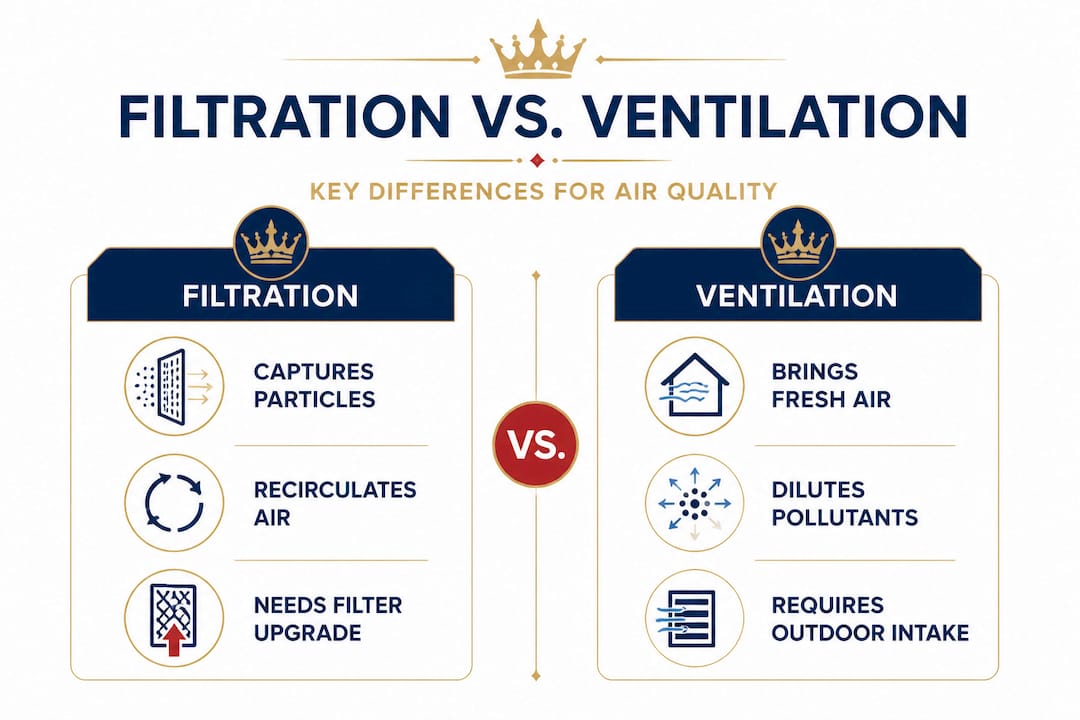
Filtration is what happens when air moves across your filter. The filter captures particles: dust, pollen, mold spores, pet dander, and similar contaminants. A higher-rated filter captures smaller particles. But filtration only works on air that actually passes through the filter, and it has no effect on gases, odors, or chemical pollutants.
Ventilation brings fresh outdoor air into your home and dilutes indoor pollutants. It reduces concentrations of carbon dioxide, volatile organic compounds (VOCs) from cleaning products or furniture, cooking odors, and other gaseous contaminants that no filter can touch.
Here is the key fact most homeowners miss: most residential forced-air HVAC systems recirculate indoor air. They do not mechanically bring in outdoor air. So your furnace or air conditioner may be running for hours and doing zero ventilation. This is why filtration and ventilation are separate IAQ strategies, not interchangeable ones.
| Feature | Filtration | Ventilation |
|---|---|---|
| What it removes | Particles (dust, pollen, dander) | Gases, odors, CO2, VOCs |
| How it works | Air passes through a filter medium | Fresh outdoor air dilutes indoor air |
| Standard home HVAC | Yes, built-in | No, usually not included |
| Limitations | Cannot remove gases; needs consistent airflow | Can bring in outdoor pollutants too |
| When to prioritize | Allergy season, dusty conditions | Poor odors, high CO2, chemical exposure |
Practical ways to boost ventilation in your Albuquerque home include:
- Open windows strategically during cooler mornings or evenings, especially during low-pollen periods.
- Use exhaust fans in bathrooms and kitchens consistently to push stale air out and draw fresh air in.
- Install an energy recovery ventilator (ERV) or heat recovery ventilator (HRV) if you want mechanical fresh-air exchange without wasting conditioned air.
- Use portable air purifiers with HEPA filters in rooms with limited airflow from air ducts and your health concerns.
- Check that your HVAC has a fresh-air intake option and use it during mild weather when outdoor air quality is good.
Upgrading your filter to a higher MERV rating helps filtration but does nothing for ventilation. Learning this distinction is one of the most useful steps toward better home air purification. Similarly, cleanliness and air quality are linked: a cleaner home sends fewer particles into your airflow to begin with, making filtration more effective.
Common airflow problems and their impact on system efficiency
To truly benefit from airflow improvements, homeowners must know what goes wrong and how to diagnose it. Poor airflow is not always obvious. Your system may run constantly, your energy bills may climb, and you may still assume everything is fine because air comes out of the vents.
Here are the most common airflow problems found in Albuquerque homes, ranked by frequency and impact:
-
Dirty or clogged filters. This is the number one issue. A filter that has not been changed in three to four months in a dusty Albuquerque home can be so clogged that it creates significant back pressure, forcing the blower motor to work harder and reducing airflow by 20 to 50 percent.
-
Blocked or closed supply vents. Furniture placed over vents, or vents manually closed in unused rooms, disrupts the pressure balance your system was designed for. Closing vents does not save energy. It creates pressure problems that strain the entire system.
-
Leaky or disconnected ducts. Duct systems in Albuquerque attics and crawl spaces are exposed to extreme heat and cold. Joints can separate over time. When conditioned air leaks into unconditioned spaces, you lose efficiency and reduce the air volume reaching your living areas.
-
Undersized return air grilles. Many older homes have returns that were undersized for the HVAC equipment now installed. The system tries to pull more air than the return can supply, creating negative pressure that pulls unfiltered air through gaps in the building envelope.
-
Obstructed outdoor unit or air handler. Debris, vegetation, or dust buildup on the outdoor unit or the indoor air handler coil restricts airflow at the source, reducing overall system capacity.
“Airflow balancing requires accurate CFM and pressure measurements. Balancing to actual targets, rather than just feeling whether air comes out of a vent, is the correct standard for a well-performing system.”
CFM stands for cubic feet per minute, which is the standard measure of airflow volume. When a technician measures your system’s CFM and static pressure (the resistance in your duct system), they get an objective picture of what your system is actually delivering versus what it was designed to deliver. This matters because a system delivering 70 percent of its design airflow will use close to full energy while providing significantly less comfort and filtration.
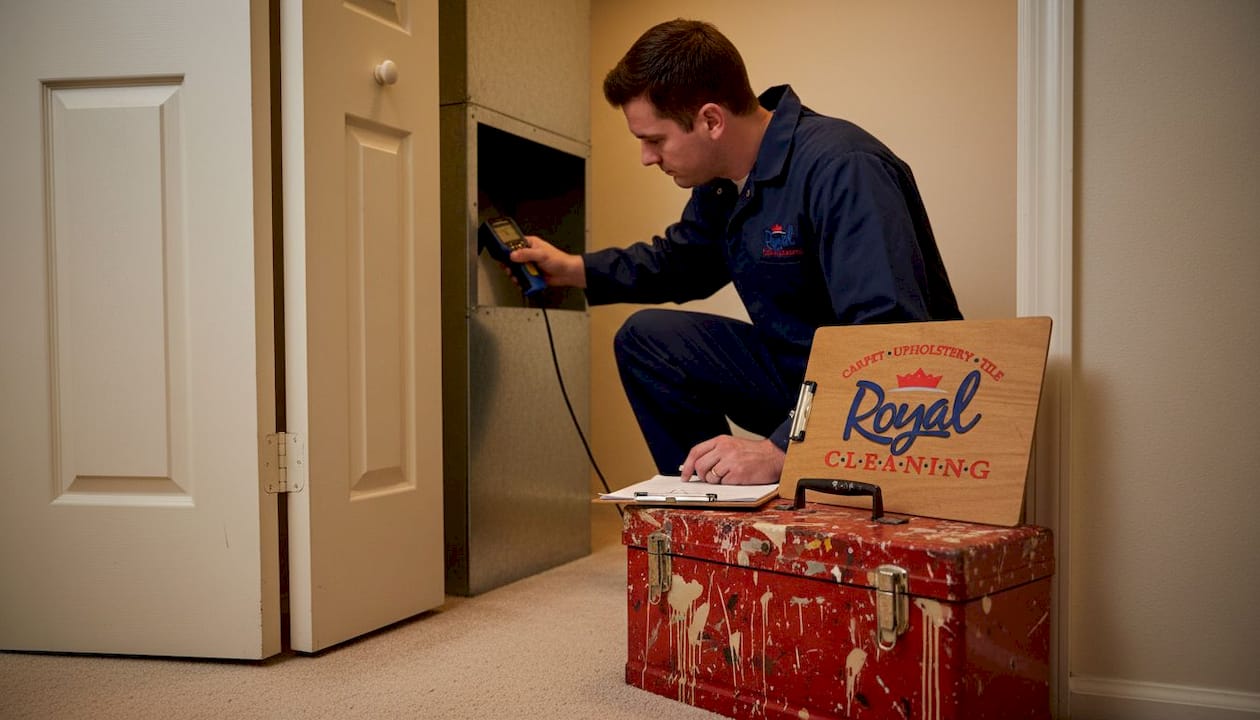
Poor airflow also shortens equipment life. When the blower motor strains against restricted flow, it overheats. Evaporator coils freeze when airflow drops too low. Heat exchangers crack when the furnace cannot move heat out of the unit fast enough. Investing in duct maintenance for air quality and addressing these issues protects both your health and your equipment investment.
Pro Tip: Do not judge your airflow by whether you feel air at the vent. A vent can feel warm or cool and still be delivering far too little volume for your room size. The only way to know is to measure CFM. Ask a technician about scheduling duct maintenance that includes airflow measurement, not just a visual inspection.
How to optimize HVAC airflow in Albuquerque homes
Knowing what can go wrong, here are practical steps to keep your home’s airflow and air quality at their best.
Consistent maintenance is the foundation. The benefits of air duct cleaning extend beyond cleaner surfaces inside your ducts: proper duct cleaning removes buildup that restricts airflow and harbors allergens. Combined with regular filter changes and vent checks, it forms the backbone of a reliable IAQ strategy.
| Maintenance task | Recommended frequency | Benefit to airflow and IAQ |
|---|---|---|
| Replace HVAC filter | Every 1 to 3 months | Prevents restriction, maintains filtration efficiency |
| Inspect and clean vents | Every 6 months | Keeps supply and return air paths clear |
| Professional duct cleaning | Every 3 to 5 years | Removes dust, mold, and debris from duct interiors |
| Check outdoor unit | Twice per year | Ensures unobstructed airflow into the system |
| Inspect duct seals and joints | Annually | Reduces leakage and maintains pressure balance |
| Airflow measurement by technician | Annually | Confirms system performing to design targets |
Follow this step-by-step process to keep your system in good shape throughout the year:
- Check your filter monthly. Hold it up to light. If you cannot see light through it, change it. In Albuquerque during high-dust months, monthly changes may be necessary.
- Walk through your home and verify every supply and return vent is open and unobstructed. Move furniture if needed. Never permanently close a vent.
- Listen for unusual sounds from your HVAC during operation. Whistling or straining sounds can indicate high static pressure from restricted airflow.
- Inspect visible duct sections in your attic, garage, or crawl space annually. Look for disconnected joints, visible gaps, or sections of duct that appear crushed or kinked.
- Schedule a professional airflow assessment if your energy bills have increased without explanation, if some rooms are consistently uncomfortable, or if it has been more than three years since your last duct cleaning.
- Check IAQ tips for Albuquerque homes seasonally to stay current with region-specific considerations like wildfire smoke or pollen peaks.
Good maintenance is what the EPA confirms: HVAC airflow is essential for air filtration and IAQ, and system efficiency and health benefits depend on consistent upkeep. Skipping maintenance for a single season in Albuquerque’s harsh climate can set your system back significantly.
A practical expert perspective on HVAC airflow and your home
Here is something most service providers will not tell you directly: the single most valuable thing you can do for your HVAC system is to get it properly balanced and cleaned before spending money on add-ons or upgrades. We see it regularly. Homeowners install whole-house air purifiers, buy premium filters, and add UV lights, yet they still have uneven comfort and poor air quality. When we measure airflow, we often find the system is operating at 60 to 70 percent of its designed capacity because of dirty ducts, blocked returns, or pressure imbalances that have gone unaddressed for years.
No air purifier makes up for a duct system that cannot move enough air to begin with. Vent placement and duct sizing are foundational, and they matter more than almost any gadget you can add afterward. This is especially true in Albuquerque, where older homes in neighborhoods like the North Valley or Nob Hill often have duct systems that were designed decades ago and have never been properly tested or balanced since.
The myth that “more vents equal better airflow” is one we encounter constantly. Adding vents without rebalancing the system just creates new pressure problems. Every time you change the duct system, the balance shifts. A proper airflow assessment with CFM and static pressure measurements tells you where your system actually stands. That information is worth far more than a new gadget.
Another persistent myth is that replacing your filter with a higher-rated one automatically improves everything. A high-MERV filter in a system without enough return air capacity can actually worsen airflow by adding too much resistance. Match the filter to your system’s capabilities, not just to what sounds best.
The hidden link between ducts and health is something we encourage every Albuquerque homeowner to take seriously. Get your system measured, get it cleaned, and get it balanced. Then consider upgrades. That sequence produces real, lasting results.
Take the next step for cleaner, healthier air
If improving your home’s airflow sounds complex, professional help is a simple, effective next step. At Royal Cleaning New Mexico, we work with Albuquerque homeowners to assess, clean, and restore HVAC airflow so that your system actually performs the way it was designed to. Our air duct cleaning experts use advanced equipment to remove built-up dust, debris, and allergens from your duct system, restoring proper flow and protecting your family’s health.
The benefits of air duct cleaning go beyond cleaner air: improved airflow reduces strain on your system, lowers energy costs, and extends equipment life. We also offer deep home cleaning services that address the surface-level sources of indoor particles, reducing the load on your HVAC system as a whole. Contact us today to schedule your Albuquerque home’s airflow assessment and duct cleaning service.
Frequently asked questions
How often should HVAC airflow be checked in Albuquerque homes?
It’s best to check airflow and duct condition annually, especially before heavy heating or cooling seasons, because good maintenance is essential for system efficiency and IAQ. Albuquerque’s dusty climate means more frequent filter checks are also wise.
Does better airflow automatically mean better indoor air quality?
Improved airflow helps, but it must be combined with proper filtration and ventilation for the best results, since filtration and ventilation each address different types of indoor air pollutants.
Can dirty HVAC ducts affect airflow and energy efficiency?
Yes. Dirty ducts restrict airflow, force your system to work harder, and can significantly raise energy costs. Accurate CFM and pressure measurements confirm whether your system is delivering what it was designed to.
Is it enough to just upgrade HVAC filters for better air?
Filters help remove particles, but a better filter does not address ventilation gaps or airflow imbalances. For the best results, filtration complements ventilation rather than replacing it, and both depend on adequate airflow through the system.
Recommended
- Indoor air quality guide for a healthier Albuquerque home
- Indoor air quality tips for Albuquerque homes: 5 proven steps
- Improve workplace air quality at home for better health
- Your Home’s Air Ducts and Your Health – Royal Carpet Cleaning
- Air changes per hour and better indoor air quality — Blog | ClimatePro UAE