(505) 280-5216
How to sanitize your home safely and improve air quality
TL;DR:
- Many Albuquerque households overuse disinfectants when simple cleaning suffices for safety.
- Proper sanitization involves a specific order of cleaning, disinfecting, and ventilating to ensure effectiveness.
- Focusing on targeted cleaning and ventilation reduces chemical exposure while maintaining indoor air quality and hygiene.
Keeping your Albuquerque home genuinely clean can feel overwhelming, especially when every store shelf is packed with disinfecting sprays, sanitizing wipes, and antimicrobial products promising to kill 99.9% of germs. The problem is that grabbing the strongest product and spraying every surface isn’t just unnecessary for most households. According to the CDC, most households are overusing disinfectants when simple cleaning does most of the work. This guide gives you a practical, evidence-based plan so your family breathes easier and your home stays genuinely safer, without wasting money or compromising your indoor air.
Table of Contents
- What you need: Tools and materials for safe home sanitization
- Step-by-step: How to clean, sanitize, and disinfect your home
- Best practices for indoor air quality during sanitizing
- How often should you sanitize? Common mistakes and local insights
- The truth about home sanitization: What most guides miss
- Get expert help for a truly clean and healthy home
- Frequently asked questions
Key Takeaways
| Point | Details |
|---|---|
| Clean before you sanitize | Always remove dirt and debris first, since sanitizers work best on clean surfaces. |
| Use products safely | Follow EPA and CDC recommendations for correct product use and required contact time. |
| Prioritize ventilation | Open windows and use fans to minimize fumes and protect indoor air during cleaning. |
| Don’t over-sanitize | Reserve strong disinfectants for high-risk cases, not everyday use. |
| Maintain air quality year-round | Combine smart cleaning habits with proper HVAC and air cleaner care for healthier Albuquerque homes. |
What you need: Tools and materials for safe home sanitization
Now that you know why proper sanitization matters, let’s cover exactly what you’ll need to do it right. Before buying any product, you need to understand what you’re actually buying. The words “cleaning,” “sanitizing,” and “disinfecting” are not interchangeable, and using the wrong product at the wrong time wastes effort and can even harm your air quality.
The EPA clarifies that cleaning physically removes dirt and most germs using soap or detergent and water. Sanitizing reduces germs to safe public health levels, while disinfecting kills nearly all germs using stronger chemicals. Each step serves a specific purpose.
Comparison: Cleaning vs. sanitizing vs. disinfecting
| Action | What it does | When to use it | Typical products |
|---|---|---|---|
| Cleaning | Removes dirt and most germs | Daily or after visible mess | Soap, detergent, water |
| Sanitizing | Reduces germs to safe levels | Food prep areas, children’s toys | Sanitizing sprays, diluted bleach |
| Disinfecting | Kills nearly all germs | After illness, bodily fluid contact | EPA-registered disinfectants |
Supplies you’ll need
Gathering the right supplies before you start saves time and keeps you from improvising with the wrong products.
- Microfiber cloths: These trap and lift particles more effectively than cotton rags and can be laundered and reused.
- Rubber or nitrile gloves: Protect your skin from chemical irritation, especially with stronger sanitizing products.
- Soap or liquid detergent: Your primary cleaning agent for removing visible dirt.
- EPA-registered sanitizing spray: Look for the EPA registration number on the label. This confirms the product’s antimicrobial claims are verified. Always choose EPA-registered products when you need real antimicrobial performance.
- Bucket and mop: For floors, particularly useful with our hard surface cleaning guide for tile and hardwood surfaces.
- Ventilation equipment: A box fan or open windows to move air out during cleaning. This is not optional.
- Optional: HEPA vacuum: Particularly valuable in Albuquerque’s dusty environment, where particulate matter builds up quickly on floors and upholstery.
For floors, especially wood, consider referencing eco-friendly floor cleaning methods before applying any sanitizing product, since certain chemicals can damage finishes.
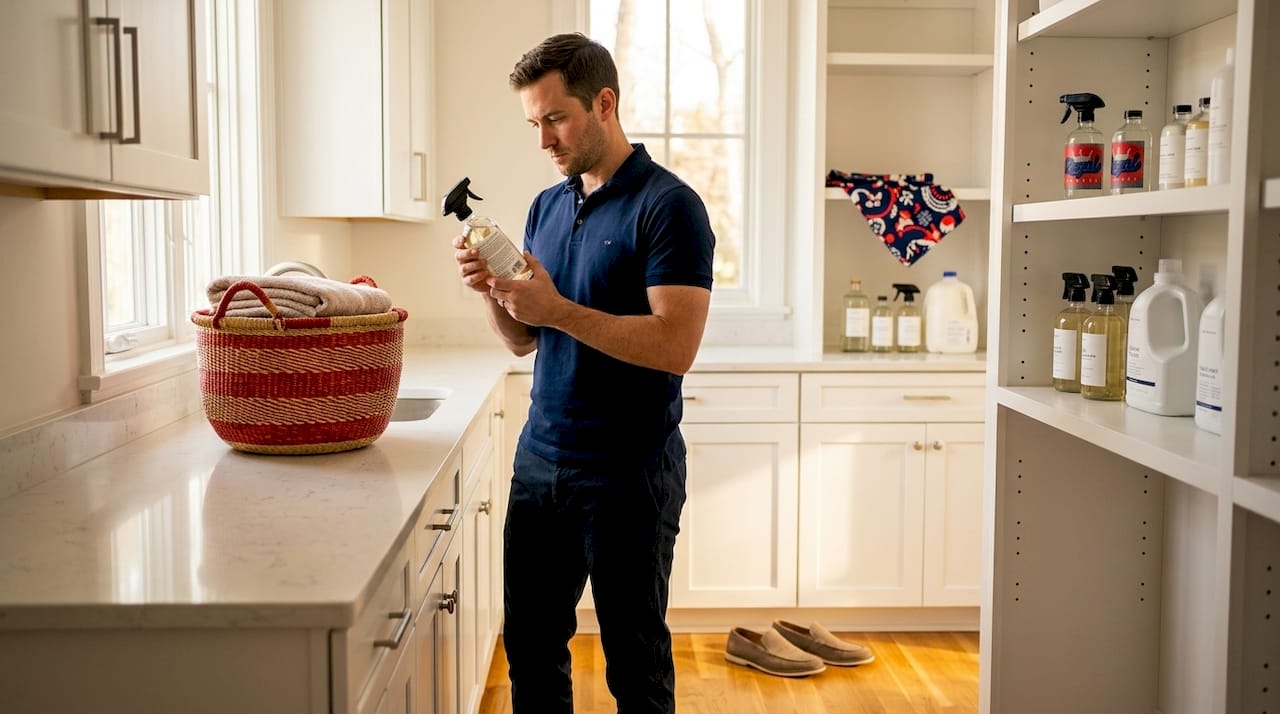
Pro Tip: Always read the product label before use. Labels specify the correct dilution ratio, contact time, surface compatibility, and ventilation requirements. Using more product than the label recommends doesn’t clean better. It just adds unnecessary chemicals to your air.
Our sanitization guidelines offer additional product recommendations tailored to Albuquerque homes.
Step-by-step: How to clean, sanitize, and disinfect your home
With your supplies ready, here’s how to use them step by step for a truly effective and safe result. Order matters here. Skipping steps or reversing the sequence is one of the most common mistakes homeowners make.
The correct order
- Remove clutter first. Clear surfaces of items so you’re cleaning the actual surface, not around objects. This also prevents you from missing contaminated areas.
- Clean with soap and water. Apply your detergent solution and wipe down the surface thoroughly. This step is the most important one. Cleaning first removes the dirt and organic material that would otherwise block sanitizers and disinfectants from working.
- Rinse if needed. Some surfaces, particularly food-prep areas, require rinsing off detergent residue before sanitizing.
- Apply sanitizer or disinfectant only where needed. Not every surface in your home requires sanitizing. Focus on high-touch surfaces: doorknobs, light switches, faucet handles, and toilet flush levers.
- Let the product sit for its full contact time. This is where most people go wrong. Disinfectants must stay wet for the contact time listed on the label, often two to ten minutes, to actually work. Spraying and immediately wiping gives you almost no germ-killing benefit.
- Wipe or allow to air dry per label instructions. Some products require wiping, others require air drying. Check the label.
- Remove gloves and wash hands. Even when wearing gloves, finish every sanitizing session by washing your hands with soap and water for at least 20 seconds.
This process, following a true multi-step cleaning approach, is what separates genuinely clean homes from surfaces that only look clean.
CDC guidance on contact time: “To be effective, disinfectants need to remain wet on the surface for the amount of time specified on the label. Wiping the surface dry before the contact time is up means the product hasn’t had enough time to do its job.”
Pro Tip: Set a phone timer when you apply a disinfectant. Contact times feel longer than they are, and it’s easy to wipe too soon. Those two to ten minutes make a significant difference in actual effectiveness.
When to use each approach
| Scenario | Action needed |
|---|---|
| Everyday kitchen spill | Clean with soap and water |
| Child’s play area after daily use | Clean, then sanitize weekly |
| Someone in the household was sick | Clean, then disinfect affected areas |
| Bathroom counters, faucets | Clean daily, sanitize 2-3 times per week |
| Bodily fluid contact on surface | Clean first, then disinfect immediately |
If you have pets, check pet-safe cleaning tips before applying any sanitizing product to floors or low surfaces where animals rest.
Best practices for indoor air quality during sanitizing
Proper sanitization also means protecting your home’s air. Let’s look at simple ways to keep your air clean while you clean. Many homeowners don’t realize that the act of cleaning can temporarily worsen indoor air quality if they don’t take the right precautions.
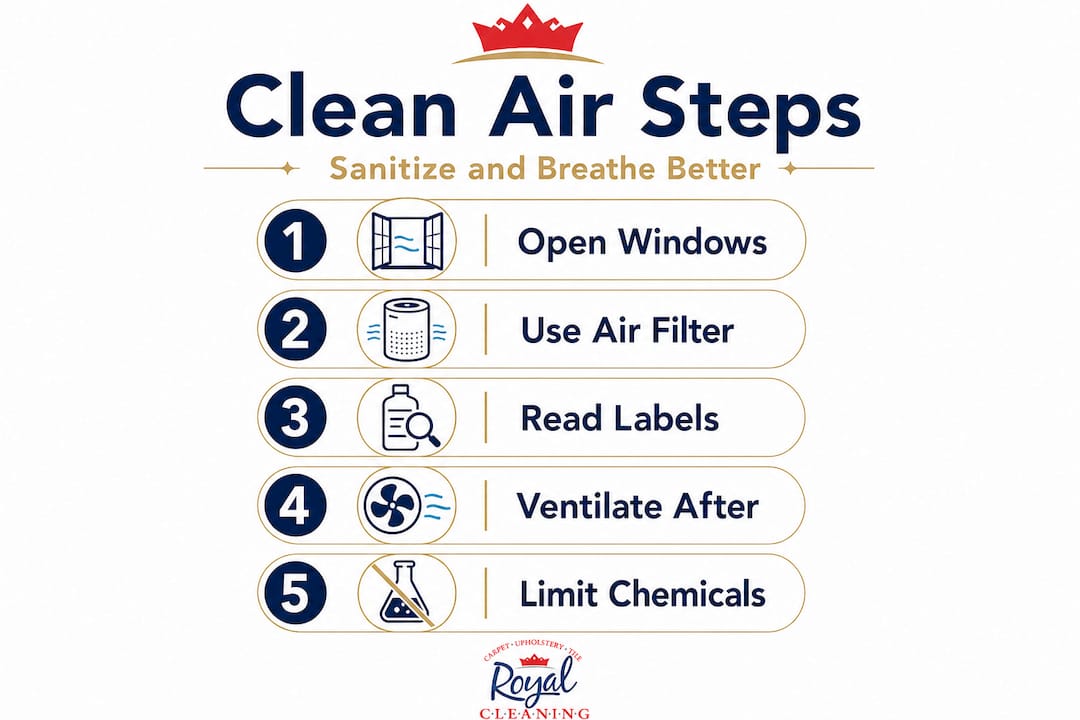
Cleaning products release volatile organic compounds (VOCs), which are chemical gases that can irritate lungs, eyes, and skin. The EPA recommends prioritizing source control and ventilation first, using air cleaners appropriately, and maintaining them properly for effective indoor air quality management.
How to protect your air during sanitizing
- Open windows and doors before you start. Fresh airflow dilutes chemical concentrations quickly. This is your most effective tool for maintaining indoor air quality.
- Use fans to direct air outward. Place a box fan in a window facing outward to actively pull polluted air out of the room. This works better than simply cracking a window.
- Run ventilation during and after cleaning. Don’t stop at the window as soon as you’re done. Continue ventilating for at least 15 to 30 minutes after finishing.
- Maintain your air cleaners. Air cleaners with HEPA filter options capture airborne particles effectively, but they must be maintained per the manufacturer’s instructions. A clogged filter provides minimal benefit.
- Understand what air cleaners can and can’t do. Air cleaners help with particles, including dust and allergens. They are not designed to remove gaseous pollutants like VOCs from cleaning sprays. Ventilation handles gases; filters handle particles.
- Replace HVAC filters on schedule. In Albuquerque’s dusty climate, many homeowners need to replace filters more often than the standard 90-day recommendation. Check them monthly.
- Choose lower-VOC product options. When possible, select cleaning and sanitizing products labeled as safer for indoor use. These products are formulated to reduce airborne chemical load.
You can find more targeted advice for your home in our guides on improving air quality and home air purification specific to Albuquerque conditions.
Pro Tip: Ventilate before, during, and after cleaning, not just while the product is on the surface. Chemical residue continues to off-gas after you’ve finished wiping, so keeping air moving for at least 20 minutes post-cleaning makes a real difference in your family’s air quality.
How often should you sanitize? Common mistakes and local insights
Maintaining your home’s cleanliness is an ongoing effort. Here’s how often to sanitize, and what Albuquerque homeowners should really prioritize. One of the most persistent myths in home hygiene is that more sanitizing equals more safety. It doesn’t.
The CDC states that daily sanitizing may not be necessary if surfaces and objects are cleaned carefully after use. Regular cleaning removes the vast majority of germs from surfaces without any chemical sanitizing product needed.
How often should you actually sanitize?
- Daily cleaning: Kitchen counters, stovetop, dining table, and bathroom sinks. Use soap and water.
- 2 to 3 times per week sanitizing: High-touch areas like doorknobs, light switches, faucet handles, and toilet flush levers.
- After illness or contamination: Disinfect affected areas thoroughly, then return to your normal cleaning schedule.
- Weekly: Bathroom surfaces, toilet seats, and refrigerator handles.
- Monthly or seasonally: Deep clean areas that accumulate dust and allergens, particularly important in Albuquerque’s dry, dusty climate.
For more on how your home cleanliness and health are connected, we’ve put together a detailed resource that goes beyond the basics.
Common mistakes Albuquerque homeowners make
- Sanitizing without cleaning first. This is the single most common error. Sanitizers and disinfectants cannot penetrate layers of dirt or grease to reach germs. Always clean first.
- Using full-strength products when diluted versions work just as well. Check your label. Many products are designed to be diluted and work best at that concentration.
- Over-relying on “antibacterial” soaps for daily hand and surface cleaning. Regular soap and water are proven effective for routine cleaning and don’t contribute to chemical residue.
- Ignoring contact time. As noted above, spraying and immediately wiping delivers little to no antimicrobial benefit.
- Assuming Albuquerque’s dry climate eliminates the need for air quality attention during cleaning. In fact, dry air can concentrate chemical fumes faster than humid conditions, making ventilation even more critical here.
Local context: Albuquerque’s high desert environment brings regular dust, pollen, and wind-driven allergens into homes. This can create the impression that daily disinfecting is needed. In reality, consistent regular cleaning to remove particulate matter, combined with proper HVAC filter maintenance, addresses this more effectively than chemical disinfection.
For additional expert cleaning tips developed specifically for homeowners in the region, we’ve compiled practical advice grounded in local conditions. And for anyone dealing with hard floors, a guide to safe floor disinfecting can help you avoid common surface damage from overuse of strong products.
The truth about home sanitization: What most guides miss
Most sanitization guides hand you a product list and a room-by-room checklist and call it done. What they don’t tell you is that consistent overuse of disinfectants comes with real trade-offs, and that a targeted, smarter strategy produces healthier homes than maximum-strength, maximum-frequency chemical use.
Chronic overuse of disinfecting chemicals can irritate skin and respiratory tissue with repeated exposure. It can also contribute to indoor air quality problems that are harder to resolve than the germ problem you were trying to solve in the first place. Research increasingly points to the idea that overly sanitized home environments may reduce the natural environmental exposures that help train immune systems, particularly in children. This isn’t a fringe position. It’s a practical reality that most cleaning guides skip.
We’ve seen this pattern consistently: families who shift to regular soap-and-water cleaning, with targeted sanitization only where it’s genuinely needed, report fewer irritation symptoms, lower product costs, and homes that feel cleaner without the chemical smell. The combination of consistent cleaning habits, selective sanitization for genuinely high-risk surfaces, and proper ventilation and air quality management is more effective and more sustainable than daily disinfecting.
Albuquerque’s air quality adds an important local layer to this. During wildfire smoke events, high pollen days, or dust storm conditions, your home’s air is already stressed. Adding unnecessary chemical fumes from daily disinfectant use compounds the problem rather than improving it. This is when your focus should be on ventilation, filtration, and the right improving home hygiene approach, not on spraying more product.
Pro Tip: Map your home’s high-touch, high-risk zones. Think doorknobs, faucet handles, toilet levers, and kitchen prep surfaces. Sanitize these selectively and consistently. Leave low-contact surfaces like walls, baseboards, and decorative items to regular cleaning. You’ll use less product, protect your air better, and get more effective results where they actually matter.
Get expert help for a truly clean and healthy home
Sometimes cleaning and sanitizing a home thoroughly goes beyond what any individual guide can address. Deep-seated allergens in carpet fibers, years of dust accumulation in air ducts, or embedded contaminants in upholstery all require professional equipment and expertise to resolve properly.
At Royal Cleaning New Mexico, we specialize in the kinds of thorough cleaning that genuinely improves your home’s health and air quality. Our upholstery cleaning experts use extraction methods that remove allergens, dust mites, and embedded debris that regular vacuuming and sanitizing sprays simply can’t reach. For air quality, understanding the air duct cleaning benefits can be the difference between a home that recirculates allergens and one that delivers truly clean air. Our professional air duct cleaning process uses advanced equipment to clear your system thoroughly, supporting everything you’re already doing at home. Reach out today to learn how we can help Albuquerque families breathe easier.
Frequently asked questions
What’s the difference between cleaning, sanitizing, and disinfecting?
Cleaning removes dirt and most germs, sanitizing reduces germs to safe levels, and disinfecting kills almost all germs with stronger chemicals. Each serves a specific purpose and should be used at the right step in the process.
Which surfaces should I sanitize most in my home?
Prioritize high-touch areas like doorknobs, kitchen counters, and bathroom fixtures, especially after illness or contamination. Low-contact surfaces like walls and decorative items only need regular cleaning.
How do I avoid chemical odors or fumes while sanitizing?
Ventilate well before, during, and after cleaning, and choose lower-VOC products where possible. Ventilation removes airborne chemical pollutants more effectively than air cleaners alone.
Do I need to disinfect my home daily?
Daily disinfection is not necessary for most households. Daily sanitizing may not be necessary if surfaces are cleaned carefully after use; reserve disinfecting for exposure to illness.
What improves Albuquerque indoor air quality most during sanitizing?
Focus on source control, proper ventilation, and regular air cleaner maintenance while minimizing unnecessary chemical use. Ventilation and filtration together provide the most effective indoor air quality improvement during and after cleaning.