(505) 280-5216
How to Sanitize Between Tenants: 2026 Property Guide
TL;DR:
- Proper sanitation between tenants involves cleaning with detergent and disinfecting with EPA-registered products to kill pathogens effectively. Landlords should document all steps, including product details, dwell times, and timestamped photos, to protect themselves legally. Thorough protocols reduce health risks, prevent disputes, and maintain tenant satisfaction.
Sanitizing rental properties between tenants means removing visible dirt and then killing pathogens on high-touch surfaces using EPA-registered disinfectants applied per label instructions. This two-step process, cleaning followed by disinfection, is the standard recommended by the CDC and EPA for residential turnover in 2026. Skipping either step creates real risk: incomplete sanitation leaves pathogens on surfaces, exposes new tenants to health hazards, and opens landlords to liability in disputes. Knowing how to sanitize between tenants correctly protects your property, your tenants, and your rental income.
What tools and products do you need to sanitize a rental property?
The right supplies determine whether your sanitation effort actually works. EPA-registered disinfectants are the non-negotiable starting point. These products carry an EPA registration number on the label, which confirms they have been tested and approved to kill specific pathogens on residential surfaces. Common categories include quaternary ammonium compounds, hydrogen peroxide-based sprays, and sodium hypochlorite solutions. Each type has a different dwell time, which is the amount of time the surface must stay wet for the product to kill pathogens.
| Disinfectant Type | Common Use | Typical Dwell Time |
|---|---|---|
| Quaternary ammonium | General surfaces, counters | 30–60 seconds |
| Hydrogen peroxide | Bathrooms, kitchens | 30–60 seconds |
| Sodium hypochlorite (bleach) | Hard, non-porous surfaces | 1–10 minutes |
| Alcohol-based (70%+) | Electronics, small surfaces | 30 seconds |
Beyond disinfectants, you need microfiber cloths, and color-coded microfiber cloths are the professional standard. Assign one color to bathrooms, another to kitchens, and a third to living areas. This prevents cross-contamination across zones, which is a common source of pathogen spread that goes unnoticed during visual inspection.
Your supply kit should also include:
- Nitrile gloves and eye protection for handling concentrated disinfectants
- A mop with a clean, replaceable head for hard floors
- A HEPA-filter vacuum for carpets and upholstery
- Spray bottles labeled by product type
- A bucket system with separate clean and rinse water
Pro Tip: Read the EPA registration number on every disinfectant label before purchasing. If the number is absent, the product has not been verified for pathogen kill claims and should not be used for tenant turnover sanitation.
How do you sanitize high-touch surfaces step by step?
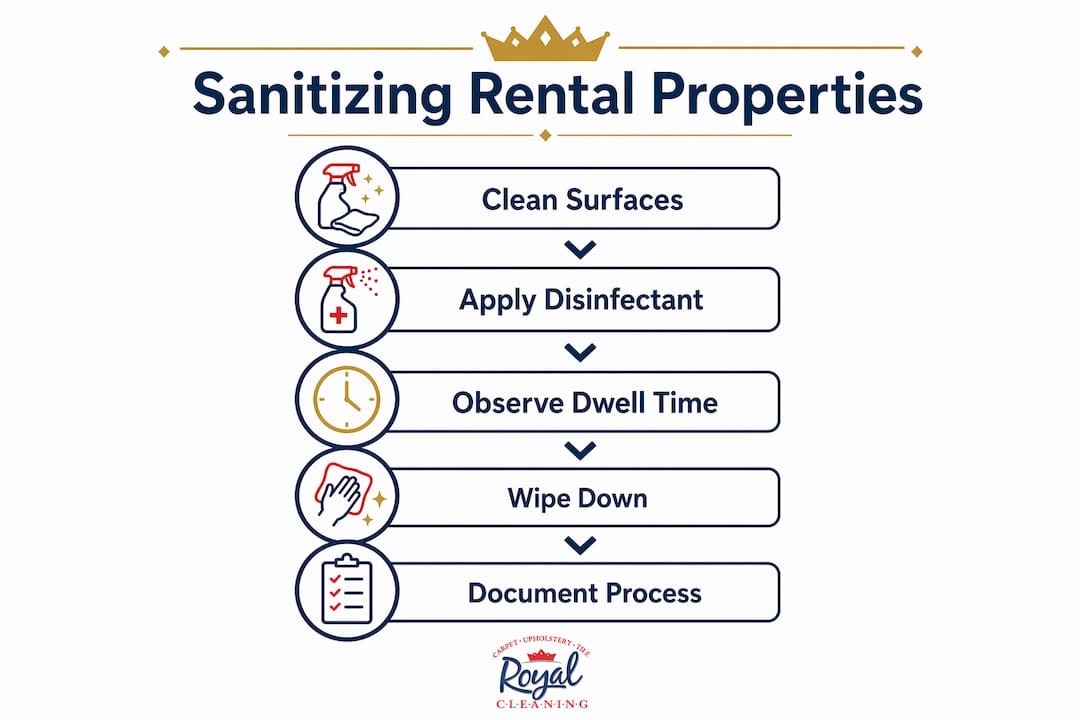
The CDC and EPA recommend a two-step process: clean first with detergent and water to remove dirt and organic matter, then apply an EPA-registered disinfectant for the full product-specified dwell time. Organic matter like grease, dust, and body oils physically block disinfectants from reaching pathogens. Skipping the cleaning step means your disinfectant may never contact the surface it needs to treat.
Follow this sequence for every turnover:
- Complete all repairs and painting first. Scheduling maintenance before cleaning avoids re-soiling surfaces you have already sanitized. Sanding, patching, and painting generate dust and debris that contaminate clean surfaces.
- Work top-down and dry-to-wet. Top-down, dry-first order prevents debris from falling onto already-cleaned lower surfaces. Dust ceiling fans and light fixtures before wiping counters and mopping floors.
- Clean all surfaces with detergent. Use a general-purpose cleaner and microfiber cloth to remove visible soil from every surface before disinfecting.
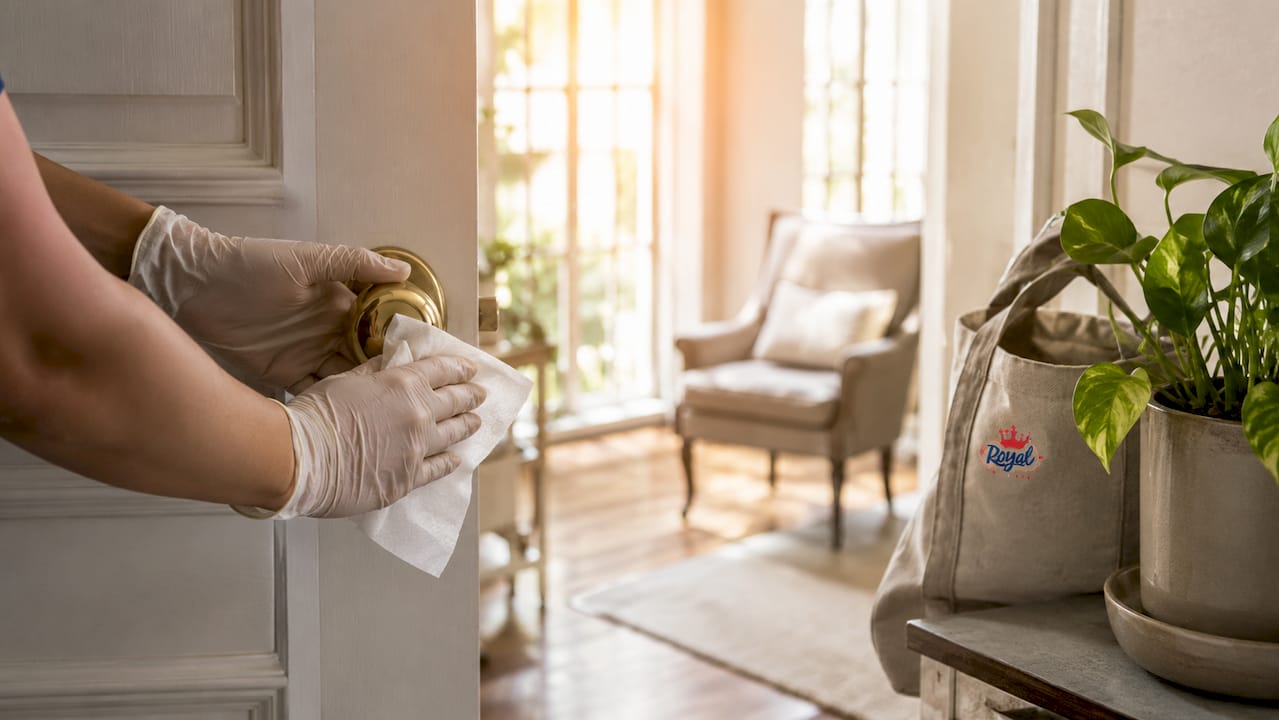
- Apply disinfectant to high-touch surfaces. High-touch surfaces include doorknobs, light switches, faucets, remote controls, and kitchen and bathroom cabinet hardware. These areas carry the greatest pathogen transfer risk during tenant transitions.
- Observe the full dwell time. Spray the surface and let it remain visibly wet for the time listed on the product label. Do not wipe it dry early.
- Ventilate the unit. Open windows and run exhaust fans after disinfecting to clear chemical residue and improve air quality before the new tenant moves in.
Pro Tip: Set a phone timer when you apply disinfectant to high-touch surfaces. It takes discipline to wait the full dwell time when you are working through a long checklist, but that wait is what separates effective sanitation from surface-level cleaning.
Turnover cleaning for a 3-bedroom unit requires 6–10 hours on average. That figure is 2–3 times the labor of a routine maintenance clean. Planning for that time commitment upfront prevents rushed work and incomplete disinfection.
What mistakes do landlords make when sanitizing between tenants?
The most damaging mistake is wiping a disinfectant off before the dwell time has elapsed. Wiping immediately after spraying is ineffective because the surface must remain wet with disinfectant for the full label-specified time to kill pathogens. Many property managers spray, wipe, and move on within seconds, which means the surface looks clean but is not sanitized.
Other common errors include:
- Skipping hidden high-touch surfaces. Remote controls, thermostat panels, and cabinet hardware are frequently missed. These surfaces accumulate pathogens between tenants and are rarely included in basic cleaning checklists.
- Failing to document products and timestamps. Without a written record of which EPA-registered product was used, when it was applied, and how long it dwelled, you have no defensible proof of compliance if a tenant files a hygiene complaint.
- Cleaning before completing repairs. Painting or patching walls after sanitizing forces you to re-clean surfaces and risks recontaminating areas you already treated.
- Using non-EPA-registered products. Consumer spray cleaners marketed as “antibacterial” are not the same as EPA-registered disinfectants. The label must carry an EPA registration number to confirm pathogen kill efficacy.
Treating sanitation as optional increases financial risk. Documented sanitation protocols help landlords avoid litigation and maintain stronger tenant occupancy records. A single hygiene dispute can cost more than an entire year of professional cleaning services.
Properties left unoccupied for 7 days generally do not require disinfection beyond normal cleaning. Back-to-back turnovers, however, require intense sanitation on all high-touch areas. Knowing which scenario you are dealing with helps you allocate time and products correctly.
How do you verify and document your sanitation protocol?
Documentation is the professional standard that separates a defensible sanitation record from a verbal claim. Sanitization logs that include EPA registration numbers, dwell times, and timestamped photos of completed work protect landlords in tenant disputes. Without this record, you cannot prove that sanitation occurred, even if it did.
Build your documentation system around these practices:
- Create a standardized checklist. A written rental cleaning checklist for every turnover covers every room, surface category, and task in a fixed sequence. Checklists reduce the chance of skipping steps under time pressure.
- Log EPA product numbers. Record the EPA registration number of every disinfectant used, the surface it was applied to, and the time of application. This creates a legally defensible paper trail.
- Take timestamped photos. Photograph high-touch surfaces before and after sanitation. Most smartphones embed the date and time in image metadata automatically.
- Use a digital log. A digital sanitization log that includes EPA product numbers, detailed checklists, and timestamped photos strengthens your defense against tenant hygiene complaints significantly more than handwritten notes.
- Implement standard operating procedures (SOPs). Standardized operating procedures bring consistency to every turnover and reduce stress on cleaning staff. When every team member follows the same documented process, quality does not depend on individual memory.
Pro Tip: Store your sanitization logs in a cloud folder organized by unit and move-out date. If a dispute arises six months later, you can pull the exact record in under two minutes.
Standardized procedures and checklists bring consistency and reduce stress in turnover workflows. Property managers who implement SOPs report fewer callbacks, fewer disputes, and faster turnaround times between tenants.
Key Takeaways
Effective sanitation between tenants requires a documented two-step protocol using EPA-registered disinfectants, observed dwell times, and timestamped records to protect both tenant health and landlord liability.
| Point | Details |
|---|---|
| Two-step protocol is mandatory | Clean with detergent first, then apply an EPA-registered disinfectant for the full dwell time. |
| Dwell time determines effectiveness | Wiping disinfectant off early negates pathogen kill; always wait the label-specified time. |
| High-touch surfaces are the priority | Doorknobs, light switches, faucets, and cabinet hardware carry the greatest pathogen transfer risk. |
| Documentation protects landlords | Log EPA product numbers, dwell times, and timestamped photos for every turnover. |
| Sequence prevents double work | Complete repairs and painting before sanitizing to avoid re-soiling treated surfaces. |
Why I think most landlords underestimate the documentation side
After working with property managers across the Albuquerque area, I have seen the same pattern repeat: the cleaning gets done, but the record never gets made. Landlords invest real time and money into turnover sanitation, then lose a dispute because they cannot prove what they did. The cleaning itself is only half the job.
What I have found is that the property managers who avoid the most problems are not necessarily the ones with the most thorough cleaning routines. They are the ones who treat documentation as part of the sanitation process, not an afterthought. A timestamped photo of a disinfected doorknob takes five seconds. That five seconds can resolve a dispute that would otherwise take hours and hundreds of dollars.
The other thing I would push back on is the idea that tenant turnover cleaning is a cost center. Done correctly, with documented protocols and professional-grade products, it is a liability shield and a marketing asset. Tenants notice when a unit is genuinely clean. That first impression affects lease renewals, referrals, and the rate at which you can fill vacancies. The financial case for thorough sanitation is stronger than most landlords realize.
— Bernadette
Professional sanitation services for Albuquerque rental properties
Royal Carpet and Tile Cleaning serves property owners and managers across Albuquerque and Rio Rancho who need reliable, documented turnover cleaning between tenants. The team uses EPA-registered disinfectants, color-coded microfiber systems, and a structured protocol that covers every high-touch surface in the unit.
For rental turnovers that include carpets and upholstery, Royal Carpet and Tile Cleaning offers professional carpet cleaning and upholstery cleaning in Albuquerque using advanced extraction equipment that removes allergens, odors, and embedded soils that standard cleaning misses. Both services complement a full sanitation protocol and are available as part of a complete turnover package. Contact Royal Carpet and Tile Cleaning to schedule your next rental turnover and receive a transparent quote with no hidden fees.
FAQ
What is the difference between cleaning and sanitizing?
Cleaning removes visible dirt and organic matter using detergent and water. Sanitizing uses an EPA-registered disinfectant applied for a specified dwell time to kill pathogens that cleaning alone does not eliminate.
How long does disinfectant need to stay on a surface?
Dwell time varies by product, but most EPA-registered disinfectants require 30–60 seconds of wet contact time on the surface. Always follow the specific label instructions, since wiping too early negates the pathogen kill.
Which surfaces must be disinfected between every tenant?
Doorknobs, light switches, faucets, remote controls, and kitchen and bathroom cabinet hardware are the highest-priority surfaces. These high-touch areas present the greatest pathogen transfer risk during tenant transitions.
Do I need to disinfect if the unit sat empty for a week?
Properties unoccupied for 7 days generally do not require disinfection beyond normal cleaning. Back-to-back turnovers with minimal vacancy time require full sanitation on all high-touch surfaces.
What records should I keep after sanitizing a rental unit?
Document the EPA registration number of every product used, the surfaces treated, the application time, and the dwell time observed. Pair this log with timestamped photos of completed work to create a defensible record in case of tenant disputes.