(505) 280-5216
How Debris Affects HVAC: Efficiency and Air Quality
TL;DR:
- Debris buildup in HVAC systems reduces efficiency, increases energy costs, and harms indoor air quality. Regular professional maintenance, including coil and duct cleaning, is essential to prevent costly repairs and health issues caused by allergens and mold spores. DIY methods are often ineffective or damaging, making expert services the best choice for long-term system performance.
Debris is the leading cause of reduced HVAC efficiency and poor indoor air quality in residential homes. The industry term for this problem is coil fouling and duct contamination, and it covers everything from leaves packed around your outdoor condenser to dust layers coating your evaporator coil. Understanding how debris affects HVAC performance is the first step toward protecting your system, lowering your energy bills, and breathing cleaner air inside your home. Albuquerque homeowners face this problem year-round thanks to dust storms, cottonwood season, and desert winds that push debris directly into HVAC components.
How debris affects HVAC systems: where it builds up
Debris enters your HVAC system through multiple points, and each location creates a different type of damage. Knowing where buildup happens helps you catch problems before they become expensive repairs.
The most common debris types include:
- Leaves and pine needles that pack around the outdoor condenser unit, blocking airflow and trapping moisture
- Dust and dirt that coat evaporator and condenser coils, reducing heat transfer
- Pollen and pet dander that pass through low-grade air filters and settle inside ductwork
- Mold spores that grow in damp areas like condensate drain pans and duct lining
- Cottonwood fluff and grass clippings that clog the condenser fins during spring and summer
Each debris type affects a specific part of your system. Leaves and pine needles hit the outdoor condenser first. Moisture trapped by leaves on coils initiates corrosion that damages fins, tubing, and causes refrigerant leaks. That kind of damage does not show up on your energy bill until the system is already failing.
Dust and fine particles travel deeper into the system. They coat the evaporator coil indoors, clog the air filter, and settle inside supply and return ducts. Condensate drain lines are another common victim. Algae, dust, and debris combine inside the drain pan and create blockages that cause water overflow and water damage to ceilings and walls.
Pro Tip: Check your outdoor condenser unit after every windstorm or heavy rain. Removing debris within 24 hours prevents moisture from sitting against the coil fins long enough to start corrosion.
Does debris buildup really increase your energy bills?
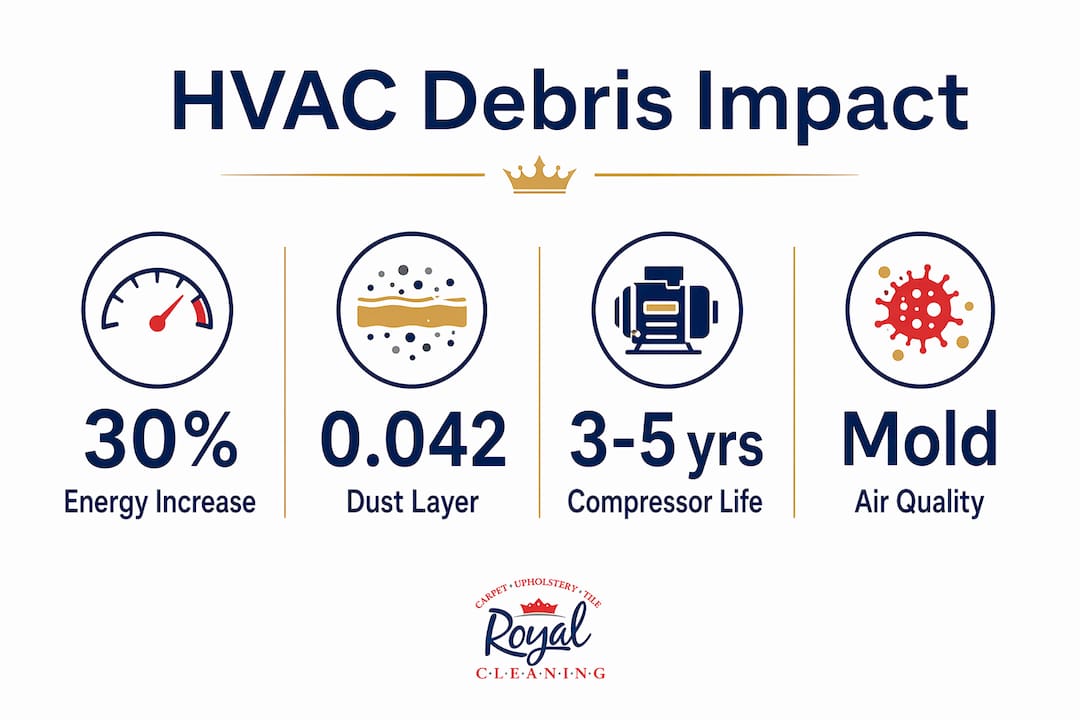
The answer is yes, and the numbers are significant. A dust layer just 0.042 inches thick on a heat exchanger reduces heat transfer efficiency by over 21%. That is less than half the thickness of a credit card causing measurable performance loss.
Dirty condenser coils push the problem further. Contaminated coils increase energy consumption by up to 30%, while clogged air filters add another 5–15% on top of that. Combined, a neglected system can cost you 35–45% more to run than a clean one.
Here is how the efficiency losses stack up across common debris scenarios:
| Debris Location | Efficiency Loss | Primary Consequence |
|---|---|---|
| Condenser coil (leaves, dirt) | Up to 30% energy increase | Compressor overheating, refrigerant leaks |
| Evaporator coil (dust layer) | 5%–40% heat transfer loss | Longer cooling cycles, higher bills |
| Air filter (dust, pet hair) | 5%–15% energy increase | Reduced airflow, motor strain |
| Ductwork (accumulated dust) | 20%–30% energy increase | Uneven airflow, pressure imbalance |
| Condensate drain (algae, debris) | Water damage risk | Overflow, mold growth |
Coil fouling creates a cycle where increased static pressure forces fan motors to run longer. Longer runtimes mean more wear on the motor, the compressor, and the refrigerant lines. The system ages faster than it should.
Debris buildup on condenser coils reduces airflow by 30–50%, shortening compressor lifespan from 10–15 years down to 3–5 years in humid climates. Even in drier climates like New Mexico, the compressor strain from blocked airflow is the same. Replacing a compressor costs $1,500–$2,500. Cleaning a coil costs a fraction of that.
How does debris impact air quality inside your home?
Debris accumulation inside your HVAC system does not stay in the system. It circulates through your living spaces every time the fan runs.
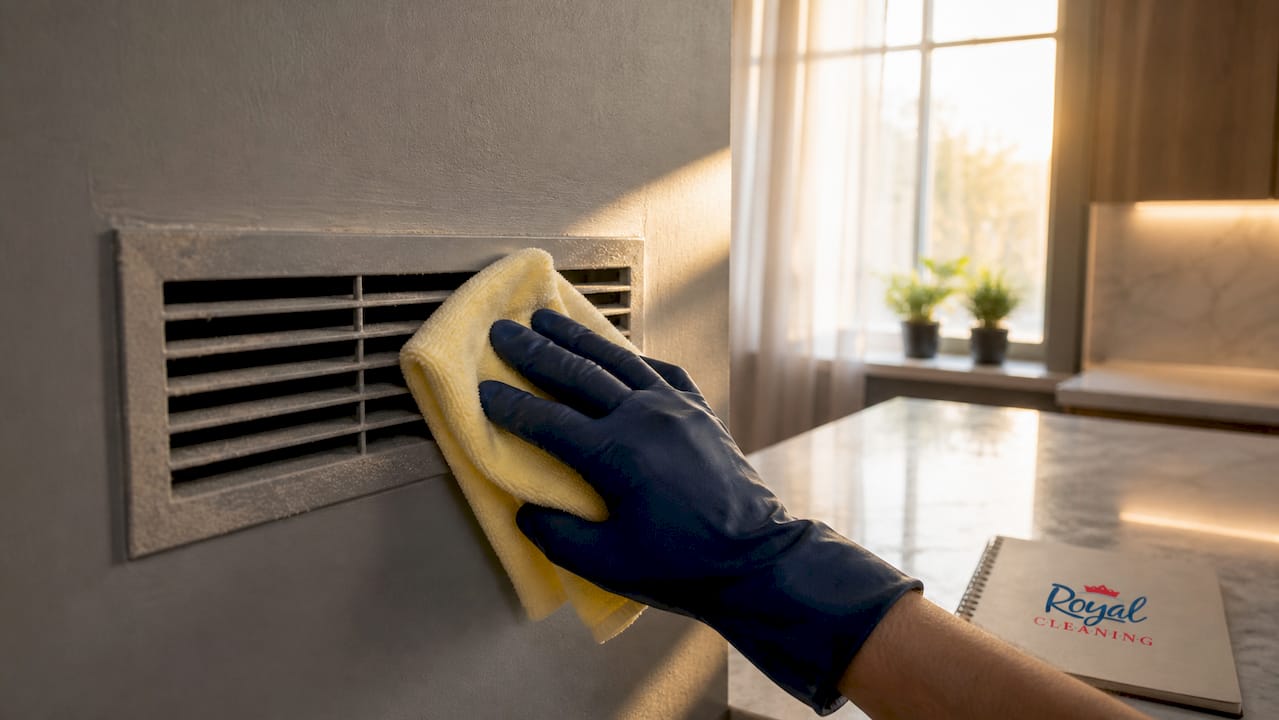
Dust and debris inside ductwork act as a reservoir for allergens. Accumulated dust in ducts causes uneven airflow, internal pressure issues, and drives up energy use by 20–30%. Beyond the energy cost, that dust carries pollen, pet dander, mold spores, and bacteria directly into the air you breathe.
The health effects are most noticeable for people with allergies or asthma. A contaminated HVAC system can trigger:
- Increased allergy symptoms including sneezing, runny nose, and itchy eyes
- Asthma flare-ups from airborne mold spores and fine particulate matter
- Headaches and fatigue linked to poor indoor air circulation
- Respiratory irritation from volatile compounds released by mold colonies in damp ducts
Mold growth is a particular concern. When debris traps moisture inside ducts or on the evaporator coil, mold colonies establish quickly. Once mold is present in ductwork, every heating and cooling cycle spreads spores throughout the home. Learning how to improve indoor air quality starts with addressing the debris that allows mold to take hold.
The fix is not just changing your air filter. A MERV 11 or MERV 13 filter catches more particles than a basic fiberglass filter, but it cannot clean debris that is already inside the ducts. That requires a dedicated cleaning process.
Common homeowner mistakes that make debris damage worse
Most debris-related HVAC damage is not caused by the debris alone. It is made worse by the wrong response to it.
The most damaging mistake is using compressed air to clear a clogged condensate drain line. Compressed air can crack PVC, separate pipe joints, or push the blockage deeper into the drain system. A wet/dry vacuum or a purpose-made condensate line flush kit is the correct tool for this job.
Delaying coil cleaning is the second most common mistake. Homeowners often wait until the system stops cooling effectively before addressing dirty coils. By that point, the efficiency losses have been compounding for months, and the coil fins may already be corroded. Scheduling coil cleaning once per year prevents this from happening.
DIY duct cleaning with a household vacuum is another problem. Standard vacuums do not create enough suction to remove debris from deep inside duct runs, and they can dislodge settled dust and push it back into the living space. This makes air quality worse, not better.
Pro Tip: Never use a leaf blower to clear debris from around your outdoor condenser. The force pushes fine particles directly into the coil fins, embedding them deeper than hand removal would. Use a soft brush or a garden hose on a low setting instead.
Neglecting the area around the outdoor unit is also a frequent oversight. Overgrown shrubs, grass clippings, and storm tree debris pile up against the unit and restrict airflow before any debris even enters the system.
Best practices for HVAC debris removal and maintenance
Consistent maintenance is the most reliable way to protect your HVAC system from debris damage. The U.S. Department of Energy recommends trimming foliage back two feet around outdoor condenser units to maintain airflow and prevent debris contact. That two-foot clearance also makes it easier to inspect the unit after storms.
Here is how DIY maintenance compares to professional service:
| Task | DIY Approach | Professional Service |
|---|---|---|
| Air filter replacement | Every 1–3 months, MERV 11+ filter | Included in annual tune-up |
| Condenser coil cleaning | Garden hose rinse, exterior fins only | Chemical treatment, full coil access |
| Evaporator coil cleaning | Limited access, surface wipe only | Full cleaning with approved coil cleaner |
| Duct cleaning | Household vacuum, limited reach | Negative air pressure extraction system |
| Condensate drain flush | Vinegar flush, wet/dry vac | Camera inspection, full line clearing |
The negative air pressure duct cleaning method is the industry standard recognized by NADCA and the EPA. It uses a powerful vacuum to create negative pressure inside the duct system, pulling debris out rather than pushing it around. This prevents dislodged particles from dispersing into your living space during the cleaning process.
Regular cleaning of coils and condensate lines can reduce HVAC energy bills by 20–30% by removing the insulating debris layers that force the system to work harder. That savings compounds year over year. Scheduling duct maintenance for cleaner air at least once every three to five years is the standard recommendation, with more frequent service for homes with pets, allergy sufferers, or recent renovation work.
Key takeaways
Debris directly degrades HVAC efficiency and indoor air quality by clogging coils, filters, and ducts, forcing longer runtimes, higher energy costs, and faster component wear.
| Point | Details |
|---|---|
| Coil fouling is costly | A dust layer under 0.05 inches thick reduces heat transfer efficiency by over 21%. |
| Energy bills rise fast | Dirty coils and clogged filters can increase energy consumption by up to 45% combined. |
| Air quality suffers indoors | Debris in ducts circulates allergens, mold spores, and fine particles through your home. |
| DIY mistakes cause damage | Compressed air on condensate lines and household vacuums in ducts worsen the problem. |
| Professional cleaning pays off | Regular coil and duct cleaning reduces energy bills by 20–30% per year. |
What i’ve learned about debris and HVAC longevity
I have seen a lot of HVAC systems in Albuquerque homes, and the ones that fail early almost always have the same story. The homeowner noticed the system was running longer than usual, assumed it was just the summer heat, and waited. By the time they called for service, the condenser coil was packed with cottonwood and caliche dust, the evaporator coil had a visible dust mat on it, and the condensate drain had been overflowing into the wall for who knows how long.
The part that surprises most people is how little debris it takes to cause real damage. That 0.042-inch dust layer on a heat exchanger is not visible to the naked eye. You cannot look at your coil and know it is losing 21% efficiency. That is exactly why waiting for symptoms is the wrong approach.
What I tell homeowners is this: treat HVAC maintenance the same way you treat an oil change. You do not wait for the engine to knock before changing the oil. You follow a schedule because you know the cost of neglect is far higher than the cost of prevention. The same logic applies here. Cleaning your air ducts regularly is not a luxury. It is basic home maintenance that protects a system you depend on every day.
The other thing worth saying plainly: DIY maintenance has real limits. Rinsing the outside of your condenser with a garden hose is useful. But it does not address the evaporator coil, the duct interior, or the condensate system. Those components need professional tools and trained hands to clean properly.
— Bernadette
How Royal Carpet and Tile Cleaning helps protect your HVAC system
If your HVAC system has been running harder than usual, or if you have noticed more dust on surfaces and worsening allergy symptoms, debris buildup is likely the cause. Royal Carpet and Tile Cleaning provides professional air duct and vent cleaning services for homeowners in Albuquerque, Rio Rancho, and surrounding areas. The team uses negative air pressure extraction equipment to remove debris from deep inside duct systems without dispersing contaminants into your living space.
Every service includes a thorough inspection of your duct system, filter assessment, and recommendations for ongoing maintenance. Royal Carpet and Tile Cleaning’s approach is transparent, health-focused, and backed by a satisfaction guarantee. Discover the full benefits of air duct cleaning and see how a professional cleaning can lower your energy costs and improve the air your family breathes every day. Contact Royal Carpet and Tile Cleaning today to schedule your service.
FAQ
How often should i change my HVAC air filter?
Change your air filter every one to three months, depending on pet ownership, allergy sensitivity, and local dust levels. Homes in dusty areas like Albuquerque benefit from monthly checks.
Can debris in my HVAC system make allergies worse?
Yes. Debris inside ducts and on coils harbors pollen, pet dander, and mold spores that circulate through your home every time the system runs, directly worsening allergy and asthma symptoms.
What is the safest way to clean a clogged condensate drain line?
Use a wet/dry vacuum or a purpose-made condensate flush kit with diluted white vinegar. Avoid compressed air, which can crack PVC pipes or push the blockage deeper into the drain system.
How much can dirty coils increase my energy bill?
Dirty condenser coils increase energy consumption by up to 30%, and clogged air filters add another 5–15%. Regular coil cleaning can reduce energy bills by 20–30% annually.
When should i call a professional for HVAC debris removal?
Call a professional when you notice reduced airflow, unusual odors, visible mold near vents, or if your system has not had a coil or duct cleaning in more than two years.