(505) 280-5216
How Clean Homes Protect Children: Eco-Friendly Safety Guide
TL;DR:
- Keeping a clean home reduces children’s exposure to harmful chemicals and allergens, but proper cleaning methods are essential. Routine cleaning with soap and water is usually sufficient, while stronger disinfectants should be used only when necessary, always with adequate ventilation. Eco-friendly products are not automatically safer; outdoor airflow during cleaning and cautious use of natural fragrances are vital to minimize risks for vulnerable children.
Cleaning products injure thousands of children every year, and common household cleaners involving bleach and detergents are frequently implicated through ingestion, skin contact, and inhalation. Many Albuquerque parents reach for products labeled “natural” or “eco-friendly” and reasonably assume the job is done safely. But that assumption is worth examining closely. The label on a bottle tells only part of the story. This guide walks you through what truly protects your children at home: the right cleaning methods, the right products, and the habits that make the real difference.
Table of Contents
- Why cleaning is central to child health and safety
- The right way to clean: Safe methods for everyday and high-risk situations
- Risks to watch: When eco-friendly cleaning is not enough
- Beyond cleaning: Air quality, allergies, and the limits of home hygiene
- A realistic approach to cleaning and child safety: What most guides miss
- Eco-friendly cleaning services for safer homes in Albuquerque
- Frequently asked questions
Key Takeaways
| Point | Details |
|---|---|
| Routine cleaning is crucial | Basic cleaning with soap and water is the backbone of a healthy, child-safe home. |
| Not all ‘green’ products are safe | Even eco-friendly products can cause harm without proper use and ventilation. |
| Ventilation reduces risk | Opening windows and safe storage can greatly limit children’s exposure to chemicals. |
| Care for allergies and asthma | Cleaning reduces dust but should be combined with other health measures for sensitive children. |
| Service provider practices matter | Choose cleaning services that align eco-friendly claims with strict safety protocols in your home. |
Why cleaning is central to child health and safety
Keeping a clean home is one of the most direct ways you protect your children from illness and chemical exposure. But not all cleaning decisions are equal, and understanding the real risks helps you make better choices every day.
Routine cleaning for safety means that soap, water, and scrubbing removes dirt and many germs effectively, and for most everyday situations, that is genuinely enough. Deeper methods like sanitizing or disinfecting become necessary only when someone in the household is sick or when there is a specific hygiene risk. This distinction matters because stronger products carry stronger risks for children.
Why are children more vulnerable than adults? Green cleaning for child safety explains it clearly: children breathe faster relative to their body weight, their developing systems process chemicals differently, and their natural hand-to-mouth behaviors mean they regularly contact surfaces that have been cleaned. A toddler crawling across a freshly mopped floor is picking up residue on their hands and putting those hands in their mouth within minutes.
Understanding how home cleanliness improves health air quality is also part of this picture. Cleaning affects not just surfaces but the air your children breathe indoors, especially when products release volatile organic compounds (VOCs) during and after use.
Top reasons cleaning matters for child safety:
- Children spend more time on floors and low surfaces where dust, residue, and contaminants concentrate
- Developing immune and respiratory systems are more sensitive to chemical irritants
- Hand-to-mouth behavior means surface residue becomes ingestion risk
- Indoor air quality directly affects lung health, especially for children with asthma or allergies
- Untreated mold, dust mite allergens, and pet dander can trigger chronic respiratory issues
Common cleaning product risks and safer alternatives:
| Product | Risk to children | Safer alternative |
|---|---|---|
| Bleach solutions | Skin/eye burns, respiratory irritation, toxic fumes if mixed | Diluted hydrogen peroxide or EPA-certified disinfectants |
| Scented detergents | Fragrance irritants, potential allergens, asthma triggers | Fragrance-free, unscented formulas |
| Aerosol sprays | Inhalation of fine particles, VOC spikes | Trigger spray bottles with concentrated solutions |
| “Green” products with essential oils | Skin and respiratory irritants in sensitive children | Truly fragrance-free, certified non-toxic formulas |
| Multi-surface cleaners with ammonia | Eye and lung irritation, dangerous if mixed with bleach | Plain soap and water for most surfaces |
“Children are more vulnerable to toxic cleaning products because of their rapid breathing, developmental status, and hand-to-mouth behaviors.” — American Academy of Pediatrics
The right way to clean: Safe methods for everyday and high-risk situations
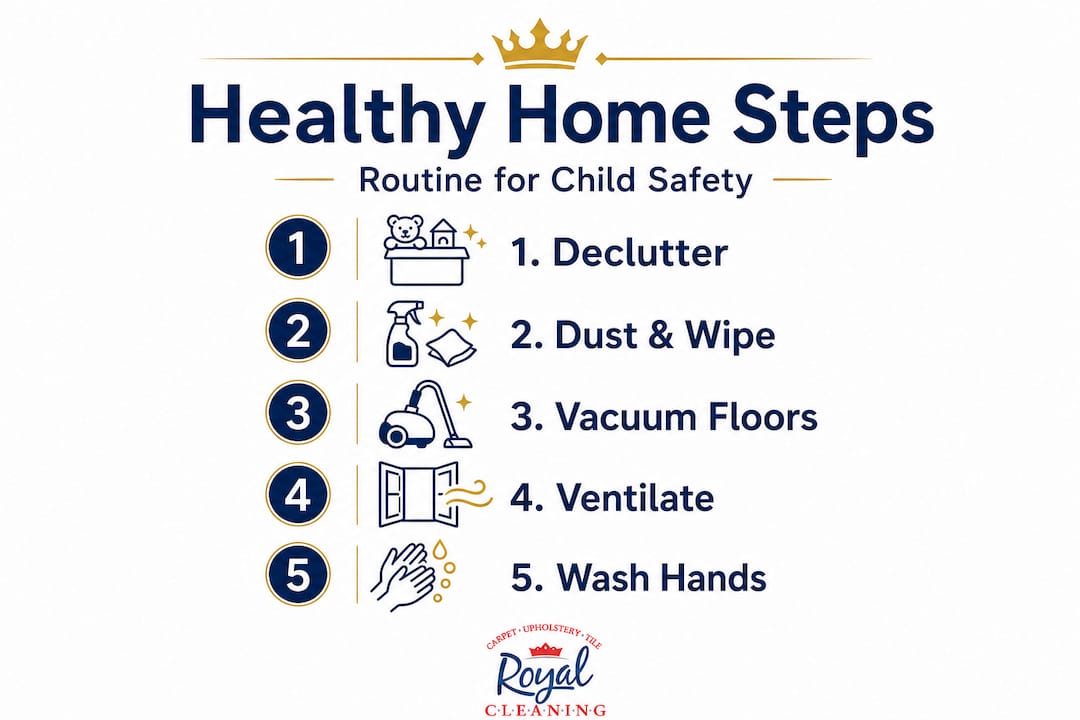
Knowing why child safety and cleaning are connected is step one. Step two is knowing exactly how to clean in a way that protects your family. The key principle is always starting with the least toxic method and escalating only when the situation genuinely calls for it.
Safe cleaning mechanics follow a clear, evidence-based sequence that every parent can apply at home, whether you are cleaning yourself or overseeing a service provider.
Step-by-step safe cleaning flow for child-safe homes:
- Start with routine cleaning. Use soap and water with physical scrubbing to remove visible dirt, grease, and organic matter. This step is non-negotiable before applying any sanitizer or disinfectant, because these products do not work properly on dirty surfaces.
- Evaluate the risk level. Ask: Is anyone in the household currently sick? Is this a surface with frequent direct contact, like a cutting board or a toilet? If not, routine cleaning is likely sufficient.
- Sanitize or disinfect only when warranted. Apply the appropriate product to a clean surface. Always read and follow the label’s contact time, which is the amount of time the product must stay wet on the surface to be effective.
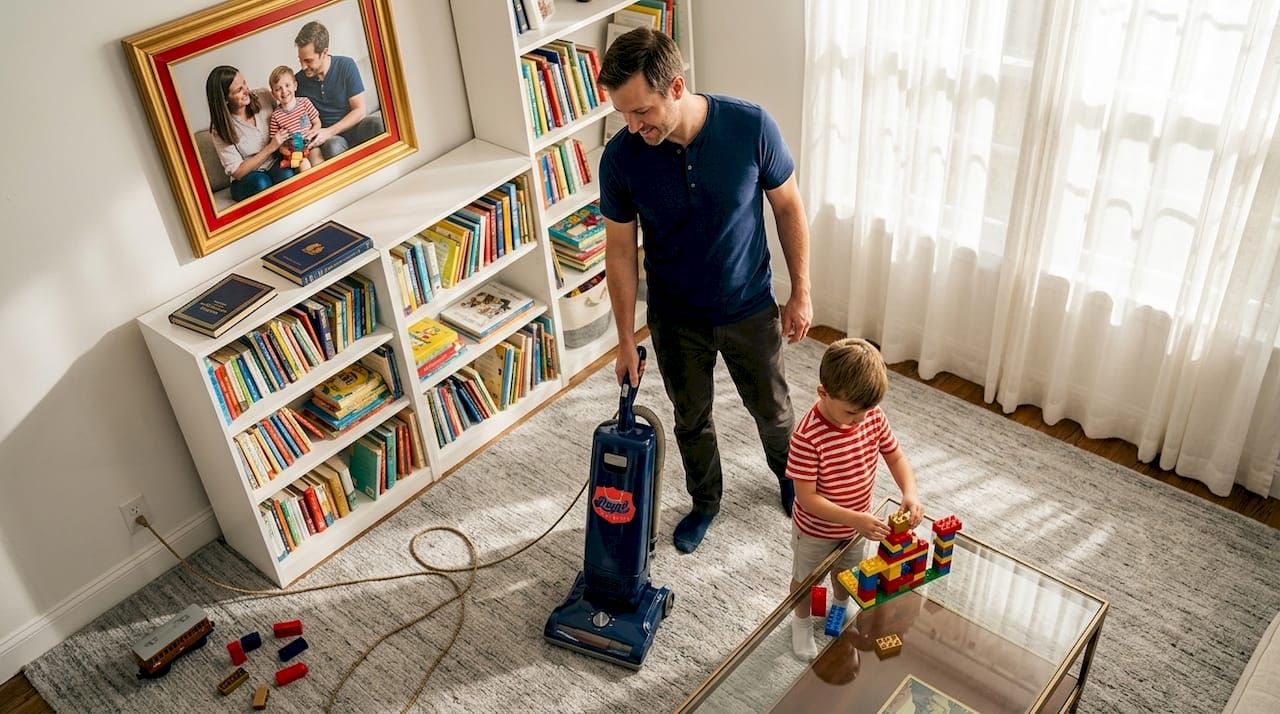
- Ventilate the space. Open windows, run exhaust fans, and allow fresh air to circulate during and after cleaning. This is one of the most effective ways to reduce your children’s exposure to indoor chemical byproducts.
- Keep children and pets out of the room. Wait until all surfaces have fully dried before allowing your children back into the cleaned area. Wet residue on floors and low surfaces poses a direct contact and ingestion risk.
- Store all products securely. Lock cleaning products away in cabinets that young children cannot open. This single habit prevents a significant proportion of accidental poisonings.
For expert cleaning tips for homeowners, this sequence applies whether you are using conventional products or certified eco-friendly ones.
Pro Tip: For children with asthma or known respiratory sensitivities, choose fragrance-free and unscented products without exception. Even “natural” fragrances from essential oils can trigger asthma episodes. The safest rule is: if it has a noticeable scent, use it with extra caution and always with maximum ventilation.
What to do when a child is sick at home:
When one of your children is ill, especially with a respiratory or gastrointestinal illness, you can and should escalate your cleaning routine. Focus disinfection efforts on high-touch surfaces: doorknobs, light switches, toilet handles, faucet handles, and shared devices. Keep the sick child’s room ventilated. Clean hands thoroughly after contact with contaminated surfaces, and launder bedding on a warm cycle. Once the illness resolves, return to your routine cleaning approach.
Risks to watch: When eco-friendly cleaning is not enough
Many families in Albuquerque feel confident once they switch to eco-friendly cleaning products. That confidence is understandable, but it sometimes leads to overlooked risks. The product label is not the whole story.
VOC exposure during cleaning shows that real-time air quality measurements detect spikes in volatile organic compounds during cleaning activity, regardless of whether a product is labeled green or conventional. The timing of cleaning, how the product is applied (spray versus wipe), and whether windows are open all affect your child’s actual exposure more than the ingredient label alone.
Fragrance is another hidden risk. Fragrances and asthma is a documented concern, and many eco-friendly products use natural essential oils as scenting agents. These can still irritate the airways of children with asthma or sensitivities, even when derived from plant sources.
Hidden risks in eco-friendly cleaning products:
- Natural essential oils (lavender, eucalyptus, citrus) can act as respiratory irritants
- Plant-derived surfactants may still cause skin irritation in sensitive children
- Aerosol eco-sprays disperse fine particles that land deep in children’s airways
- Improper ventilation during green cleaning still causes VOC buildup indoors
- Products marketed as biodegradable may still contain preservatives or stabilizers with irritant potential
Green claims vs. true safety measures:
| Green marketing claim | What it actually means | What truly protects children |
|---|---|---|
| “Natural ingredients” | Derived from plant sources, but not inherently non-toxic | Fragrance-free, certified non-toxic formulas |
| “Biodegradable” | Breaks down in environment, not a safety statement | Using correct dilution ratios and ventilating |
| “Non-toxic” | Low acute toxicity in standard testing, not zero risk | Keeping kids out until surfaces dry |
| “Eco-certified” | Meets certain environmental standards | Verifying safety practices of the person cleaning |
| “Safe for families” | Marketing language without regulatory definition | Following label instructions and ventilating |
For families with children who have respiratory conditions, asthma safe carpet cleaning and home allergen reduction strategies go beyond product selection into professional-level approaches.
“Green does not automatically mean safe for children. Real-time measurements show peaks in VOCs during cleaning activity, making timing, ventilation, and application method as important as the ingredient list.” — Published research on pediatric VOC exposure
When evaluating an eco-friendly cleaning service for your home, ask direct questions. Find out what specific products they use and request documentation. Confirm that they ventilate properly during service. Ask whether they keep children and pets out of cleaned areas until surfaces are fully dry. A reputable provider will answer these questions without hesitation.
Beyond cleaning: Air quality, allergies, and the limits of home hygiene
Cleaning is essential, but it has real limits that parents of children with allergies or asthma need to understand. Knowing what cleaning can and cannot achieve helps you build a complete plan for your child’s health.
Research shows that cleaning and allergen reduction can reduce settled dust loadings in a home, but the results for specific allergens like dust mite proteins or pet dander are more nuanced. Cleaning interventions reduce the total amount of allergen in a space, but may not bring levels below the threshold that triggers symptoms in a sensitized child.
Cleaning method effectiveness on allergens and air quality:
| Cleaning method | Effect on settled dust | Effect on airborne allergens | Air quality improvement |
|---|---|---|---|
| Vacuuming with HEPA filter | High reduction | Moderate, temporary | Moderate |
| Damp mopping | High for hard floors | Low (does not affect air) | Low to moderate |
| Steam cleaning carpets | High deep-cleaning effect | Moderate reduction | Low without ventilation |
| Air duct cleaning | Indirect, reduces source | Moderate to high | High over time |
| Regular surface wiping | Moderate | Low | Low |
Pro Tip: If your child has diagnosed allergies or asthma, pair your cleaning routine with guidance from their pediatrician or allergist. Cleaning is one part of a larger management plan that may also include air filtration, mattress and pillow encasements, humidity control, and medication. Cleaning alone is rarely a complete solution for medically sensitive children.
For persistent symptoms despite regular cleaning, consider professional intervention. Deep cleaning for allergies addresses allergen buildup in carpets, upholstery, and air ducts at a level that routine home cleaning cannot match. Similarly, if you have concerns about HVAC systems circulating dust and allergens through your home, a professional air duct inspection and cleaning may be warranted.
Other pillars of child health remain important alongside your cleaning routine. Hand hygiene, regular pediatric check-ups, and age-appropriate vaccinations all play roles that no cleaning product or service can replace. Cleaning is a meaningful contribution to a healthy home, and it works best as part of a broader health strategy.
A realistic approach to cleaning and child safety: What most guides miss
Here is something most eco-friendly cleaning guides will not say directly: the product label matters less than what you actually do when you clean.
Parents spend a lot of energy reading ingredient lists and comparing certifications, which is not wasted effort. But we have seen Albuquerque families switch entirely to premium eco products and still have indoor air quality problems, because they were spraying products in enclosed rooms with windows shut, or letting children back onto wet floors, or storing products at child height. The cleaning behavior is what creates or removes the risk, not just the bottle.
Broader perspective on cleaning, hand hygiene, and vaccines from pediatric guidance is worth noting here: over-disinfecting every surface in your home on a daily basis is not only unnecessary, it can become a source of chemical exposure in itself. Routine cleaning with soap and water remains the backbone of a safe home environment. Reserve stronger products for situations that genuinely need them.
There is also a tendency to treat professional cleaning as a replacement for consistent home habits. It is not. A professional home maintenance cleaning for health service handles what your routine cleaning cannot reach: deeply embedded allergens in carpets, contamination inside air ducts, or upholstery that traps years of dust and dander. But those benefits build on daily habits, not replace them.
The families who consistently achieve healthier homes do three things well: they clean routinely with simple, effective methods; they ventilate during and after any cleaning; and they call in professional support for the areas where household tools fall short. That combination, not any single product, is what actually works.
Eco-friendly cleaning services for safer homes in Albuquerque
Applying the principles in this guide is straightforward for daily cleaning tasks. But some areas of your home, like carpets where children play, upholstered furniture they sit and sleep on, and the air ducts circulating air through every room, require a level of cleaning that household equipment simply cannot reach.
At Royal Cleaning New Mexico, we offer child-safe, eco-friendly cleaning services designed with Albuquerque families in mind. Our professional carpet cleaning uses extraction methods that remove deeply embedded allergens, bacteria, and residue from the fibers where your children spend time every day. Our upholstery cleaning in Albuquerque addresses the fabric surfaces that accumulate dander, dust mites, and irritants over time. And our air duct cleaning in Albuquerque targets the source of circulated dust and allergens throughout your home. We use eco-friendly, fragrance-free product options, ventilate properly during all services, and keep your children’s safety as the standard for every job we take on.
Frequently asked questions
What should I do if my child touches or ingests cleaning products?
Immediately rinse the affected skin or mouth thoroughly with water, call Poison Control or your pediatrician, and keep the product container nearby for reference because cleaning products cause child injuries through multiple pathways that medical professionals need to identify quickly.
Are natural or eco-friendly cleaning products always safe for children?
No. Green cleaning products can still contain irritants, and natural fragrances from essential oils may trigger reactions in sensitive children, so ventilation and label review remain essential regardless of the product’s marketing.
How can I reduce my child’s exposure to cleaning chemicals during cleaning?
Open windows and use fans to ventilate the space, keep children and pets out of rooms being cleaned, and allow all surfaces to dry completely before allowing access, because proper ventilation significantly reduces indoor chemical byproduct accumulation.
Does cleaning alone solve all child allergy or asthma issues?
Not always. While cleaning reduces dust in the home, allergen concentration studies show that specific allergens may persist even after thorough cleaning, so medical guidance and environmental management strategies are also needed for sensitive children.
How do I check if an eco-friendly cleaning service is really child-safe?
Ask the provider directly about their specific products, ventilation practices, and whether they keep children and pets out of cleaned areas until surfaces are dry, because verifying the actual cleaning procedures matters as much as reviewing their eco-friendly claims.