(505) 280-5216
Home air purification: cleaner indoor air for Albuquerque
TL;DR:
- Home air purifiers use technologies like HEPA, activated carbon, UV-C, and ionizers to remove airborne pollutants.
- Effectiveness depends on proper sizing, regular filter maintenance, and integrating source control measures in Albuquerque homes.
- Combining filtration with duct cleaning and source reduction provides the best results for indoor air quality.
Regular vacuuming and dusting are good habits, but they don’t eliminate the microscopic particles floating in your home’s air right now. Albuquerque’s dry, windy climate pushes dust, pollen, and outdoor pollutants indoors constantly. Even well-kept homes carry allergens, volatile organic compounds (VOCs), and pathogens that settle into every room. Air purifiers remove airborne pollutants using advanced filters and technologies designed to target what you can’t see. This guide explains how home air purification works, compares the main technologies, and gives you practical steps to choose and maintain the right system for your Albuquerque home.
Table of Contents
- How home air purification works
- Comparing air purification technologies
- Effectiveness and real-world results in Albuquerque homes
- Choosing and maintaining your home air purification system
- Why source control and maintenance matter more than just air purifiers
- Connect with local experts for cleaner air and healthier homes
- Frequently asked questions
Key Takeaways
| Point | Details |
|---|---|
| HEPA filters remove particles | HEPA filters capture 99.97 percent of fine dust, pollen, and pet dander for noticeably cleaner air. |
| Albuquerque needs frequent maintenance | Due to local dust and pollen, replace filters regularly and check purification systems more often. |
| Source control is vital | Prevent indoor pollution at the source by banning smoking, fixing leaks, and ventilating before relying on devices. |
| Technology matters | Choose air purification systems with the right filters and CADR ratings to match your space and primary pollutants. |
How home air purification works
Air purification systems pull indoor air through a series of filters or treatment stages, then push cleaner air back into the room. The process repeats continuously, gradually reducing the concentration of pollutants with each pass. Devices draw indoor air through filters to remove dust, pollen, smoke, bacteria, and viruses in a single unit.
Here are the core technologies you’ll find in most home purification systems:
- HEPA filters (High-Efficiency Particulate Air): Capture 99.97% of particles at 0.3 microns or larger, including dust, pollen, mold spores, and pet dander.
- Activated carbon filters: Absorb VOCs, odors, and gases like formaldehyde that HEPA alone cannot trap.
- UV-C lights: Neutralize bacteria and viruses by damaging their DNA, adding a layer of pathogen control.
- Ionizers: Release charged ions that bind to fine airborne particles, causing them to drop out of the air or stick to surfaces.
Different technologies target specific pollutants: HEPA handles particles, carbon handles gases, UV-C handles pathogens, and ionizers handle fine airborne matter.
Two key metrics tell you how well a unit performs:
| Metric | What it measures | Why it matters |
|---|---|---|
| CFM (cubic feet per minute) | Volume of air processed per minute | Determines how quickly a room’s air turns over |
| CADR (clean air delivery rate) | Cleaned air delivered per minute for specific pollutants | Matches unit size to room size accurately |
Pro Tip: Look for the CADR rating on the product label. A unit with a CADR of 200 for dust is well-suited for a room up to about 300 square feet.
Understanding how these systems work also connects to your air duct sanitation workflow, since ducts can reintroduce contaminants even when your purifier is running. The EPA indoor air quality guidance consistently highlights that filtration works best when the entire system, ducts included, is clean.
Comparing air purification technologies
Now that you know the technologies, see how they compare in practical use. Each method has real strengths and real limitations.
| Technology | Best for | Limitation |
|---|---|---|
| HEPA filtration | Dust, pollen, pet dander, mold spores | Does not remove gases or odors |
| Activated carbon | VOCs, smoke odors, chemical gases | Does not capture particles |
| UV-C light | Bacteria, viruses | Effectiveness varies with exposure time |
| Ionizer | Fine particles | May produce ozone |
| HVAC-integrated filters | Whole-home particle reduction | Requires MERV-13 or higher rating |
Mechanical filtration, adsorption, UV-C, and ionization each target different pollutants, and each carries specific limitations and risks you should weigh before buying.
For Albuquerque homeowners dealing with seasonal pollen and year-round dust, HEPA combined with activated carbon is the most practical starting point. UV-C adds value if you have family members with respiratory conditions or compromised immune systems. Just keep in mind that UV-C needs adequate contact time to fully neutralize pathogens, so a unit where air moves too quickly past the lamp may deliver limited benefit.
Ionizers require extra caution. Ionizers may produce ozone, and the EPA flags ozone as a health concern, especially for children, older adults, and people with asthma. If you choose an ionizer, confirm it meets California Air Resources Board (CARB) certification for ozone output.
Portable units offer flexibility. You can move them room to room and size them precisely to the space. HVAC-integrated options, by contrast, treat the whole home but require professional installation and regular home allergen removal practices to stay effective.
Pro Tip: A DIY box-fan HEPA filter setup costs under $50 and can meaningfully cut particle levels in a single room. It’s a solid option while you research a permanent solution.
For a broader look at reducing allergens throughout your home, the home allergen reduction resource covers complementary steps beyond filtration. The EPA smoke exposure strategies guide also offers practical advice for wildfire smoke events, which increasingly affect New Mexico.
“No single technology handles every pollutant. The most effective approach layers two or more technologies and combines them with source control.”
Effectiveness and real-world results in Albuquerque homes
Understanding each technology is key, but real results come down to proper use and local challenges. Lab numbers don’t always translate directly to your living room.
Portable HEPA purifiers reduce PM2.5 (fine particulate matter) by 50 to 80 percent, HVAC systems with MERV-13 or higher filters cut particulate exposure by roughly 50 percent, and UV-C combined with HEPA can reduce viruses by up to 99.8 percent under controlled conditions.
Here’s what affects real-world performance in Albuquerque homes:
| Factor | Impact on performance |
|---|---|
| Room size vs. CADR match | Undersized unit reduces effectiveness significantly |
| Bypass leaks in ducts | Bypass leaks drop CADR by up to 15% |
| Air turbulence and layout | Open floor plans dilute purified air faster |
| Filter condition | Clogged filters cut airflow and capture rates |
| Placement | Central placement away from walls improves circulation |
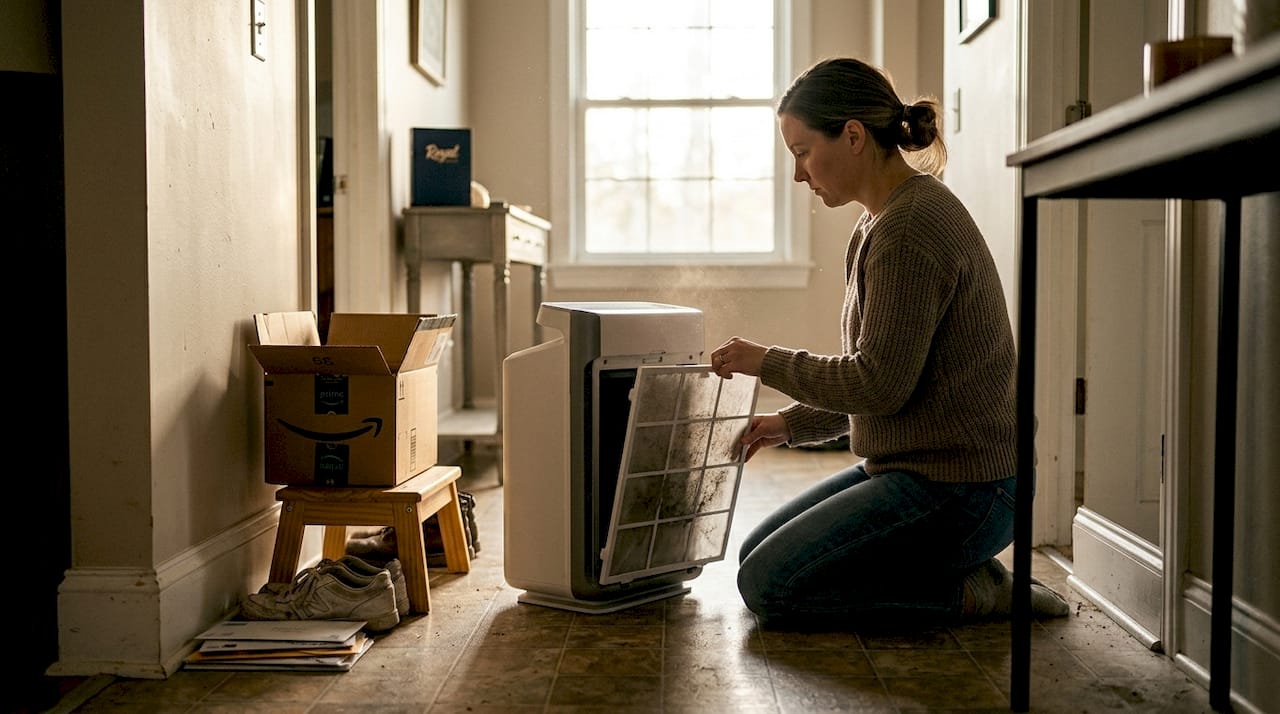
Albuquerque’s dust levels are higher than most U.S. cities, so HEPA filters need replacement every 6 to 12 months, and possibly more often during high-wind seasons. Skipping filter changes is the single most common reason purifiers stop performing.
Follow these steps to get the best results:
- Size your unit correctly using the CADR rating for your room’s square footage.
- Place the purifier in the center of the room or near the primary source of pollutants.
- Keep doors and windows closed when the unit is running to avoid pulling in fresh outdoor dust.
- Check pre-filters monthly and clean or replace them as needed.
- Schedule air duct filter replacement at least once a year to prevent duct contamination from undermining your purifier’s work.
- Pair purification with source control: no indoor smoking, fix moisture leaks promptly, and ventilate when cooking.
Pro Tip: Set a phone reminder every three months to check your filters. In Albuquerque, waiting the full 12 months often means running a clogged filter for half that time. You can also schedule duct maintenance to keep your full system in top shape.
Choosing and maintaining your home air purification system
You’ve seen the science and real-world results. Now learn how to make the right choices for your Albuquerque home.
Start with room size. CADR should match room size and pollutant sources, and ENERGY STAR-certified air cleaners save over 25 percent more energy than standard models. For a 300 square foot room, look for a CADR between 195 and 260 CFM.
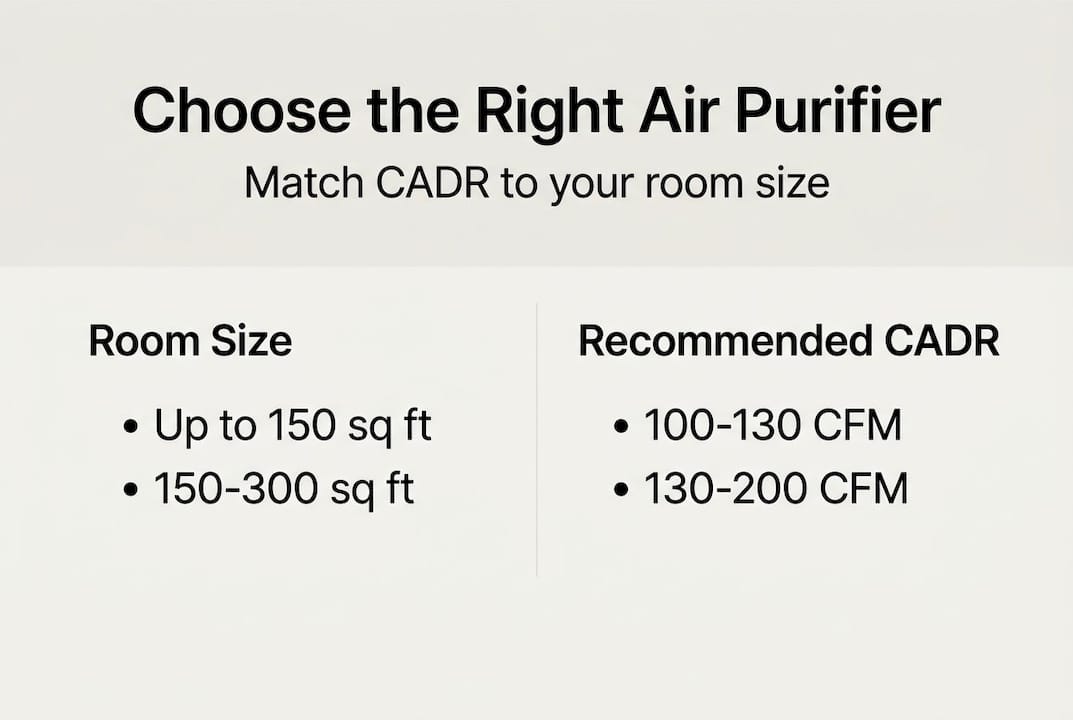
Here’s a quick sizing reference:
| Room size (sq ft) | Recommended CADR (CFM) |
|---|---|
| Up to 150 | 100 to 130 |
| 150 to 300 | 130 to 200 |
| 300 to 500 | 200 to 330 |
| 500 to 700 | 330 to 460 |
Oversizing wastes energy, and undersizing delivers poor air quality. Replacing HEPA filters every 6 to 12 months is essential, especially in Albuquerque where dust loads are heavier than average.
Key selection and maintenance steps:
- Choose ENERGY STAR-certified models to reduce operating costs over time.
- Confirm the unit carries a CADR rating from AHAM (Association of Home Appliance Manufacturers) for verified performance.
- Select a model with both HEPA and activated carbon filters for broad-spectrum coverage.
- Avoid ionizers without CARB certification to minimize ozone risk.
- Review the air duct filter replacement guide to coordinate purifier and duct filter schedules.
Additional best practices:
- Run your purifier on its highest setting for the first hour after cooking or cleaning.
- Keep replacement filters on hand so you don’t delay swaps when the time comes.
- Combine purification with regular professional air duct cleaning to prevent duct-borne contaminants from cycling back into your rooms.
- Consider EPA DIY air cleaners as a backup option during high-smoke or high-dust events.
Pro Tip: Buy an extra set of filters when you purchase your unit. Prices fluctuate, and having spares means you’ll never delay a critical filter change.
Why source control and maintenance matter more than just air purifiers
Most homeowners buy a purifier, set it in the corner, and assume the job is done. We’ve seen this pattern repeatedly in Albuquerque homes, and it consistently leads to disappointment.
The honest truth is that an air purifier is one tool in a larger system, not a complete solution on its own. EPA recommends source control and ventilation before relying on filters, because reducing pollutants at the source is always more effective than trying to capture them after they’ve spread through your home.
Albuquerque’s environment makes this even more critical. High dust and pollen levels mean filters clog faster, and a clogged filter doesn’t just lose effectiveness. It can actually restrict airflow and make your HVAC system work harder. DIY solutions and consistent upkeep can outperform expensive devices when the basics are neglected.
Filter maintenance is a critical and often neglected part of the puzzle. We always recommend pairing any purification system with a consistent duct maintenance schedule, because clean ducts mean your purifier isn’t fighting a losing battle against contaminants cycling through your vents. The best investment you can make isn’t always a more expensive device. Sometimes it’s just showing up for the maintenance.
Connect with local experts for cleaner air and healthier homes
If you’re ready to take the next step toward cleaner air, local expertise makes a real difference. A purifier works best when the rest of your home is clean, and that includes your air ducts, carpets, and upholstery.
At Royal Cleaning New Mexico, we help Albuquerque homeowners reduce allergens and airborne pollutants through professional cleaning services that complement your purification system. Our air duct cleaning service removes the built-up dust and debris that undermines even the best purifiers. Pair that with our carpet cleaning and upholstery cleaning services for a complete indoor air quality approach. Contact us today to schedule a service and start breathing easier in your home.
Frequently asked questions
What pollutants do home air purifiers remove?
Home air purifiers remove dust, pollen, pet dander, smoke, VOCs, bacteria, and viruses, though not all models handle gases or odors effectively. Always check the filter types included before purchasing.
How often should filters be changed in Albuquerque?
Replace HEPA filters every 6 to 12 months, and check more frequently given Albuquerque’s high dust levels to maintain consistent performance. Filter maintenance is critical for sustained purification results.
Can air purifiers remove all indoor air contaminants?
No. Purifiers cannot remove CO2 or every pollutant, and effectiveness depends on multiple factors including unit sizing, filter type, and combining filtration with proper ventilation and source control.
Are ionizer air purifiers safe?
Ionizer purifiers may produce ozone, which can pose health risks, and EPA advises caution especially for children, older adults, and people with asthma or other respiratory conditions.
Is DIY air purification effective?
Yes. DIY air cleaner solutions using a box fan and HEPA filter are widely recommended and can significantly reduce particulate pollution at a fraction of the cost of commercial units.