(505) 280-5216
Hard surface cleaning: your guide to a healthier home
TL;DR:
- Proper hard surface cleaning removes up to 96% of microbes, allergens, and contaminants.
- Techniques like vacuuming, chemical pre-treatment, agitation, and extraction are essential for effective cleaning.
- Professional cleaning improves indoor air quality but requires careful method selection to avoid temporary particle spikes.
Your floors look clean. You mopped last weekend, wiped down the counters, and everything looks fine. But cleaning reduces floor microbes by 96% only when the right methods are used at the right depth, and a quick once-over rarely qualifies. For Albuquerque homeowners dealing with desert dust, dry air, and allergens that settle deep into porous surfaces, understanding true hard surface cleaning is one of the most practical steps you can take for your family’s health and your home’s long-term value. This guide covers what hard surface cleaning really means, how it works, what mistakes to avoid, and how it directly affects the air your family breathes every day.
Table of Contents
- What is hard surface cleaning and why does it matter?
- The science and methods of hard surface cleaning
- Surface-specific tips and common mistakes to avoid
- How hard surface cleaning impacts your indoor air quality
- Why the “sparkling floor” myth is holding Albuquerque homeowners back
- Get professional hard surface cleaning for a truly healthier home
- Frequently asked questions
Key Takeaways
| Point | Details |
|---|---|
| More than surface shine | True hard surface cleaning significantly improves hygiene and can boost indoor air quality. |
| Method matters | Using the right process and products for each surface is crucial to avoid damage and achieve top results. |
| Healthier air with caution | Cleaning removes allergens but can temporarily raise air particles, so always ventilate and use HEPA equipment. |
| Professional value | Expert services deliver deeper results with specialized tools and help maintain your home’s health over time. |
What is hard surface cleaning and why does it matter?
Hard surface cleaning is not the same as routine mopping or wiping down countertops. It refers to the thorough removal of dirt, microbial contamination, allergens, and chemical residue from rigid, non-textile floor and wall surfaces using targeted tools, controlled pressure, and appropriate cleaning agents.
Common hard surfaces in Albuquerque homes include:
- Ceramic and porcelain tile
- Natural stone, including travertine, slate, and marble
- Hardwood and engineered wood floors
- Laminate and luxury vinyl plank (LVP)
- Polished or stained concrete
- Grout lines between tile and stone
One of the biggest misconceptions is that a surface looks clean, so it is clean. That is not how contamination works. Allergens, bacteria, mold spores, and dust mite debris settle into grout lines, surface micro-scratches, and porous stone where they stay invisible to the eye but very active in your air. For families with respiratory conditions or allergies, this invisible layer is a real problem.
Why this matters in Albuquerque specifically: The high desert environment brings fine particulate matter indoors consistently. Wind-blown soil, pollen from local vegetation, and naturally low humidity create conditions where allergens accumulate faster on surfaces than in many other regions. Regular visual cleaning simply cannot keep up.
Proper cleaning improves hygiene and air quality, but it can also temporarily raise fine particle levels (PM2.5 by 0.7 to 14.5 micrograms per cubic meter) and total volatile organic compounds (TVOCs by 10 to 104 parts per billion by volume) if the wrong products or methods are used. That is why understanding how to clean correctly matters just as much as cleaning at all. Focusing on improving indoor air quality starts at floor level, and it starts with choosing the right approach.
The science and methods of hard surface cleaning
Understanding what actually happens during a professional hard surface cleaning helps you evaluate whether your current routine is enough, and know when to call in expert support.
Key methodologies for hard surface cleaning follow a structured sequence. Here is how a professional process typically works:
- Dry debris removal: Vacuuming or dry sweeping removes loose soil, grit, and surface particles before any liquid is applied. Skipping this step pushes debris deeper into grout and surface texture.
- Pre-treatment and chemical application: A cleaning agent matched to the surface type and soil level is applied and allowed to dwell. This dwell time lets the chemistry break down grease, mineral deposits, and biological matter before mechanical agitation begins.
- Agitation: Mechanical scrubbing, rotary brushes, or hand-agitation works the cleaning solution into the surface. This step is where most DIY cleaning falls short, because light mopping rarely creates enough friction to loosen embedded soil.
- Extraction: A rotary extraction tool or wet vacuum removes the suspended soil and cleaning solution. For tile and grout, tile and grout cleaning details show how professional equipment operates at 800 to 1,200 PSI, which thoroughly flushes grout channels without damaging intact surfaces.
- Finishing: Depending on the surface, this may include sealing, polishing, or applying a protective coat to extend the clean and prevent rapid re-soiling.
Pro Tip: When using a rotary extraction tool, make slow, overlapping passes rather than quick single passes. Each overlap increases the amount of soil extracted and reduces the chance of leaving cleaning solution residue behind, which can actually attract more dirt over time.
Here is a comparison of the main professional cleaning methods and how they apply to different hard surfaces:
| Method | Best surfaces | Pressure/heat | Pros | Cons |
|---|---|---|---|---|
| Rotary extraction | Tile, grout, concrete | 800 to 1,200 PSI | Deep soil removal, fast drying | Not suitable for damaged grout or delicate stone |
| Steam cleaning | Sealed stone, ceramic tile | Low PSI, high heat | Chemical-free, sanitizing | Can damage unsealed wood or stone |
| Damp mopping with pH-neutral cleaner | Hardwood, laminate, LVP | Hand pressure only | Safe, controlled, gentle | Limited to surface-level cleaning |
| Manual scrubbing | All surfaces (spot treatment) | Manual force | Precise, no equipment needed | Labor-intensive, inconsistent results |
| Stripping and waxing | Vinyl composite tile (VCT) | Chemical strip, then buffer | Restores finish, adds protection | Harsh chemicals, not for all surfaces |
| Polishing and sealing | Stone, polished concrete | Low-speed buffer | Protects surface, improves appearance | Requires professional technique |
pH-neutral cleaners deserve special attention. On delicate surfaces like marble, travertine, or some engineered wood products, acidic cleaners (even diluted vinegar) can cause etching or strip protective coatings. A pH-neutral product sits at a 7 on the pH scale, meaning it cleans effectively without reacting chemically with the surface material. The 5-step deep cleaning process we use for tile and grout in Albuquerque homes always starts with a pH-appropriate chemical match before any tool touches the floor.
Surface-specific tips and common mistakes to avoid
Once you know the methods, it is critical to match your approach to your specific surfaces. The wrong product or technique does not just clean poorly, it can cause permanent damage that requires costly repairs or full replacement.
Matching method to surface type is one of the most important rules in hard surface care. Here is a clear comparison of correct versus incorrect cleaning approaches by surface:
| Surface | Correct method | What to avoid |
|---|---|---|
| Ceramic/porcelain tile | Rotary extraction, pH-neutral cleaner | Abrasive scrubbers, acidic cleaners |
| Natural stone (marble, travertine) | pH-neutral cleaner, soft mop, professional sealing | Vinegar, lemon-based cleaners, steam on unsealed stone |
| Hardwood | Minimal water damp mop, manufacturer-approved cleaner | Excess water, steam cleaners, harsh detergents |
| Laminate flooring | Damp mop, no-rinse pH-neutral product | Wet mopping, wax, solvent-based cleaners |
| Luxury vinyl plank (LVP) | Soft mop, mild pH-neutral cleaner | Floor strippers, polish, steam on glued edges |
| Polished concrete | Specialty concrete cleaner, periodic sealing | Acidic products, abrasive pads that remove the polish layer |
| Grout lines | Rotary extraction at correct PSI, grout sealer post-clean | High PSI on damaged grout, bleach without rinsing |
Common mistakes Albuquerque homeowners make:
- Using white vinegar as a “natural” cleaner on stone or tile floors (it etches marble and can degrade grout over time)
- Leaving standing water on hardwood or laminate floors, which causes swelling, warping, and delamination
- Applying floor stripper or wax to luxury vinyl plank, which was never designed for those products and can become permanently cloudy or tacky
- Skipping the grout sealing step after deep cleaning, which allows stains and moisture to reenter the grout channels immediately
Sealing grout after a professional deep clean is one of the most effective protective steps a homeowner can take. Properly applied grout sealer can prevent up to 90% of future staining, significantly extending the time between deep cleanings and keeping your floors looking their best with regular maintenance.
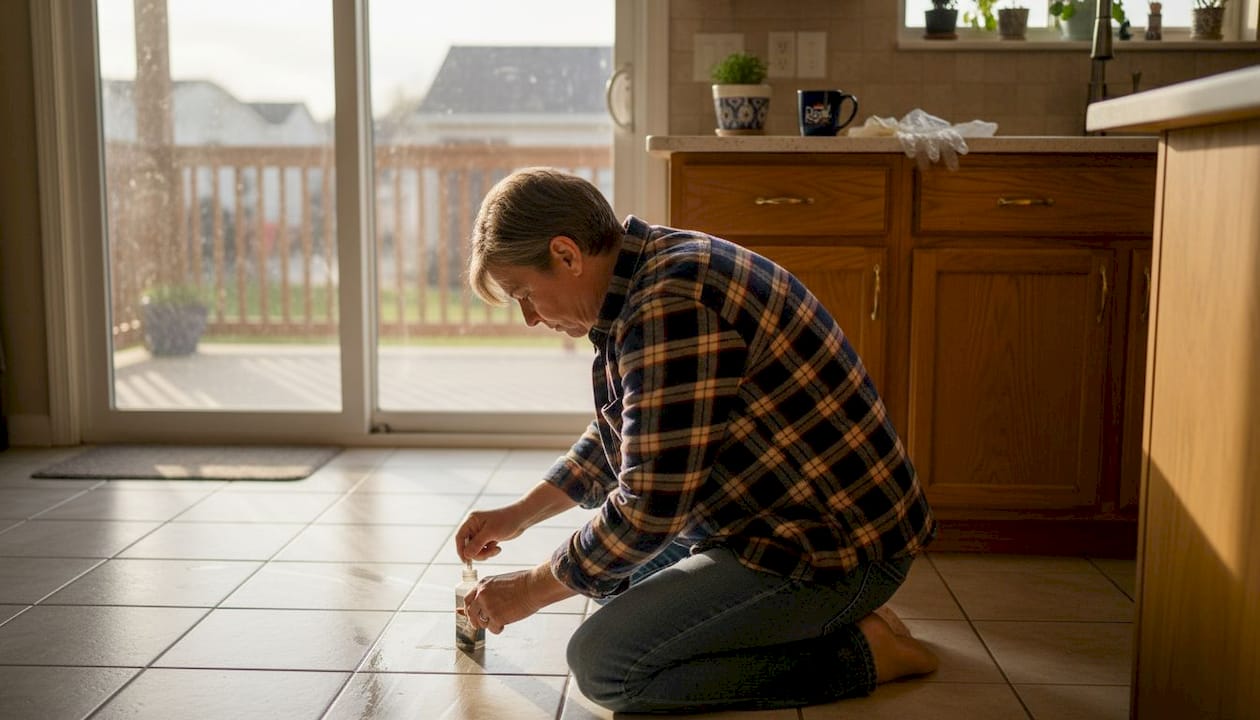
Pro Tip: If your grout is already cracked or crumbling, standard rotary extraction at full pressure will make the damage worse. A professional should reduce pressure to 500 to 700 PSI and use gentle extraction techniques to clean without accelerating grout failure. This is also a signal that regrouting may be needed before sealing.
For more guidance tailored to your specific flooring, our expert cleaning tips resource covers surface-specific recommendations in detail.
How hard surface cleaning impacts your indoor air quality
Mastering technique is important, but what happens to the air in your home during and after cleaning? The relationship between floor cleaning and indoor air quality is real, measurable, and something every Albuquerque homeowner should understand.
Short-term effects of cleaning:
When you clean, you disturb settled particles. Dry sweeping, aggressive scrubbing, and chemical spray application can temporarily push fine dust and chemical vapors into your breathing zone. Cleaning temporarily raises PM2.5 and TVOC levels, with quaternary ammonium compounds (quats) producing the highest readings. This is not a reason to stop cleaning. It is a reason to clean smarter.
Long-term benefits of regular deep cleaning:
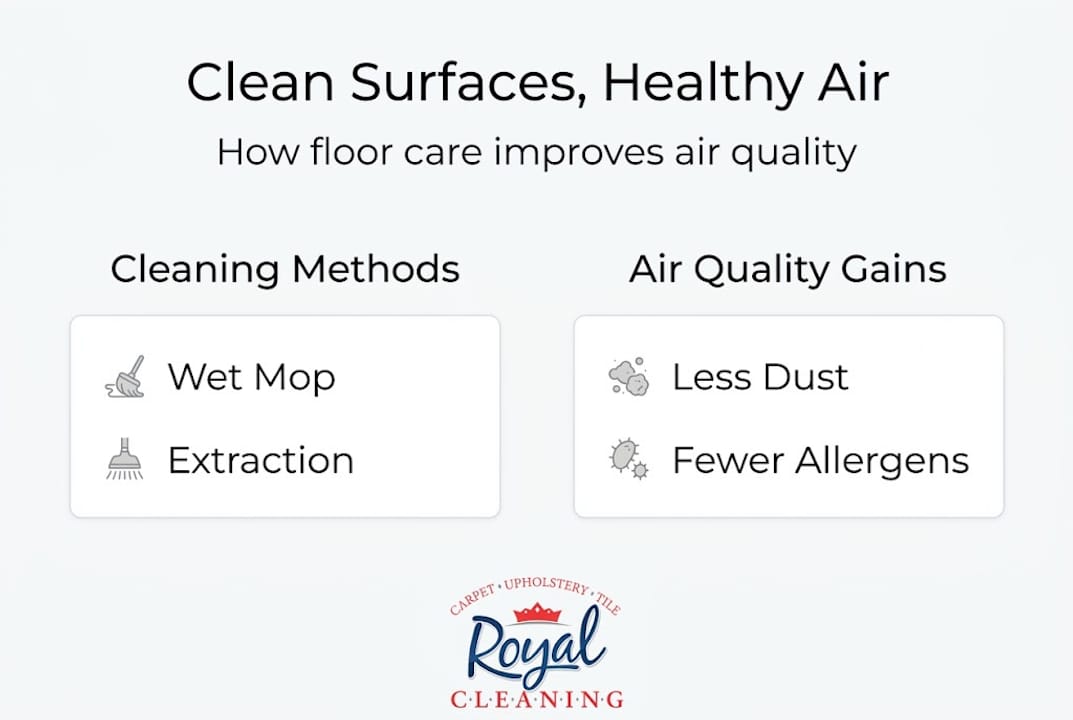
Over time, thorough hard surface cleaning dramatically reduces the microbial load on your floors. Bacteria, mold spores, dust mite debris, and tracked-in allergens are physically removed rather than just redistributed. Consistent cleaning also removes the nutrient base, organic matter, that allows mold and bacteria to reestablish between cleanings. The result is a measurably healthier indoor environment.
Stat callout: Professional-grade cleaning methods reduce floor microbes by up to 96%, a result that routine household mopping cannot achieve.
HEPA (High-Efficiency Particulate Air) vacuuming plays a specific and important role here. Standard vacuums can recirculate fine particles back into the air as they exhaust. HEPA vacuums prevent 20 to 50% particle resuspension compared to standard vacuums, which means a significantly smaller amount of what you pick up ends up back in your air.
Best practices to protect your air quality during and after cleaning:
- Open windows and run exhaust fans during and for at least 30 minutes after cleaning
- Choose low-VOC or fragrance-free cleaning products whenever possible
- Use a HEPA-filter vacuum for dry debris removal before any wet cleaning
- Avoid using multiple chemical products in quick succession, which can amplify TVOC spikes
- Clean regularly rather than infrequently with heavy chemical use, which keeps contaminant levels consistently lower
Understanding how improving air quality at home connects to your floor care routine is a practical step toward a healthier living environment. It also reinforces why cleanliness impacts air quality in ways most people have not been told.
Why the “sparkling floor” myth is holding Albuquerque homeowners back
Here is something worth saying plainly: a shiny floor is not a healthy floor. This is one of the most persistent myths in home care, and it causes real problems for Albuquerque families.
We see this regularly. Homeowners invest in scented mop solutions that leave a visual gleam but deposit chemical residue across the entire floor surface. That residue becomes sticky over time, trapping fine particles and acting as a film that holds allergens in place rather than removing them. The floor looks great. The air quality is actually worse.
Physical scrubbing rivals some chemicals on sealed or non-porous surfaces. This matters because many homeowners believe that stronger chemicals mean better cleaning. The science does not consistently support that. Mechanical agitation combined with appropriate extraction often outperforms heavy chemical application, and it does so without the associated TVOC increase.
The multi-step cleaning approach we use is built on this principle. Each step serves a function, from debris removal through extraction to finishing. No single step can compensate for a skipped one, and no amount of chemical product can substitute for proper mechanical action and thorough extraction.
Pro Tip: Use the least harsh product that gets the job done. If a pH-neutral cleaner removes the soil, there is no benefit to upgrading to a stronger chemical. Stronger products increase TVOC emissions during application and require more thorough rinsing to avoid residue buildup. Simpler is often safer and just as effective.
The healthiest homes focus on removing contaminants, not masking them. Visual shine can be achieved in many ways, some of which actually deposit more material on your floors than they remove. Real hygiene comes from a structured process where soil, allergens, and microbial matter are physically extracted and carried out of your home.
Get professional hard surface cleaning for a truly healthier home
You now know that true hard surface cleaning involves more than a mop and a spray bottle. It requires the right equipment, the right chemistry matched to each surface, proper pressure settings, and a structured process that physically removes contamination rather than spreading it around.
At Royal Cleaning New Mexico, we bring commercial-grade rotary extractors, HEPA-equipped vacuums, and surface-specific cleaning solutions to Albuquerque homes. Our technicians test surfaces before applying any chemistry and adjust pressure based on the condition of your grout and finish. For homeowners ready to go beyond DIY, our professional tile and grout cleaning service is built around the multi-step process described in this guide. We also offer upholstery cleaning services for a complete interior cleaning solution. Most homes benefit from professional deep cleaning every 12 to 18 months. Contact us for a free estimate and find out what your floors actually need.
Frequently asked questions
How often should I have my hard surfaces professionally cleaned?
Experts recommend professional cleaning every 12 to 18 months for most hard surfaces, and more frequently for porous materials like unsealed concrete or heavily used grout.
Does hard surface cleaning improve indoor air quality?
Yes, thorough cleaning removes allergens and dust, improving hygiene and air quality over time, though some methods can temporarily raise fine particle and chemical vapor levels if ventilation is not used.
Which products are safest for my tile and stone surfaces?
pH-neutral cleaners for stone and marble are the safest choice, as acidic or abrasive products can etch the surface and damage sealers permanently.
Will deep cleaning damage my grout or floor finish?
Properly executed deep cleaning with calibrated equipment is safe, but wrong techniques like high PSI on damaged grout or steam on unsealed wood can cause irreversible damage like crumbling or delamination.