(505) 280-5216
Expert cleaning tips for homeowners: fresh solutions for cleaner air
TL;DR:
- Albuquerque’s dry, dusty climate requires frequent cleaning and specialized air quality strategies.
- Top-to-bottom cleaning and high-efficiency equipment effectively reduce indoor allergens and particulates.
- Professional services, including duct and carpet cleaning, are essential for maintaining healthy indoor air.
Albuquerque homeowners face a cleaning challenge that most generic guides simply ignore. The city’s high desert climate brings persistent fine dust, low humidity, and seasonal wind events that push allergens and particulates into your home faster than you can sweep them out. Poor indoor air quality is not just a comfort issue. It affects your family’s respiratory health, sleep quality, and overall well-being. The good news is that expert-level cleaning strategies, built specifically around Albuquerque’s conditions, can make a real, measurable difference. This guide walks you through exactly what tools to use, how to clean, how often to clean, and what most homeowners miss.
Table of Contents
- Start with the right tools and products
- Master the top-to-bottom cleaning method
- Dust, vacuum, and mop: Frequency matters in Albuquerque
- Optimize indoor air quality through targeted cleaning
- Albuquerque-specific cleaning challenges and solutions
- What most cleaning guides get wrong about Albuquerque homes
- Bring in the professionals for the toughest cleaning jobs
- Frequently asked questions
Key Takeaways
| Point | Details |
|---|---|
| Dust and clean strategically | Start from the top and move down to keep surfaces clean without repeating work. |
| Prioritize HEPA tools | HEPA vacuums and filters remove over 90% of particles, improving indoor air quality. |
| Clean often in Albuquerque | Tackle dust and allergens with twice-weekly vacuuming and frequent surface wiping. |
| Target air quality improvements | Maintain filters, control humidity, and choose eco-conscious products for the healthiest air. |
| Call professionals for deep cleaning | Expert services for carpets and ducts can drastically cut hidden allergens and extend surface life. |
Start with the right tools and products
With the challenge laid out, you need the right gear and products to clean smarter, not harder. The tools you use determine how much dust and allergens you actually remove versus simply move around. Most homeowners underestimate how much their equipment matters.
Here is what expert cleaners rely on:
- Microfiber cloths: These trap particles at the fiber level rather than pushing them into the air. Damp microfiber cloths capture particles without spreading them, and HEPA vacuums capture 99.97% of particles down to 0.3 microns.
- HEPA vacuums: Standard vacuums can recirculate fine dust back into your air. A HEPA-rated vacuum keeps those particles contained.
- MERV-13 air filters: MERV stands for Minimum Efficiency Reporting Value. A MERV-13 filter captures fine particulates, pollen, and even some bacteria that lower-rated filters miss.
- EPA-registered cleaning products: These are tested and verified to eliminate specific pathogens. Products high in volatile organic compounds, or VOCs, can actually worsen indoor air quality even as they clean surfaces.
- Low-VOC or VOC-free sprays: Look for the EPA Safer Choice label when shopping for household cleaners.
You can explore the best cleaning tools recommended for Albuquerque homes, or review efficient cleaning routines that pair well with these products.
Pro Tip: Invest in a dedicated set of color-coded microfiber cloths for different surfaces, such as one color for bathrooms and another for kitchens. This prevents cross-contamination and keeps bacteria from traveling between rooms.
Master the top-to-bottom cleaning method
Once your equipment is ready, using the optimal method makes every sweep count. Professional cleaners do not randomly move from room to room or surface to surface. They follow a deliberate sequence that uses gravity to their advantage.
Here is the step-by-step order:
- Ceiling fans and vents first. Dust collects heavily here and falls when disturbed. Clean these before anything else.
- Light fixtures and high shelves. Work your way down from the highest points in the room.
- Countertops, furniture surfaces, and appliances. Wipe these after high areas are done.
- Baseboards and lower wall surfaces. These catch falling dust from the steps above.
- Sweep or dry mop the floor. Remove loose debris before vacuuming.
- Vacuum, then mop. Vacuuming picks up fine particles; mopping captures what remains.
“Top-to-bottom cleaning methodology is the professional standard, starting from ceilings and working down to floors to leverage gravity and avoid re-cleaning surfaces.”
This approach saves 30 to 40% of cleaning time by eliminating the need to re-clean surfaces that get re-dusted. You can also review Albuquerque cleaning methods that apply this system to local home layouts.
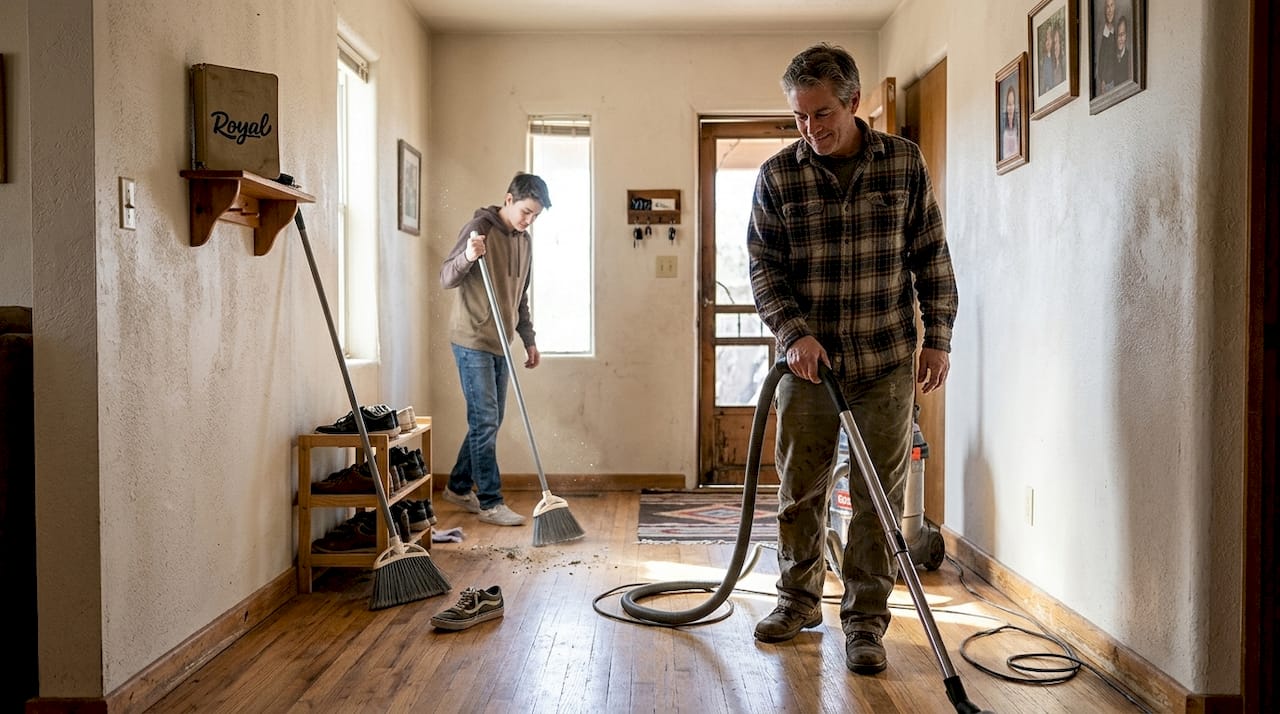
Pro Tip: Always sweep before vacuuming. Sweeping protects your vacuum’s motor and brush roll from larger debris, and it boosts overall efficiency. Moving clockwise through each room also helps you avoid missing spots.
Dust, vacuum, and mop: Frequency matters in Albuquerque
With the process in place, expert results depend just as much on how often you clean as how you clean. Albuquerque’s dry, windy climate means dust accumulates faster than in most other cities. A once-a-week routine is simply not enough for high-traffic areas.
Key habits that make a real difference:
- Remove shoes at the door and vacuum floors frequently with HEPA filter vacuums to reduce tracked-in dust, pollen, and contaminants.
- Twice-weekly vacuuming of high-traffic areas is the recommended standard for Albuquerque’s high-dust environment.
- Wipe hard surfaces with damp microfiber cloths at least twice a week.
- Mop hard floors weekly using a microfiber mop and a low-VOC floor cleaner.
| Area | Recommended frequency | Priority level |
|---|---|---|
| Entryways and hallways | Twice weekly | High |
| Living room floors | Twice weekly | High |
| Kitchen floors | Twice weekly | High |
| Bedrooms | Weekly | Medium |
| Bathrooms | Weekly | Medium |
| Ceiling fans and vents | Monthly | High |
| Baseboards | Every 2 weeks | Medium |
Frequent dust control does more than keep surfaces clean. It directly reduces the concentration of airborne particulates, which is one of the most practical ways of improving air purification in your home. Building these healthy cleaning habits into your weekly schedule is one of the highest-impact steps you can take.
Optimize indoor air quality through targeted cleaning
Smart daily cleaning lays the foundation, but intentional air quality steps make expert results possible. Cleaning surfaces is only part of the equation. The air itself needs attention.
Expert air quality tactics for Albuquerque homes:
- Change HVAC filters rated MERV-13 or higher every one to three months, control indoor humidity between 30 and 50%, and use exhaust fans during cooking and showering.
- Run exhaust fans in bathrooms and kitchens every time you cook or shower to remove moisture and airborne contaminants.
- Use an air purifier with a HEPA filter in bedrooms and main living areas.
- Schedule professional carpet cleaning annually. Professional carpet cleaning removes 98% of embedded allergens, and air purifiers can collect up to 99% of airborne particulates, with HEPA air cleaners reducing PM2.5 by 24.8% and TVOCs by 52.9%.
- Keep indoor plants to a minimum if you have mold sensitivities, as overwatered soil can introduce spores.
| Method | Effectiveness | Effort level | Recommended frequency |
|---|---|---|---|
| MERV-13 HVAC filter | High | Low | Every 1 to 3 months |
| HEPA air purifier | Very high | Low | Continuous |
| Professional duct cleaning | High | None (outsourced) | Every 3 to 5 years |
| Professional carpet cleaning | Very high | None (outsourced) | Annually |
| Exhaust fan use | Medium | Low | Every cooking/shower event |
You can learn more from our indoor air quality guide and find out about duct contamination specific to Albuquerque homes. The EPA’s indoor air guide also provides reliable, research-backed guidance.
Albuquerque-specific cleaning challenges and solutions
General expert tips are valuable, but Albuquerque’s unique climate requires a distinct approach. The combination of fine desert dust, low humidity, and static electricity means particles cling to surfaces and circulate in the air longer than in humid climates.
The biggest local challenges and how to address them:
- Fine dust buildup: Prioritize frequent surface wiping, use EPA-registered disinfectants for high-touch areas, and schedule professional duct and carpet cleaning every 12 to 18 months.
- Static electricity: Static causes dust to cling to walls, screens, and furniture. Use anti-static microfiber cloths and slightly dampen surfaces before wiping.
- VOC accumulation: Swap out conventional cleaning sprays for low-VOC or VOC-free alternatives. Research on VOCs confirms that indoor VOC levels can significantly exceed outdoor levels, especially in tightly sealed homes.
- Tracked-in dirt and allergens: Enforce a strict shoes-off policy and place high-quality doormats at every entry point.
“Source control is the most effective strategy: eliminate VOC sources, prohibit indoor smoking or vaping, and prioritize ventilation.”
One common myth worth addressing: vinegar is often promoted as a natural all-purpose cleaner. While it works for some light tasks, it is not an EPA-registered disinfectant and cannot reliably eliminate serious pathogens. For high-touch surfaces in your kitchen and bathrooms, EPA-registered products are the more dependable choice. Reviewing healthy habits designed for the Albuquerque climate can help you build a routine that actually holds up.
What most cleaning guides get wrong about Albuquerque homes
Most cleaning guides are written for a generic American home in a temperate, moderately humid climate. They do not account for Albuquerque’s fine particulate dust, rapid allergen buildup, or the way dry air keeps particles suspended longer. When you follow those generic routines here, you end up cleaning more often and getting less satisfying results.
The real mistake is treating cleaning as a fixed checklist rather than a seasonal, climate-responsive practice. Albuquerque’s spring wind season, for example, is a period when you need to vacuum more frequently, change filters ahead of schedule, and keep windows closed during peak wind hours. That kind of local awareness is what separates effective cleaning from surface-level effort.
We also see homeowners fall for trendy cleaning hacks that look impressive online but ignore proven air quality gains. Diffusing essential oils, for instance, can actually add VOCs to your indoor air. Sticking to region-specific cleaning methods and prioritizing filtration year-round will always outperform viral trends.
Bring in the professionals for the toughest cleaning jobs
While homeowners can do a lot, even the cleanest homes can benefit from occasional professional expertise. Carpets, upholstery, and air ducts accumulate contaminants that no amount of regular vacuuming can fully address.
Our carpet cleaning service uses advanced hot water extraction to remove embedded allergens, bacteria, and dust mites that standard vacuums leave behind. For your HVAC system, professional air duct cleaning removes built-up debris that recirculates through your home every time the system runs. If you want to understand exactly what that service involves, our guide on the benefits of duct cleaning breaks it down clearly. Scheduling these services once or twice a year gives your home a reset that daily cleaning simply cannot replicate.
Frequently asked questions
How often should I vacuum my home in Albuquerque?
Vacuum high-traffic areas at least twice per week due to the region’s high dust and pollen levels. Less frequent vacuuming allows particulates to build up and recirculate into your air.
What is the best way to reduce allergens indoors?
Use HEPA vacuums, change air filters regularly, and limit VOCs by choosing eco-friendly cleaners with good ventilation. HEPA vacuums capture 99.97% of particles down to 0.3 microns, making them far more effective than standard models.
How does top-to-bottom cleaning save time?
It prevents dust and debris from resettling on already-cleaned surfaces, cutting redundant work by up to 40% of cleaning time. Starting at ceiling level and working down is the professional standard for a reason.
Are natural cleaners like vinegar good enough in Albuquerque?
Vinegar helps for some light tasks, but EPA-registered disinfectants are more reliable for eliminating serious pathogens on high-touch surfaces. Use vinegar where appropriate, but do not rely on it as your primary disinfectant.
What is the single most important cleaning tip for indoor air quality?
Eliminate pollutant sources, keep air filters clean, and ventilate consistently for the biggest measurable impact. Source control beats any single product or cleaning technique.