(505) 280-5216
Energy Savings from Cleaning in Albuquerque: Cut 15% Costs
Professional cleaning services can reduce your home energy costs by up to 15%, a significant saving many Albuquerque homeowners overlook. Clogged air ducts and dryer vents force HVAC systems to work harder, driving up monthly bills and compromising indoor air quality. This guide reveals how strategic cleaning investments deliver measurable energy savings, improve comfort, and pay for themselves within two years.
Table of Contents
- Understanding How Cleaning Improves Energy Efficiency
- How Air Duct Cleaning Enhances Energy Efficiency
- Energy Savings From Dryer Vent Cleaning
- Professional Vs DIY Cleaning: What Homeowners Need to Know
- Common Misconceptions About Energy Savings From Cleaning
- Cost-Benefit Analysis And Practical Recommendations
- Enhance Your Home’s Efficiency With Royal Cleaning Services
- Frequently Asked Questions
Key Takeaways
| Point | Details |
|---|---|
| Energy Reduction | Air duct and dryer vent cleaning reduces home energy consumption by 8-15%. |
| Professional Advantage | Professional services deliver significantly greater savings than DIY methods. |
| Air Quality Impact | Cleaner systems lower HVAC runtime, improving comfort and reducing energy waste. |
| Cleaning Frequency | Schedule cleaning every 3-5 years, more often in Albuquerque’s dusty climate. |
| Cost Recovery | Energy savings typically offset cleaning expenses within 12-24 months. |
Understanding How Cleaning Improves Energy Efficiency
Dust, pollen, and debris accumulate in air ducts and dryer vents over time, creating physical barriers that restrict airflow. When your HVAC system struggles against these blockages, it consumes extra electricity to maintain desired temperatures. Similarly, clogged dryer vents force your appliance to run longer cycles, wasting energy and creating fire hazards.
Poor indoor air quality creates a hidden energy drain. When allergens and contaminants circulate through your home, occupants often adjust thermostats more frequently or run systems longer to achieve comfort. This behavior pattern increases energy consumption beyond what proper ventilation would require.
Three key mechanisms connect cleaning to energy savings from air duct cleaning. First, improved airflow reduces HVAC workload and electricity demand. Second, better air quality minimizes unnecessary system cycling. Third, clean vents eliminate safety hazards that compromise appliance efficiency.
Combining professional cleaning with regular HVAC maintenance amplifies these benefits. Clean ducts allow filters to work more effectively, and clear vents enable appliances to operate at designed efficiency levels. Homeowners who integrate cleaning into annual maintenance schedules see the most consistent energy savings.
Pro Tip: Schedule a professional inspection before summer heat peaks to identify efficiency problems before they spike your cooling bills.
How Air Duct Cleaning Enhances Energy Efficiency
Accumulated dust and allergens in ductwork create friction that reduces energy use by 8-15% through professional cleaning. Every layer of buildup forces your system to push harder, drawing more electricity to deliver the same heating or cooling output. This inefficiency compounds during Albuquerque’s temperature extremes when HVAC systems run most frequently.
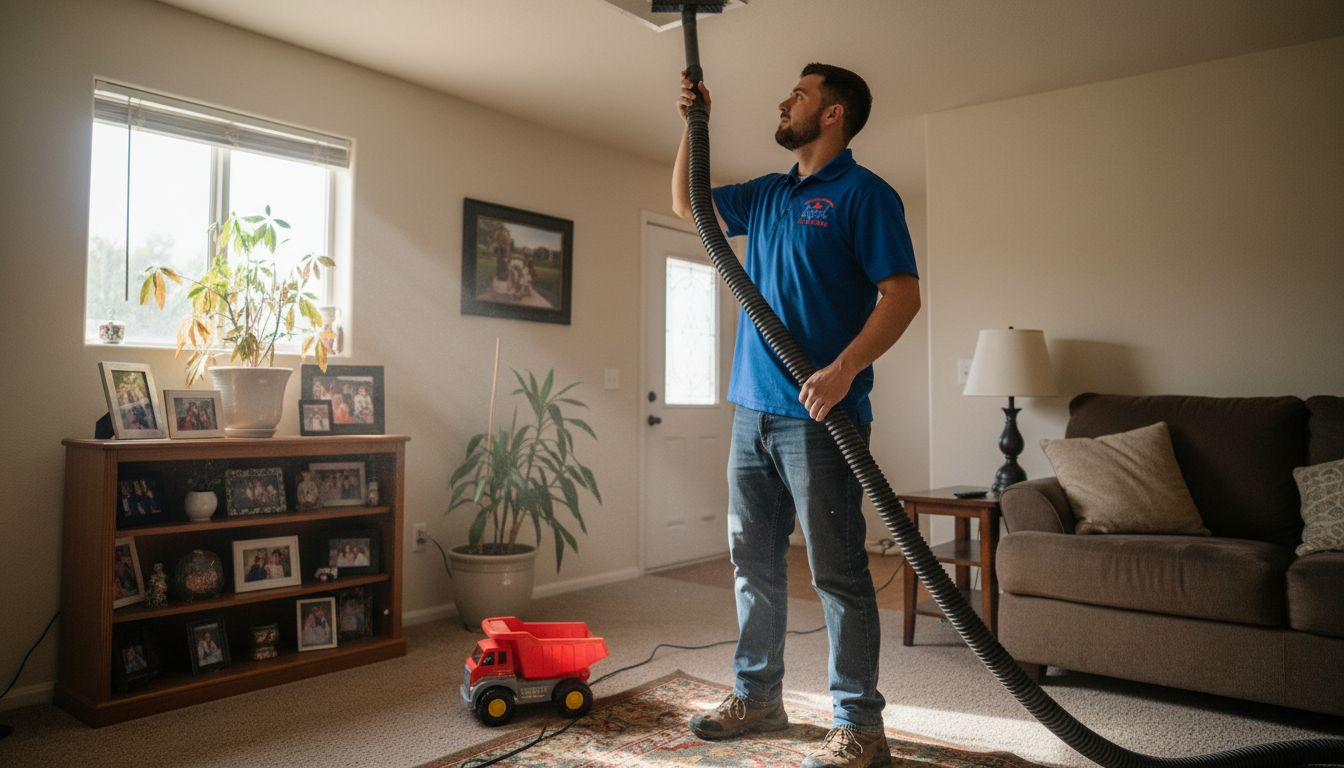
Scheduling professional air duct cleaning every 3-5 years maintains optimal efficiency and extends equipment lifespan. Systems operating with clean ducts experience less mechanical strain, reducing repair frequency and delaying costly replacements. Improved airflow also creates more consistent temperatures throughout your home, eliminating hot and cold spots that trigger thermostat adjustments.
| Cleaning Interval | Energy Savings | System Condition Impact |
|---|---|---|
| Never cleaned | 0% baseline | High strain, frequent repairs |
| Every 5+ years | 3-6% | Moderate strain, reduced lifespan |
| Every 3-5 years | 8-12% | Optimal performance, extended lifespan |
| Every 1-2 years | 12-15% | Maximum efficiency, minimal wear |
Albuquerque’s arid climate accelerates dust accumulation compared to humid regions. Fine desert particles infiltrate homes through windows, doors, and ventilation systems, settling in ductwork faster than national averages. Homeowners should prioritize duct cleaning more frequently than the standard 3-5 year recommendation to combat this regional challenge.
Pro Tip: Monitor your air filter replacement frequency as an indicator for duct cleaning needs. If filters clog faster than every three months, your ducts likely need professional attention.
Energy Savings from Dryer Vent Cleaning
Lint and debris blockages extend drying cycles, increasing energy consumption by up to 12% while creating dangerous fire conditions. When hot air cannot escape efficiently, dryers must run longer to achieve the same results, wasting electricity and wearing out heating elements prematurely. The National Fire Protection Association identifies lint buildup as the leading cause of dryer fires nationwide.
Professional cleaning reaches deep into vent systems where DIY tools cannot access. Standard household vacuum attachments remove surface lint but miss compacted buildup in bends and long runs. Specialized equipment extracts these hidden blockages, restoring full airflow and maximum efficiency.
| Method | Energy Savings | Fire Risk Reduction | Thoroughness |
|---|---|---|---|
| DIY cleaning | 2-4% | Minimal | Surface only |
| Professional cleaning | 8-12% | Significant | Complete system |
Cleaning frequency depends on dryer usage and household size. Single occupants using dryers weekly can extend intervals to three years, while families running multiple daily loads should schedule annual dryer vent cleaning to maintain safety and efficiency. Albuquerque’s dry climate produces more lint per load than humid environments, accelerating blockage formation.
Installing a secondary lint trap provides early warning of vent problems. If this backup trap collects significant lint between professional cleanings, your primary system needs immediate attention. This simple monitoring tool helps homeowners time service appointments before efficiency drops or hazards develop.
Professional vs DIY Cleaning: What Homeowners Need to Know
DIY cleaning tools lack the power and reach to extract fine particles deep within duct systems. Standard shop vacuums and brush attachments address visible debris but leave embedded contaminants that continue restricting airflow. This incomplete cleaning delivers only 3-5% energy savings compared to professional cleaning’s 8-15% reduction.
Professional equipment includes high-powered vacuums, rotary brushes, and compressed air systems that dislodge and extract deeply embedded particles. Trained technicians identify problem areas, inspect for damage, and address issues DIY methods cannot detect. This comprehensive approach justifies higher upfront costs through superior energy savings and system protection.
| Factor | Professional Cleaning | DIY Cleaning |
|---|---|---|
| Energy savings | 8-15% | 3-5% |
| Thoroughness | Complete system | Surface only |
| Cost per service | $300-600 | $50-100 |
| Recommended frequency | Every 3-5 years | Every 6-12 months |
| ROI timeline | 12-24 months | Rarely achieved |
Initial professional service costs recover quickly through monthly energy bill reductions. A homeowner spending $400 for duct cleaning while achieving 12% energy savings on a $200 monthly bill recoups costs within 17 months. Subsequent years deliver pure savings, making professional service financially superior despite higher entry costs.
Local air duct cleaning services often provide free assessments to evaluate system condition. Request this inspection to understand your specific needs before committing to cleaning schedules. Some homes require immediate professional attention, while others can safely delay service another year.
Pro Tip: Use professional assessments to create a multi-year maintenance plan that balances DIY filter changes with scheduled professional deep cleaning for optimal cost efficiency.
Common Misconceptions About Energy Savings from Cleaning
Many homeowners expect immediate dramatic reductions in energy bills after cleaning, but savings accumulate gradually as systems operate more efficiently over weeks and months. HVAC systems do not suddenly consume 15% less electricity; rather, they run shorter cycles and encounter less resistance, producing cumulative savings visible in monthly comparisons.
Not all cleaning services impact energy consumption equally. Carpet and upholstery cleaning improve indoor air quality but do not directly affect HVAC efficiency. Only services addressing air ducts, dryer vents, and HVAC components deliver measurable energy savings through improved airflow and reduced system strain.
DIY cleaning provides marginal benefits compared to professional services. While homeowners can maintain filters and remove surface debris, they cannot achieve the deep cleaning required for significant efficiency gains. Surface-level maintenance prevents rapid deterioration but does not restore systems to optimal performance levels.
Cleaning frequency directly affects long-term savings. One-time cleaning provides temporary improvement, but benefits diminish as new contaminants accumulate. Establishing regular cleaning schedules maintains consistent efficiency and prevents the gradual performance degradation that erodes energy savings.
Educating yourself about realistic expectations helps make informed decisions about service timing and provider selection. Understanding the gradual nature of energy savings and the importance of professional thoroughness enables better planning and budget allocation for home maintenance.
Cost-Benefit Analysis and Practical Recommendations
Professional cleaning investments typically recoup costs within 12-24 months through reduced energy bills, with faster returns in larger homes and older systems. A 2,000 square foot home spending $450 for comprehensive duct and vent cleaning while achieving 10% savings on $250 monthly energy costs recovers the investment in 18 months. Years two through five deliver net savings exceeding $1,000.
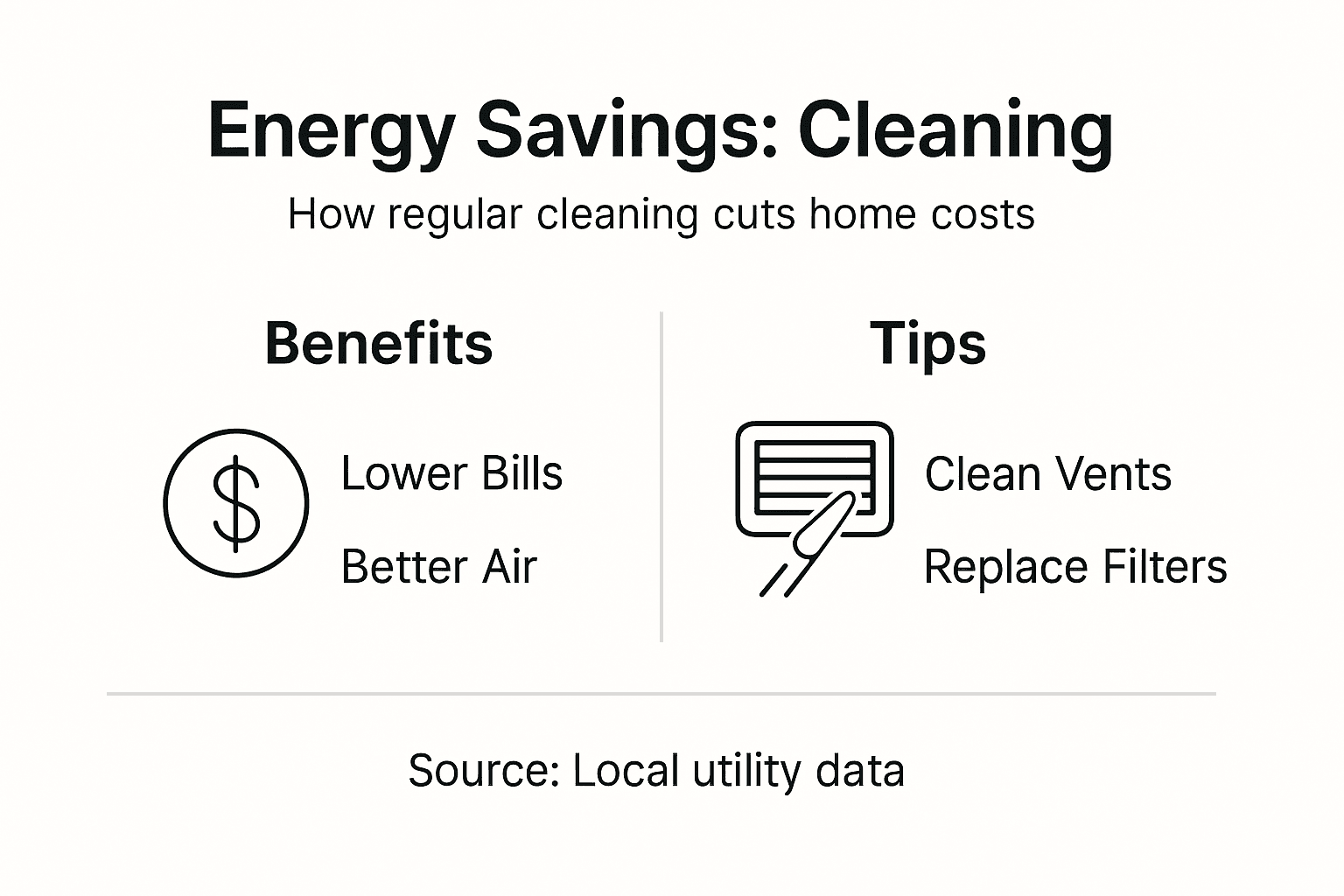
Albuquerque’s desert environment accelerates dust accumulation, making three-year cleaning intervals optimal for most households. Homes near construction sites, on unpaved roads, or with pets should consider biennial service to maintain peak efficiency. Monitoring energy bills annually helps identify when cleaning has become necessary.
Combining cleaning with HVAC system upgrades multiplies efficiency gains. New high-efficiency units operating with clean ductwork achieve manufacturer-rated performance, while older systems benefit from reduced strain that extends operational life. Coordinate cleaning schedules with equipment replacement planning to maximize return on both investments.
Follow these steps to maximize energy savings from cleaning:
- Schedule professional assessments to establish baseline system condition and cleaning needs.
- Compare energy bills from the 12 months before and after cleaning to quantify actual savings.
- Adjust cleaning frequency based on measured results and seasonal dust accumulation patterns.
- Maintain filters monthly between professional services to preserve cleaning benefits longer.
- Document all service dates and costs to track long-term return on investment.
| Cleaning Frequency | Annual Energy Savings | Cost Recovery Timeline | Net 5-Year Benefit |
|---|---|---|---|
| Every 5 years | $120 | 38 months | $150 |
| Every 3 years | $200 | 22 months | $550 |
| Every 2 years | $250 | 18 months | $700 |
Pro Tip: Track your energy bills three months before and six months after cleaning to calculate your actual savings percentage, then use this data to optimize your future cleaning schedule.
Enhance Your Home’s Efficiency with Royal Cleaning Services
Albuquerque homeowners deserve cleaning services that deliver measurable energy savings and improved indoor air quality. Royal Cleaning New Mexico specializes in thorough air duct and dryer vent cleaning designed specifically for our region’s unique dust challenges.
Our experienced technicians use advanced equipment to remove the deep contaminants DIY methods miss, ensuring you achieve the full 8-15% energy savings professional cleaning provides. We understand how Albuquerque’s arid climate affects your home systems and tailor our professional services accordingly.
Schedule your consultation today to discover how much you can save on energy bills while breathing cleaner air. Our comprehensive dryer vent cleaning eliminates fire hazards and reduces drying times, while duct cleaning optimizes HVAC performance. Contact Royal Cleaning New Mexico for transparent pricing and reliable service that pays for itself.
Frequently Asked Questions
What is the best frequency for air duct cleaning in Albuquerque?
Most Albuquerque homes should schedule professional duct cleaning every 3 years due to accelerated dust accumulation in our arid climate. Homes with pets, smokers, or recent renovations benefit from biennial cleaning to maintain optimal efficiency and air quality.
How much can dryer vent cleaning reduce my energy bills?
Professional dryer vent cleaning typically reduces energy consumption by 8-12% by restoring proper airflow and shortening drying cycles. This translates to $50-100 annual savings for average households, with faster cost recovery for families running multiple loads daily.
Are professional cleaning services worth the investment compared to DIY?
Professional services deliver 8-15% energy savings versus DIY’s 3-5% reduction, making them financially superior despite higher upfront costs. The investment typically recovers within 18 months through reduced energy bills, with ongoing savings in subsequent years.
Can cleaning my HVAC system improve indoor air quality?
Yes, removing accumulated dust, allergens, and contaminants from ductwork significantly improves indoor air quality by eliminating circulation of these particles throughout your home. Cleaner air reduces respiratory irritation and may decrease HVAC runtime as occupants require fewer temperature adjustments for comfort.
What signs indicate my home’s vents need cleaning?
Watch for visible dust around vent registers, musty odors when systems run, uneven heating or cooling between rooms, and increased energy bills without usage changes. Frequent filter clogging and excessive lint around your dryer indicate immediate cleaning needs.
How long do energy savings from cleaning last?
Energy savings persist until new contaminants accumulate to levels that restrict airflow again, typically 3-5 years in most homes. Regular maintenance and filter changes between professional cleanings extend efficiency benefits and delay the need for subsequent service.