(505) 280-5216
Duct maintenance for Albuquerque homes: improve air quality
TL;DR:
- Albuquerque’s dusty climate accelerates duct contamination, affecting indoor air quality and HVAC efficiency.
- Professional duct cleaning involves inspection, sealing, agitation, HEPA extraction, and optional disinfection.
- Regular maintenance every 3 to 5 years and addressing sources are key for cleaner indoor air.
If you live in Albuquerque, you already know how relentless the dust can be. Sandstorms roll through, coating every surface inside and out, and your HVAC system pulls that dust straight into your ductwork. Over time, up to 90% of indoor pollutants may originate from your ducts, quietly circulating allergens, debris, and contaminants every time your system runs. This guide walks you through why duct maintenance matters specifically for Albuquerque homes, how to prepare for a service visit, what the professional process looks like step by step, and what results you should realistically expect afterward.
Table of Contents
- Why duct maintenance matters in Albuquerque homes
- What to prepare before your duct service visit
- Step-by-step professional duct maintenance process
- Common issues, edge cases, and mistakes in duct maintenance
- Results you can expect and signs of success
- Our take: why setting realistic expectations is the key to duct maintenance
- Get professional duct maintenance and more for a healthier Albuquerque home
- Frequently asked questions
Key Takeaways
| Point | Details |
|---|---|
| Albuquerque needs more frequent cleaning | Local dust storms make regular duct maintenance (every 3–5 years) essential for indoor air quality. |
| Professional standards matter | NADCA-certified cleaning removes up to 90% of contaminants and ensures proper system care. |
| Preparation maximizes results | Homeowner prep like clearing vents and noting issues helps technicians deliver better service outcomes. |
| Cleaning isn’t always enough | Air quality improves most when duct cleaning is combined with good filtration and HVAC upkeep. |
Why duct maintenance matters in Albuquerque homes
Albuquerque’s arid, high-desert climate creates conditions that accelerate duct contamination faster than in most U.S. cities. Dust storms, known locally as haboobs, push fine particulate matter into homes through every gap and crack. Your HVAC system then draws that material into the return air ducts, where it settles and builds up over months and years.
The result is a system that actively redistributes pollutants throughout your living space. Albuquerque duct contamination is compounded by the fact that 90% of indoor pollutants may trace back to the duct system itself. That means every time your heater or air conditioner kicks on, it may be spreading dust, pet dander, mold spores, and other irritants room to room.
Signs your ducts may need attention:
- Visible dust puffing from supply registers when the system starts
- Musty or stale odors coming through vents
- Worsening allergy or asthma symptoms indoors
- Noticeably higher energy bills without a clear cause
- Evidence of rodent or insect activity near ductwork
- Excessive pet dander or recent home renovation debris
Stat to know: The EPA recommends cleaning ducts only when specific problems are present, such as visible mold growth, vermin infestation, or substantial dust discharge. Routine cleaning without cause is not always necessary, but Albuquerque’s climate makes these triggers far more common here than in other regions.
If you’re unsure whether your system qualifies, reviewing when ducts need cleaning can help you make a confident, informed decision before scheduling a service. Knowing your specific situation helps you avoid unnecessary expense while also avoiding the health risks of waiting too long.
What to prepare before your duct service visit
Before the technician arrives, a bit of preparation can help everything go smoothly. A well-prepared home allows the crew to work efficiently, reduces the risk of damage to your belongings, and helps you get the most out of your appointment.
Homeowner preparation checklist:
- Clear a path to every supply and return vent or register
- Move furniture or rugs blocking floor vents
- Secure pets in a separate room or outside the home
- Write down any concerns: unusual odors, specific rooms with poor airflow, or recent pest activity
- Locate your HVAC unit and ensure the area around it is accessible
- Note any recent renovations that may have introduced extra debris
Hiring a NADCA ACR standard certified professional is one of the most important steps you can take. NADCA, the National Air Duct Cleaners Association, sets the industry benchmark for proper cleaning procedures and technician training.
| What to verify before booking | Why it matters |
|---|---|
| NADCA certification | Ensures industry-standard process |
| Proof of insurance | Protects your home and belongings |
| Before/after photo documentation | Confirms work was completed properly |
| Written scope of work | Prevents surprise add-on charges |
| References or reviews | Validates quality and reliability |
Pro Tip: Ask your technician to show you before photos of your ductwork before they begin. This gives you a baseline and makes it easy to compare results when the job is done. Good professionals welcome this kind of transparency.
For help with scheduling duct maintenance, reviewing what a professional air duct cleaning guide covers can also help you ask the right questions when you call.
Step-by-step professional duct maintenance process
With your home prepped, here’s exactly what happens during a typical professional duct cleaning in Albuquerque. Understanding the process helps you verify that the work is being done correctly and completely.
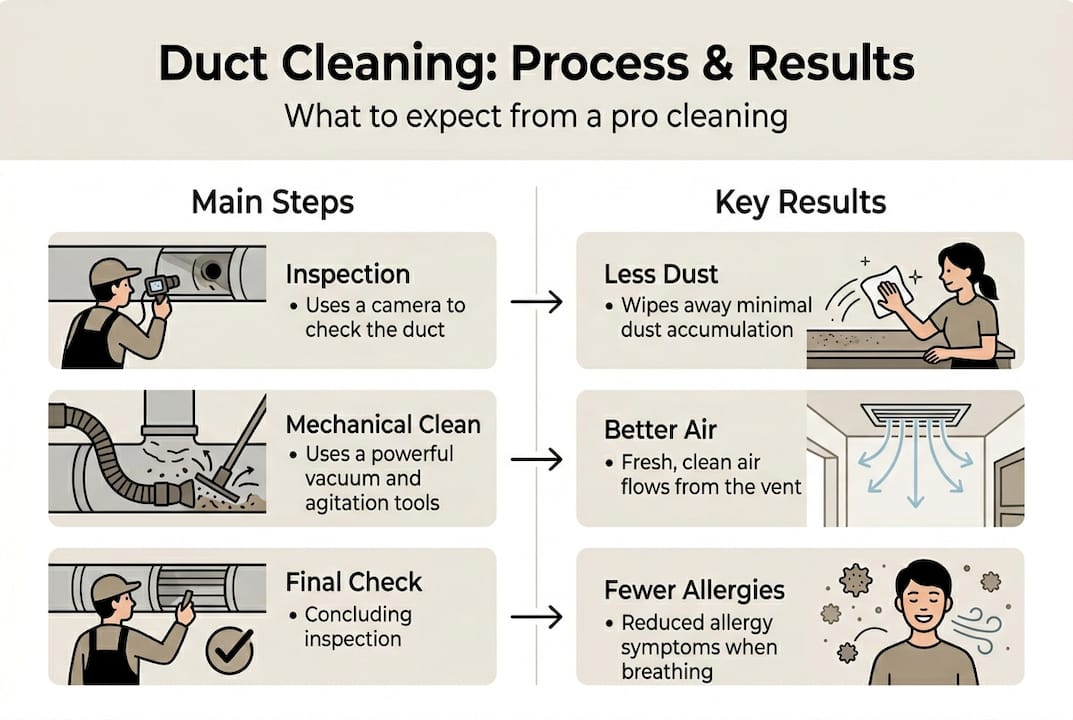
- Initial inspection and air quality assessment. The technician photographs duct interiors and checks for mold, debris, and blockages. Some teams use a camera scope to document conditions before work begins.
- System sealing and negative pressure setup. The crew seals all registers and connects a high-powered HEPA vacuum to the main trunk line. This creates negative pressure so dislodged contaminants are captured rather than released into your home.
- Mechanical agitation. Rotary brushes, air whips, and compressed air tools loosen debris from duct walls. Each branch and supply line is addressed individually.
- HEPA vacuum extraction. The negative pressure system pulls all loosened material into a sealed collection unit outside your home, preventing cross-contamination.
- Optional disinfection. An EPA-registered antimicrobial agent can be applied to duct surfaces to reduce mold and bacteria. This step is especially useful in homes with prior moisture issues.
- Filter and coil check. Technicians inspect and often replace air filters and check the evaporator coil for buildup, since a dirty coil undermines the benefits of clean ducts.
- Final inspection and customer review. After photos are taken, the technician walks you through the results and confirms all registers are reopened and functioning.
| Process stage | Time estimate |
|---|---|
| Inspection and setup | 20 to 30 minutes |
| Mechanical cleaning | 60 to 90 minutes |
| Disinfection (optional) | 15 to 20 minutes |
| Final review | 15 to 20 minutes |
The full duct cleaning process typically takes 2 to 4 hours and, when performed to NADCA standards, can remove up to 90% of contaminants from your system.
Pro Tip: Request that the technician clean both supply and return ducts. Some low-cost providers only address supply lines, leaving the return side, which carries the most contaminated air, untouched.
Common issues, edge cases, and mistakes in duct maintenance
Even the best process can encounter unique challenges or common errors. Here’s what to watch for so you’re not caught off guard.
Situations that require special handling:
- Mold in flexible or fibrous ducts. Flex ducts and duct board lined with fiberglass cannot always be effectively sanitized. In many cases, mold in flex ducts requires full duct replacement rather than cleaning.
- Rodent or insect infestation. Droppings and nesting material require specialized removal and disinfection protocols before standard cleaning can proceed.
- Post-renovation debris. Drywall dust and construction particles are abrasive and can damage HVAC components if not handled carefully.
- Older duct systems. Aging metal ducts may have deteriorated seals or asbestos-containing insulation, which requires professional assessment before any work begins.
“Duct cleaning is not a cure-all. The EPA cautions that cleaning alone does not guarantee improved indoor air quality unless the source of contamination is also addressed.”
Common mistakes homeowners and contractors make:
- Skipping coil and filter cleaning, which negates much of the duct cleaning benefit
- Attempting DIY cleaning with a household vacuum, which risks spreading contaminants further
- Hiring uncertified contractors who use inadequate equipment or skip negative pressure setup
- Ignoring common duct cleaning mistakes that lead to repeat contamination within months
Albuquerque’s dust levels mean you should also revisit when to clean ducts more frequently than the national average suggests, especially after major dust events or if anyone in your home has respiratory sensitivities.
Results you can expect and signs of success
After maintenance, you’ll want to confirm the results and know when your next steps should be. A well-executed duct cleaning produces noticeable changes that you can see, feel, and measure.
What you should notice after a professional service:
- Less visible dust settling on furniture and surfaces within days
- Cleaner, fresher air coming from supply registers
- Reduced musty or stale odors throughout the home
- Quieter HVAC operation as airflow improves
- Lower energy bills over the following billing cycles
- Fewer allergy or asthma flare-ups for sensitive household members
Stat to know: Proper duct maintenance can deliver up to 90% allergen reduction and reported HVAC efficiency gains of up to 60%, translating directly to lower monthly energy costs.
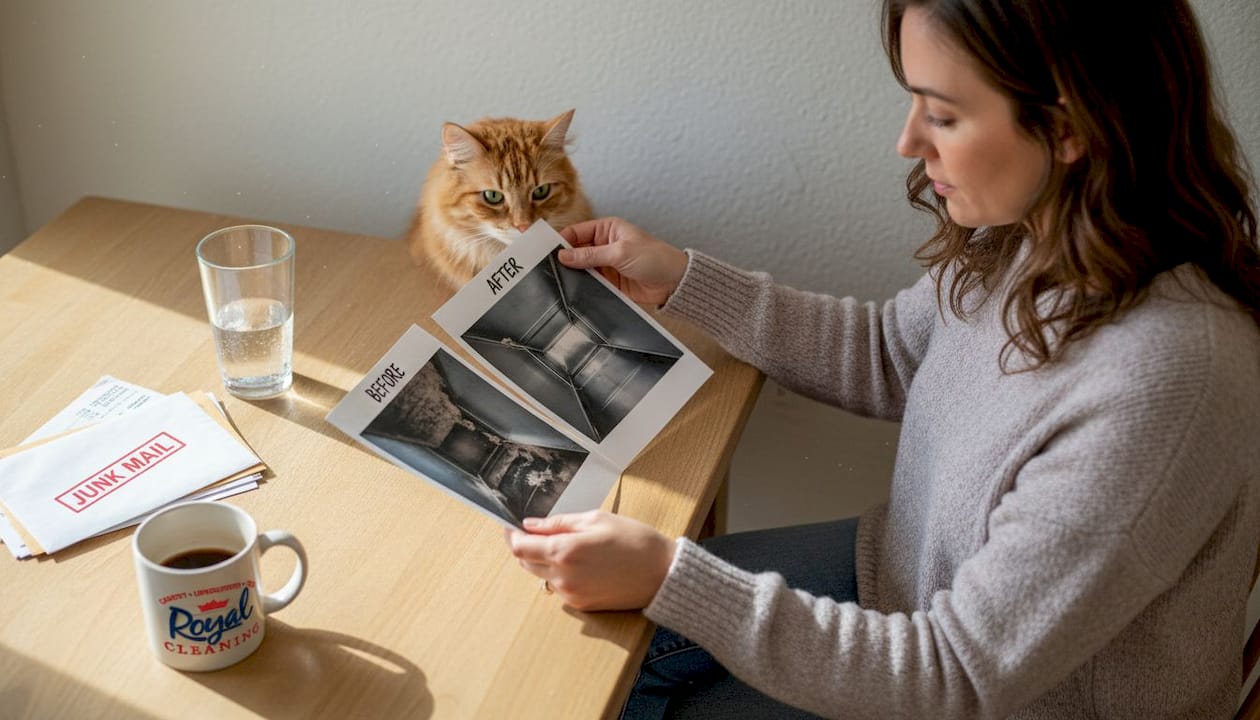
Before and after photos are your best verification tool. Compare them carefully. If the after photos still show heavy debris coating duct walls, the job was not completed properly. A reputable contractor will stand behind their work and return to address any deficiencies.
You should also track how quickly dust returns to your home. If surfaces are heavily coated again within a few weeks, it may indicate an unresolved source of contamination, such as a failing air filter, a breach in the duct system, or an outdoor air intake problem.
Review the full list of duct cleaning benefits to understand what a properly maintained system should deliver over time. Knowing the benchmarks helps you hold your service provider accountable and plan your next maintenance interval with confidence.
Our take: why setting realistic expectations is the key to duct maintenance
We’ve seen homeowners invest in duct cleaning and walk away disappointed, not because the service was poor, but because they expected it to solve every air quality problem in their home. That’s a misconception worth addressing directly.
Duct cleaning is one part of a larger system. The EPA notes clearly that duct cleaning alone does not guarantee better indoor air quality. Source control matters just as much. That means addressing humidity, using high-efficiency filters, sealing duct leaks, and keeping your HVAC coils clean. Without those steps, even a perfectly cleaned duct system will recontaminate within months.
We also think the industry does homeowners a disservice by overselling cleaning frequency. Most homes in Albuquerque do well with a service every 3 to 5 years, combined with regular filter changes and annual HVAC inspections. More frequent cleaning is only warranted when specific triggers arise.
Ask your provider what they found, what they removed, and what they recommend to prevent rapid recontamination. A contractor who can answer those questions clearly is one worth trusting. Review the true duct cleaning value and use it to set fair, informed expectations before you book.
Get professional duct maintenance and more for a healthier Albuquerque home
If your home is overdue for duct service or you’ve noticed the signs of contamination described above, now is the right time to act.
Royal Carpet Cleaning offers professional air duct cleaning performed to NADCA standards, with before and after documentation and transparent pricing. We also provide complementary services that support overall home hygiene, including upholstery cleaning services and carpet care, so you can address multiple sources of indoor contamination in one visit. Explore the full duct cleaning benefits and contact us today to schedule a consultation. Cleaner air starts with one call.
Frequently asked questions
How often should I have duct maintenance in Albuquerque?
In Albuquerque’s dusty climate, every 3 to 5 years is the recommended interval, though homes with pets, allergy sufferers, or recent renovations may need service sooner.
What are the signs that my home’s air ducts need cleaning?
Watch for dust from vents, musty odors, worsening allergy symptoms, signs of rodent activity, or unexplained increases in your energy bills.
Will duct cleaning really improve my indoor air quality?
Duct cleaning can remove up to 90% of contaminants, but the EPA notes it works best when combined with proper filtration, regular HVAC maintenance, and source control measures.
Is it safe to clean air ducts myself?
Professional cleaning uses NADCA ACR standards and specialized negative-pressure equipment that household vacuums cannot replicate, making DIY attempts likely to spread rather than remove contaminants.