(505) 280-5216
Disinfecting High-Touch Surfaces: Your Home Guide
TL;DR:
- Most germs in your home originate from surfaces touched frequently by hands rather than the air. Proper cleaning and disinfection of high-touch surfaces daily significantly reduce household illnesses by removing dirt first and allowing disinfectants to work effectively.
Most germs in your home don’t come from the air. They come from surfaces your hands touch dozens of times a day. Disinfecting high-touch surfaces is one of the most direct ways to reduce illness in your household, yet most families do it wrong or skip it entirely. They clean, but they don’t disinfect. They spray, but they wipe too soon. This guide covers everything you need: which surfaces matter most, what products actually work, how to apply them correctly, and which mistakes quietly undermine your efforts every single time.
Table of Contents
- Key takeaways
- Disinfecting high-touch surfaces: knowing where to start
- What to gather before you start
- How to properly clean and disinfect each surface
- Common mistakes that make disinfection less effective
- My perspective on why cleaning habits matter more than products
- When professional cleaning makes a real difference
- FAQ
Key takeaways
| Point | Details |
|---|---|
| Clean before you disinfect | Dirt and organic matter block disinfectants from working, so always clean first. |
| Respect dwell time | Disinfectants need 3 to 10 minutes of surface contact to eliminate 99.9% of pathogens. |
| Know your surfaces | The wrong product on metals, plastics, or rubber can cause lasting damage. |
| Build a daily routine | Target doorknobs, light switches, and phones daily; do deeper disinfection weekly. |
| Don’t trust scent | A fresh smell does not mean a surface is disinfected. Fragrance has no germ-killing power. |
Disinfecting high-touch surfaces: knowing where to start
Before you open a single bottle of disinfectant, you need to know which surfaces in your home pose the highest risk. A high-touch surface is any surface that multiple people contact repeatedly throughout the day. The frequency of contact is what matters most because the more often a surface is touched, the faster germs accumulate and transfer.
Here are the most common high-touch surfaces in a typical home:
- Doorknobs and door handles (interior and exterior)
- Light switches throughout the home
- Faucet handles in bathrooms and kitchens
- Toilet flush handles and toilet seats
- Remote controls for televisions and streaming devices
- Smartphones and tablets
- Cabinet and drawer handles in the kitchen
- Kitchen and bathroom countertops
- Stair railings and banisters
- Refrigerator door handles
- Computer keyboards and mice
Germs survive on surfaces for varying lengths of time depending on the material. Viruses like influenza can survive on hard, non-porous surfaces such as stainless steel and plastic for up to 24 hours. Bacteria often survive longer. Porous materials like fabric absorb germs differently, which is why high-contact surface cleaning requires different approaches depending on what you’re dealing with.
Material also determines which disinfectant you can safely use. Electronics, for example, cannot tolerate liquid-heavy applications. Rubber-handled tools or grips are vulnerable to alcohol-based products over time. Knowing your surfaces before you start protects both your home and your health.
What to gather before you start
Getting the right tools and products together before you begin makes the process faster and more effective. Using the right disinfectant for each surface is not optional. Bleach damages stainless steel, ammonia yellows certain plastics, and alcohol degrades rubber grips. Here’s a breakdown of commonly recommended disinfectants and where they work best:
| Disinfectant | Best for | Contact time | Avoid using on |
|---|---|---|---|
| EPA-registered disinfectant spray | Hard, non-porous surfaces | 3 to 10 minutes | Porous fabrics, electronics |
| Isopropyl alcohol (70%) | Electronics, phones, remotes | 30 seconds to 1 minute | Rubber grips, painted surfaces |
| Bleach solution (1:10 dilution) | Bathroom fixtures, tile | 1 to 5 minutes | Stainless steel, colored fabrics |
| Hydrogen peroxide (3%) | Countertops, sinks | 1 minute | Colored grout, natural stone |
| Disinfecting wipes | Light switches, door handles | Per label instructions | Rough or porous surfaces |
Beyond your chosen disinfectant, you need microfiber cloths, disposable gloves, and good ventilation. Microfiber cloths outperform paper towels because they physically trap particles rather than spreading them around. Use color-coded cloths for different zones in your home. One color for bathrooms, another for the kitchen, another for common areas. Cross-contamination risk drops significantly when you keep these zones separate.
Pro Tip: Always read the product label before using any disinfectant in your home. Labels specify required contact time, whether you need to rinse after application, and which surfaces are not compatible with the product.
Ventilation matters too. Many disinfectants release fumes that should not be inhaled in concentrated amounts. Open windows and doors, or run your exhaust fan when cleaning in bathrooms. Never mix bleach with ammonia-based products. That combination produces chloramine gas, which is harmful even in small amounts.
How to properly clean and disinfect each surface
Effective surface disinfection is a two-step process, not one. Cleaning and disinfecting are not the same thing. Organic soil protects germs from disinfectant, so applying a disinfectant to a dirty surface is far less effective than it should be. Clean first, disinfect second. Every time.
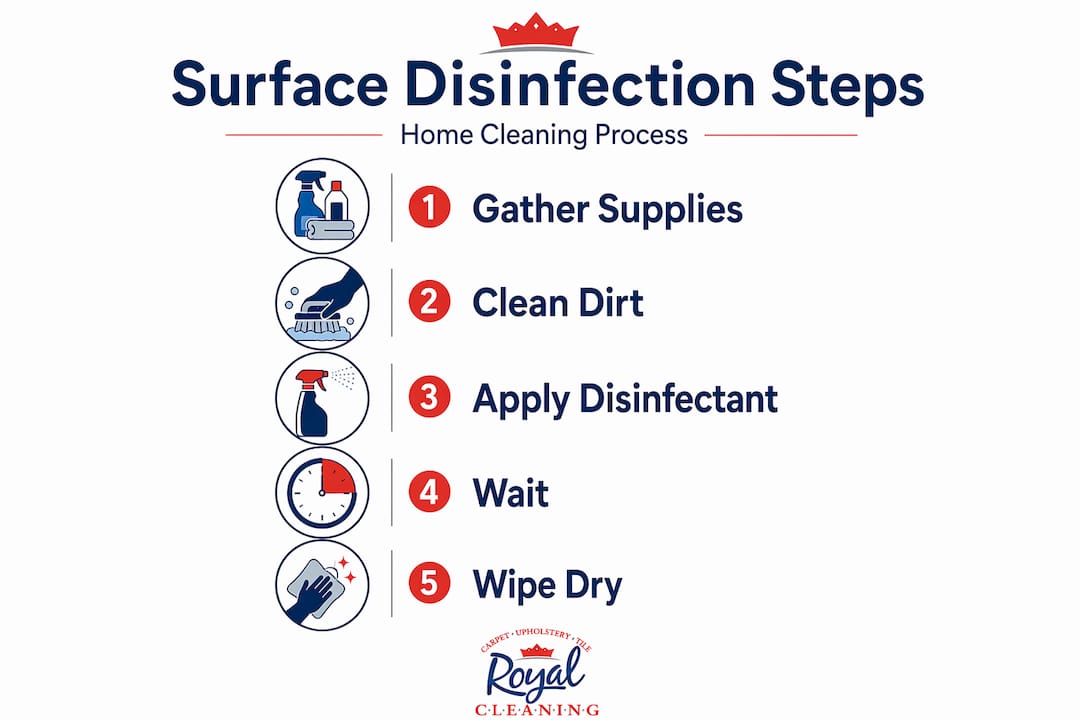
Follow these steps for each high-touch surface:
- Remove visible dirt and debris. Wipe the surface with a damp cloth or cleaning solution to remove grease, grime, and organic matter.
- Rinse if needed. Some cleaners leave a residue that can interfere with disinfectants. A quick rinse with clean water prevents this.
- Apply disinfectant to the entire surface. Cover it completely. Patchy application leaves gaps where germs survive.
- Let it sit for the full contact time. Surfaces must remain visibly wet for 3 to 10 minutes for EPA-registered products to achieve a 99.9% elimination rate.
- Wipe with a clean cloth or allow to air dry. Check your product label. Some disinfectants should be rinsed off on food-contact surfaces; others do not require it.
- Change your cloth between surfaces. Using the same cloth on a doorknob and then a countertop transfers germs rather than removing them.
For electronics like remote controls and smartphones, apply a small amount of 70% isopropyl alcohol to a microfiber cloth and wipe gently. Never spray liquid directly onto electronics. That single habit protects both your devices and your family.
The table below shows a practical schedule to follow for routine disinfection:
| Task | Frequency | Time required |
|---|---|---|
| Doorknobs, light switches, faucet handles | Daily | 5 to 10 minutes |
| Countertops, cabinet handles, remote controls | Daily | 5 to 10 minutes |
| Toilets and bathroom fixtures | Daily or every other day | 10 minutes |
| Phones, tablets, keyboards | Daily or after heavy use | 5 minutes |
| Stair railings, refrigerator handles | Weekly | 5 minutes |
| Deep clean of all high-touch surfaces | Weekly | 30 to 60 minutes |
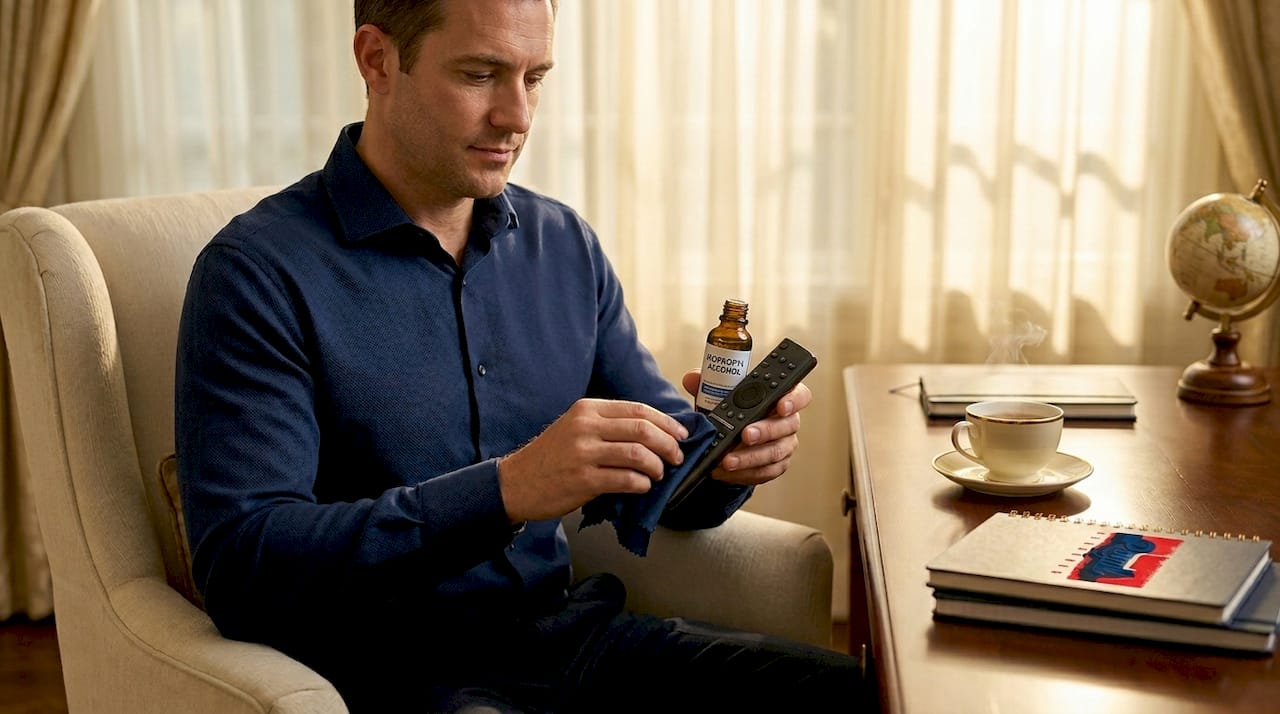
Daily disinfection of high-traffic spots like doorknobs, switches, and remote controls combined with a thorough weekly session keeps your home genuinely protected without overwhelming your schedule.
Pro Tip: When wiping a surface, always move in one direction rather than scrubbing back and forth. Back-and-forth wiping spreads germs across a wider area instead of lifting and removing them.
Common mistakes that make disinfection less effective
Many families put in real effort with sanitizing frequently touched areas and still wonder why illness keeps circulating through the house. The answer is almost always one of these mistakes.
- Wiping disinfectant off too soon. This is the single most common error. Removing disinfectant before dwell time is complete means the product never had time to kill pathogens. You’re essentially just spreading liquid around.
- Skipping the cleaning step. Disinfecting a dirty surface gives germs a place to hide. The cleaning step is not optional, even when you’re in a hurry.
- Using the wrong product for the surface. The best disinfectants for surfaces only work as intended when matched to the right material. Bleach on stainless steel, for example, causes visible pitting over time.
- Missing undersides and edges. Door handle undersides, faucet lever undersides, and remote control edges are consistently missed during cleaning. These spots collect just as many germs as the top surfaces.
- Trusting scent as a sign of cleanliness. A product that smells clean or fresh has not necessarily disinfected anything. Fragrance has no germ-killing power, and a surface can smell fresh while still harboring pathogens.
- Cross-contaminating zones. Using one cloth across multiple rooms and surfaces spreads germs from one area to another, defeating the purpose entirely.
For sensitive electronics, a targeted approach using minimal moisture and 70% alcohol is the safest route. Do not soak the cloth. Do not let liquid seep into ports or seams.
When a surface looks and smells clean, it’s easy to feel like the job is done. But disinfection is invisible. The only way to know it’s working is to follow the process correctly, every time.
Learning how to sanitize your home safely includes knowing when a DIY approach reaches its limits. Grout lines, upholstery, and carpets harbor germs in ways that standard surface sprays cannot address. These materials often need professional attention, especially in high-traffic areas of your home.
My perspective on why cleaning habits matter more than products
What I’ve noticed over years of working in and around residential cleaning is that most people focus on finding the right product when they should be focusing on the right process. I’ve seen homes where families were using high-quality disinfectants and still dealing with repeated illness because they were wiping surfaces dry within 30 seconds of spraying.
The difference between cleaning and disinfecting is not a technical detail. It’s the whole point. Cleaning removes dirt. Disinfecting kills pathogens. If you do one without the other, you’ve only done half the job. I think this distinction gets lost because cleaning and disinfecting are often marketed as the same action, which they are not.
What I’ve also learned is that chemical safety concerns lead some people to under-disinfect entirely. They worry about exposure to products and end up using too little, too infrequently, or in ways that don’t work. The balance is achievable: use EPA-registered products correctly, ventilate the space, wear gloves, and follow the label. That approach is both safe and effective.
Frequent hand washing alongside consistent surface disinfection is the real foundation of household hygiene. No disinfecting routine replaces clean hands. They work together.
The families I’ve seen do this well don’t spend more time cleaning. They spend the same time, but they do it correctly. A consistent five-minute daily routine on the highest-risk surfaces beats a two-hour weekend session that skips dwell time and uses the wrong cloths.
— Bernadette
When professional cleaning makes a real difference
Daily disinfection keeps your most-touched surfaces under control, but some areas of your home need more than a spray and a wipe. Carpets, upholstery, and tile and grout are among the highest-contact surfaces in your home, and they require specialized equipment and products to be truly cleaned and disinfected at a deep level.
Royal Carpet and Tile Cleaning serves homeowners in Albuquerque, Rio Rancho, and surrounding areas with professional-grade cleaning that goes well beyond everyday surface care. Their professional carpet cleaning removes allergens, bacteria, and embedded debris that standard vacuuming and surface sprays cannot reach. Their upholstery cleaning service handles fabrics and materials that require precise techniques to avoid damage while achieving genuine sanitation. Professional service is not a replacement for your daily disinfecting routine. It’s the deeper layer that makes your overall home hygiene strategy complete.
FAQ
What are high-touch surfaces in a home?
High-touch surfaces are any surfaces that multiple people contact repeatedly throughout the day, including doorknobs, light switches, faucet handles, remote controls, countertops, and smartphones. These surfaces accumulate germs quickly and require daily disinfection.
How long should disinfectant sit on a surface?
Most EPA-registered household disinfectants require the surface to remain visibly wet for 3 to 10 minutes to achieve a 99.9% pathogen elimination rate. Wiping the surface dry before this time is complete significantly reduces effectiveness.
Do I need to clean a surface before disinfecting it?
Yes. Organic dirt and grease protect germs from disinfectants, so cleaning first is non-negotiable. Apply a cleaner to remove visible soil, then apply your disinfectant as a separate second step.
Can I use bleach on all hard surfaces?
No. Bleach causes pitting on stainless steel and can damage certain plastics and colored materials. Always check product compatibility before applying bleach or any disinfectant to surfaces in your home.
How often should I disinfect high-touch surfaces?
Doorknobs, light switches, faucet handles, and remote controls should be disinfected daily. A deeper session covering all high-touch surfaces in your home is recommended at least once a week, with bathrooms and kitchen fixtures getting attention every one to two days.