(505) 280-5216
Cleaning Service Pricing Factors: A Homeowner’s Guide
TL;DR:
- Cleaning service prices depend on home size, condition, service frequency, and cleaner type. Larger homes, clutter, and heavy buildup significantly increase costs, while recurring services reduce them. Transparent, itemized quotes help homeowners make fair comparisons and avoid hidden charges.
Cleaning service pricing factors are the specific variables that determine what you pay for professional cleaning. These include home size, current condition, service frequency, and the type of cleaner you hire. The national average for standard house cleaning ranges from $120 to $280 per visit, but that number shifts significantly based on your home’s unique circumstances. Understanding what drives those differences helps you evaluate quotes fairly, avoid surprises, and hire with confidence.
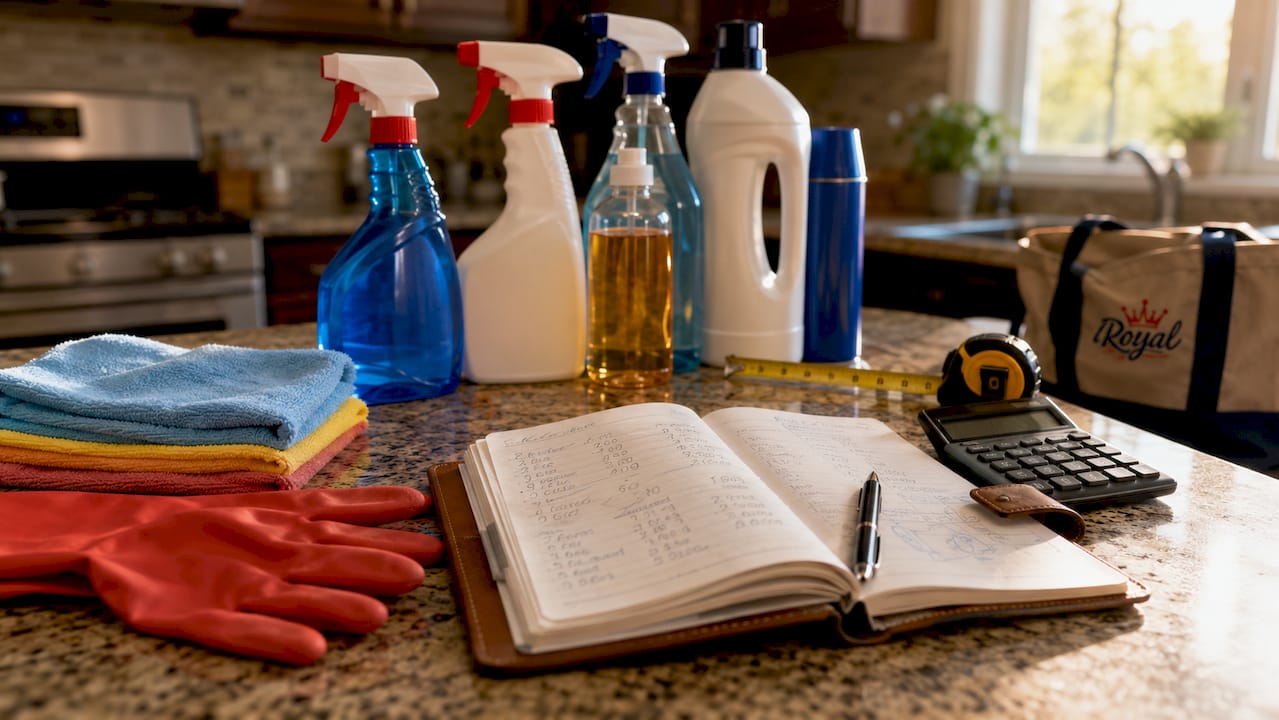
1. What are the main cleaning service pricing factors?
The industry term for this topic is residential cleaning rate determinants, though most homeowners simply call them pricing factors. Either way, the core variables are the same: square footage, room count, home condition, service type, and cleaner model. Each factor affects labor time and overhead costs independently. Together, they explain why two homes on the same street can receive quotes that differ by hundreds of dollars.
2. How does home size and layout impact cleaning costs?
Home size is the most direct driver of cleaning cost. Larger homes require more labor hours, more supplies, and sometimes additional staff. Most companies use one of three pricing models to account for size.
| Pricing model | How it works | Best for |
|---|---|---|
| Per square foot | Flat rate multiplied by total area | Larger, open-plan homes |
| Per bedroom/bathroom | Fixed fee per room type | Standard multi-bedroom homes |
| Hourly | Rate times estimated hours | Irregular layouts or custom needs |
Bathrooms carry more weight than bedrooms in any of these models. Each bathroom adds 20–40 minutes of labor due to scrubbing tile, disinfecting fixtures, and cleaning grout. A three-bedroom, three-bathroom home costs noticeably more to clean than a three-bedroom, one-bathroom home of the same square footage. Kitchens follow the same logic. High-use kitchens with grease buildup, multiple appliances, and stone countertops take far longer to clean than a lightly used galley kitchen.
- Square footage sets the baseline estimate
- Bathrooms are the primary labor bottleneck per room
- Kitchens with heavy use add significant time
- Open floor plans clean faster than compartmentalized layouts
Pro Tip: Tell your cleaner the exact number of bathrooms and whether your kitchen sees daily cooking. That detail alone can prevent a quote from being revised upward on the day of service.
3. In what ways does home condition affect cleaning rates?
Home condition is the factor most homeowners underestimate when requesting quotes. A home that has not been cleaned professionally in six months requires far more effort than one maintained weekly. Moderate mess adds a 20–30% surcharge, heavy buildup adds 50–100%, and extreme neglect or hoarding scenarios can push costs to 3–5 times the base rate.
- Moderate mess: Light clutter, some dust buildup, minor soap scum. Expect a 20–30% increase over standard rates.
- Heavy conditions: Significant grease, mold, or pet hair throughout. Expect a 50–100% increase.
- Extreme neglect: Structural grime, hoarding, or long-term vacancy. Requires a custom quote, often 3–5 times base pricing.
Clutter also extends cleaning time even when surfaces are not dirty. A cleaner who must move items to wipe down surfaces works more slowly than one with clear counters and floors. Pets compound this further. Pet ownership increases cleaning costs by 15–25% due to shedding, odors, and the need for specialty products.
Pro Tip: Be honest about your home’s condition when requesting a quote. Describing it accurately upfront prevents the cleaner from adjusting the price mid-job, which is both awkward and avoidable.
4. What role do service frequency and cleaning type play in pricing?
How often you schedule cleaning directly affects what you pay per visit. Recurring cleaning services save homeowners 15–30% compared to one-time visits. Weekly bookings typically save 25–30%, bi-weekly bookings save 15–25%, and monthly bookings save 5–15%. The logic is straightforward. A home cleaned regularly stays in better condition, so each visit requires less labor.
The type of service you choose matters just as much as frequency:
- Standard cleaning covers routine tasks like vacuuming, mopping, wiping surfaces, and cleaning bathrooms. This is the baseline service most companies price from.
- Deep cleaning addresses buildup in areas standard cleaning skips, such as inside appliances, behind furniture, and grout lines. Deep cleaning averages 1.5–2 times standard rates.
- Move-in/move-out cleaning is the most labor-intensive service type. It covers the entire home from top to bottom, including inside cabinets, closets, and all fixtures. Costs range from $120 to $500 depending on home size, and rates often run 2–2.5 times a standard clean.
- Specialty services such as carpet cleaning, upholstery cleaning, tile and grout cleaning, and air duct cleaning are priced separately. Each requires specialized equipment and training, which adds to the cost.
Scheduling recurring cleaning services is the single most effective way to reduce your per-visit cost while keeping your home consistently clean.
5. How does the type of cleaner or company model impact pricing?
The business model of your cleaner shapes pricing as much as any physical factor in your home. Three main models exist: independent cleaners, franchise companies, and tech-platform services.
- Independent cleaners typically charge hourly and keep 85–95% of their fees directly. Their rates reflect actual labor and supplies without corporate overhead. Pricing tends to be flexible and negotiable.
- Franchise companies use flat-rate or per-square-foot models. Franchise fees, dispatch software, and corporate overhead are built into the price. You pay more, but you get standardized processes, background-checked employees, and liability coverage.
- Tech-platform services operate similarly to franchises but add app-based booking and dynamic pricing. Convenience comes at a markup.
Legitimate cleaning companies factor insurance, payroll taxes, training, and equipment into their rates. These costs are absent from budget services, which is why a quote that seems too low often is. A company that carries general liability insurance and workers’ compensation costs more to operate. That cost shows up in the quote, and it protects you if something breaks or someone gets hurt in your home.
Pro Tip: Ask directly whether the company carries liability insurance and whether workers are employees or independent contractors. The answer tells you a lot about what you are actually paying for.
6. What hidden costs should homeowners watch for in cleaning quotes?
Transparent pricing is the clearest sign of a trustworthy cleaning company. Several costs are legitimate but often go undisclosed until after you book.
- Travel or trip fees: Fuel, parking, and vehicle maintenance are real costs that should appear as a line item, not a surprise on your invoice.
- Supply surcharges: Some companies charge extra for specialty products like eco-friendly disinfectants or pet-odor treatments. Ask upfront.
- Scope creep: A quote based only on square footage without accounting for home condition, clutter, or pet hair will almost always be revised upward.
- Payment method fees: Some services add a processing fee for credit card payments. Confirm accepted payment methods before booking.
Flat-rate or per-square-foot pricing often masks true labor and condition considerations. A per-job quote based on actual scope is more accurate and fairer to both parties. Request at least three written quotes that specify scope, supplies included, and payment terms. Written quotes protect you from disputes and make it easier to compare services on equal terms.
“Lowball pricing is rarely a deal. It usually signals uninsured workers, undertrained staff, or a company that will revise the price once they see your home.”
Watch for signs your home needs professional cleaning and use that knowledge to describe your home’s condition accurately when requesting quotes. Accurate descriptions lead to accurate quotes.
Key takeaways
Cleaning service pricing is determined by home size, condition, service frequency, cleaner type, and transparency of the quote. No single factor works in isolation.
| Point | Details |
|---|---|
| Home size and layout | Bathrooms add 20–40 minutes each; kitchens with heavy use add significant labor time. |
| Home condition surcharges | Moderate mess adds 20–30%; heavy buildup adds 50–100% to the base rate. |
| Frequency discounts | Recurring bookings save 15–30% per visit compared to one-time cleans. |
| Cleaner model matters | Independent cleaners offer flexibility; franchises offer standardization and insurance coverage. |
| Written quotes protect you | Request at least three itemized quotes specifying scope, supplies, and payment terms. |
What I’ve learned about getting fair cleaning quotes
I’ve reviewed hundreds of cleaning quotes over the years, and the pattern is consistent. Homeowners who focus only on the bottom-line number almost always end up frustrated. They either pay more than expected when the cleaner adjusts the price on arrival, or they hire someone cheap and deal with the consequences of uninsured, undertrained workers.
The smarter approach is to treat the quote process like a short interview. Ask about insurance. Ask whether workers are employees or contractors. Ask what happens if something gets damaged. A company that answers those questions clearly and confidently is worth paying more for. One that deflects or gets vague is telling you something important.
Home condition and frequency are the two levers you actually control. If your budget is tight, schedule recurring cleanings rather than sporadic deep cleans. Your home stays cleaner, the labor per visit drops, and you build a relationship with a cleaner who knows your home. That familiarity has real value. A cleaner who knows your home notices when something is off and works more efficiently.
Insured cleaners cost more for a reason. That reason is your protection. I would never recommend hiring an uninsured cleaner to save $30 per visit. The risk is not worth it.
— Bernadette
Get a transparent cleaning quote from Royal Carpet and Tile Cleaning
Royal Carpet and Tile Cleaning serves homeowners in Albuquerque, Rio Rancho, and surrounding areas with written, itemized quotes that account for every factor covered in this article. There are no surprise fees and no vague estimates.
Services include professional carpet cleaning, upholstery cleaning, tile and grout cleaning, air duct cleaning, and dryer vent cleaning. Every service uses professional-grade equipment and eco-friendly disinfectant options. Royal Carpet and Tile Cleaning’s team is fully insured and trained to assess your home’s actual condition before quoting. Contact Royal Carpet and Tile Cleaning directly to schedule a consultation and receive a personalized pricing breakdown for your home.
FAQ
What is the average cost of a standard house cleaning?
The national average for standard house cleaning ranges from $120 to $280 per visit. Your actual cost depends on home size, condition, and location.
How much more does deep cleaning cost than standard cleaning?
Deep cleaning typically costs 1.5–2 times the rate of a standard clean. Move-in and move-out cleaning can run 2–2.5 times the standard rate depending on home size.
Do pets affect cleaning service pricing?
Yes. Pets increase cleaning costs by 15–25% due to shedding, odors, and the need for specialty cleaning products.
How can I reduce my cleaning service costs?
Schedule recurring cleanings rather than one-time visits. Weekly or bi-weekly bookings save 15–30% per visit compared to one-time cleans.
What should a written cleaning quote include?
A fair quote specifies the scope of work, supplies included, travel fees, payment methods, and any condition-based surcharges. Request at least three written quotes before making a hiring decision.