(505) 280-5216
Why cleaning rental units between tenants protects your investment
Many landlords assume a quick sweep and a wipe-down of the counters is enough to prepare a rental unit for the next tenant. That assumption can cost you far more than you expect. In Albuquerque, where dust accumulates faster than in most U.S. cities, skipping a thorough turnover clean creates legal exposure, longer vacancies, and unhappy tenants who leave negative reviews. One empty month at $1,500 in rent is a real loss, and it is entirely preventable. This guide walks you through the legal, financial, and practical reasons why professional turnover cleaning is one of the smartest moves you can make as a local landlord.
Table of Contents
- Legal and health foundations for turnover cleaning
- The hidden risks of neglecting turnover cleaning
- What does a professional turnover cleaning include?
- DIY vs. professional cleaning: What’s actually cost-effective?
- Special Albuquerque considerations: Dust, energy savings, and tenant expectations
- How professional cleaning services streamline turnovers in Albuquerque
- Frequently asked questions
Key Takeaways
| Point | Details |
|---|---|
| Legal compliance | State law and habitability standards effectively make turnover cleaning required for landlords. |
| Vacancy reduction | Professional cleaning can shorten vacancy periods by over a week, protecting rental income. |
| Health and energy savings | Thorough cleaning improves indoor air quality and can reduce energy bills by up to 15% in Albuquerque. |
| Higher ROI | Quality turnover cleaning boosts tenant satisfaction, property value, and retention rates. |
| DIY risks | DIY cleaning often leaves major areas missed, risking costly complaints and turnover delays. |
Legal and health foundations for turnover cleaning
Before anything else, you need to understand what the law actually requires. New Mexico does not have a single statute that says “clean the unit between tenants,” but the legal obligation is still very real. Habitable condition requirements under New Mexico’s Uniform Owner-Resident Relations Act mean you must deliver a unit that is clean, sanitary, and safe. Failing to meet that standard puts you at legal risk before the new tenant even moves in.
Health is the other side of this equation. Dust, allergens, mold spores, and bacteria left behind by previous tenants do not disappear on their own. They accumulate in carpets, HVAC filters, and grout lines. A new tenant who develops respiratory issues in a poorly cleaned unit may have grounds to hold you liable. Understanding state cleaning regulations in New Mexico helps you stay ahead of those risks.
Security deposits are also directly tied to cleaning. Deposit deductions for cleaning are allowed in New Mexico when the unit requires restoration beyond normal wear and tear. But to use that protection, you need documented proof of the unit’s condition before and after each tenancy. A professional cleaning paired with a written report gives you exactly that.
Here is what the law effectively requires you to provide:
- A unit free of health hazards, including mold, pests, and unsanitary surfaces
- Functioning plumbing, heating, and ventilation systems
- Clean common areas and appliances included in the lease
- Documentation of condition at move-in and move-out
“Landlords who skip turnover cleaning often discover the hard way that habitability disputes are expensive, time-consuming, and almost always avoidable with a proper cleaning protocol.”
Knowing how to approach effectively cleaning rental homes is not just good practice. It is your legal foundation.
The hidden risks of neglecting turnover cleaning
Beyond legalities, there are tangible costs landlords face when turnover cleaning falls short. The most immediate is vacancy time. A dirty or poorly cleaned unit takes longer to lease. Prospective tenants walk through and walk out. Listings sit longer. Every extra day costs you money.
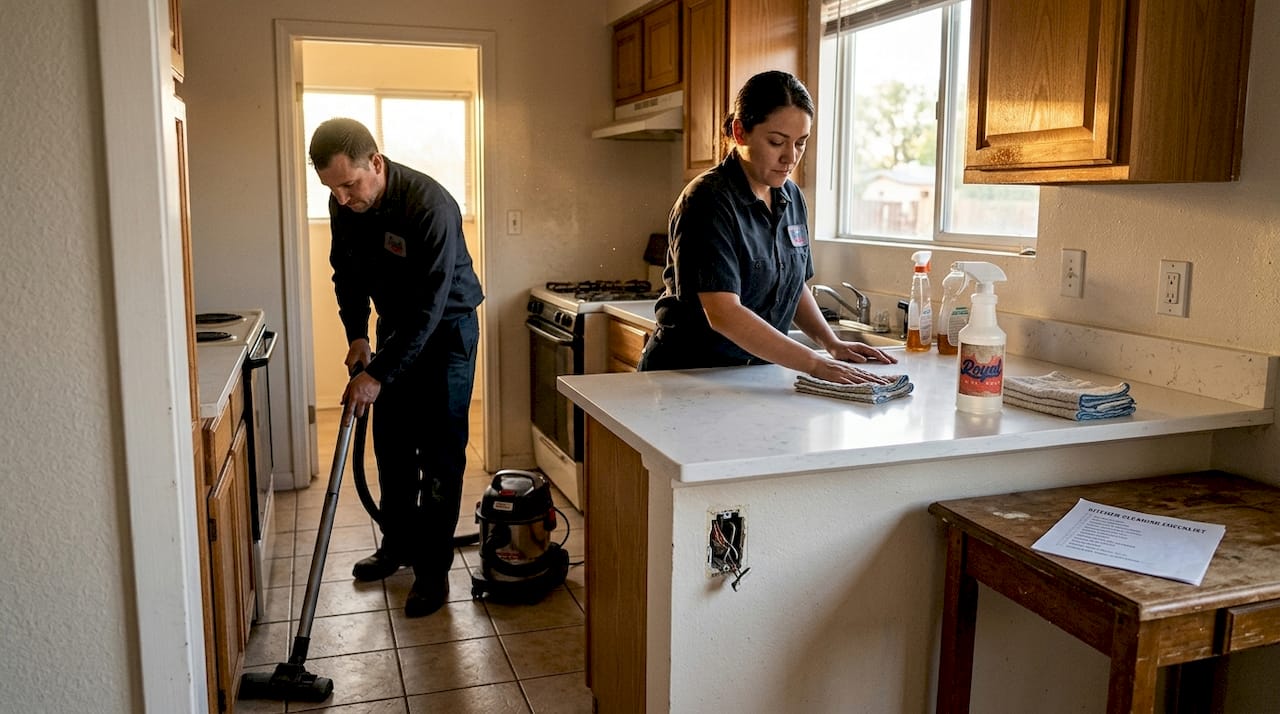
Average vacancy runs 30 days, which translates to roughly $1,500 in lost rent at typical Albuquerque rates. Professional cleaning can reduce that vacancy window to under 21 days. That single improvement can save you hundreds of dollars per turnover cycle.
There is also the issue of damage documentation. A thorough turnover clean is the best time to inspect every surface, appliance, and fixture. Turnover reveals hidden damage that you can document for deposit deductions or insurance claims. If you skip the clean, you skip the inspection, and you lose that financial protection.
Here is a step-by-step approach to protecting yourself during every turnover:
- Schedule the cleaning within 48 hours of move-out
- Walk through the unit with a checklist before and after cleaning
- Photograph every room, appliance, and fixture
- Document any damage separately from normal wear and tear
- Use the cleaning report to support any deposit deductions
Review our move out cleaning guide for a detailed breakdown of what to look for. Pairing that with a list of deep cleaning tasks ensures nothing gets missed.
Pro Tip: Bundle your turnover cleaning with re-keying and any minor repairs. Scheduling everything in the same window keeps your unit off the market for the shortest possible time and reduces the number of vendor visits you have to coordinate.
What does a professional turnover cleaning include?
So, what sets a true turnover clean apart from basic guest-ready cleaning? The scope is significantly broader, and the standard is much higher. A professional team works room by room with a structured checklist, not a general impression of cleanliness.
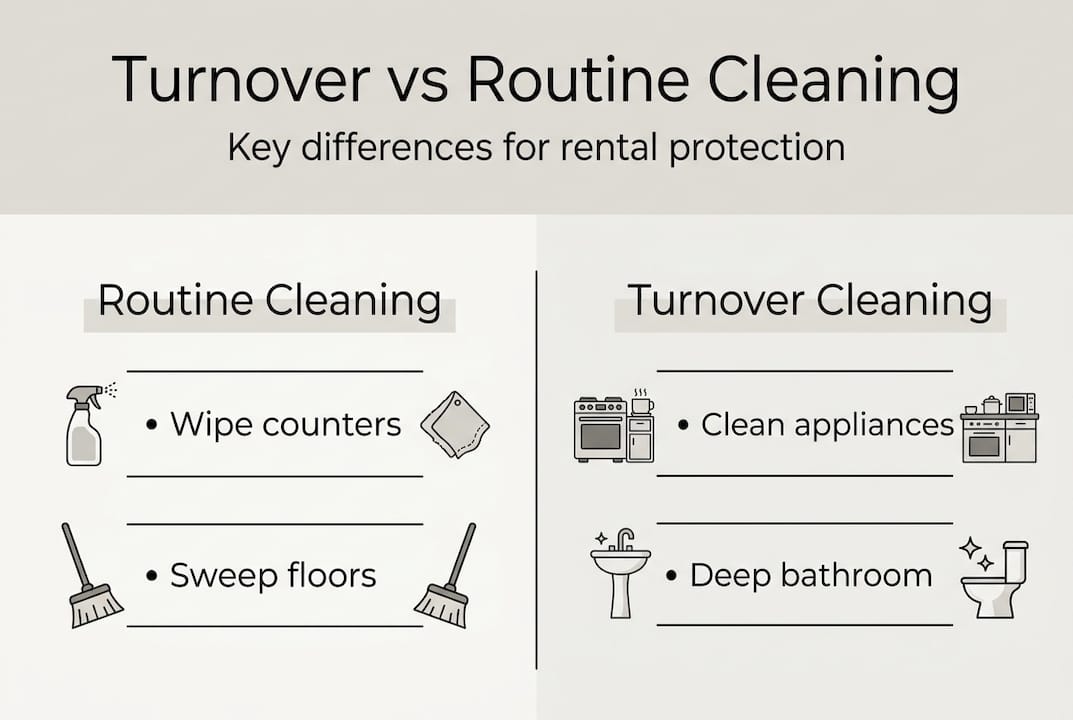
Room-by-room deep clean checklists cover kitchens (degreasing appliances and cabinets), bathrooms (grout, caulk, and fixtures), interiors (baseboards and light fixtures), carpets (shampooing), and HVAC filters. Each area has specific tasks that go well beyond what a standard cleaning covers.
Here is a comparison of what each level of cleaning typically includes:
| Area | Routine cleaning | Turnover cleaning |
|---|---|---|
| Kitchen | Wipe surfaces, clean sink | Degrease oven, clean inside cabinets, sanitize appliances |
| Bathroom | Clean toilet, sink, mirror | Scrub grout, recaulk if needed, disinfect all fixtures |
| Floors | Vacuum and mop | Shampoo carpets, scrub tile grout, clean baseboards |
| HVAC | Not included | Replace filters, clean vents and returns |
| Windows | Wipe glass | Clean tracks, sills, and screens |
Albuquerque’s dry, dusty climate means HVAC systems collect debris faster than in more humid regions. Professional cleaning cuts energy costs by 8 to 15% by reducing the workload on clogged systems. That is a benefit your next tenant will notice immediately.
For a complete breakdown, use our room-by-room turnover checklist before every turnover. You can also explore specialty cleaning services for tasks like tile and grout restoration or air duct cleaning.
Pro Tip: Use a printed or digital checklist for every turnover, even if you use the same cleaning team each time. Checklists create accountability and give you documentation if a tenant later disputes the unit’s condition at move-in.
DIY vs. professional cleaning: What’s actually cost-effective?
With those tasks in mind, the next decision is whether to do it yourself or hire a professional team. The honest answer depends on the size of the unit, the condition it was left in, and how quickly you need to re-lease it.
For a small studio left in good condition, DIY cleaning may be manageable. For a three-bedroom unit with carpet, tile, and a full kitchen, the time investment alone makes DIY a poor choice. Most landlords underestimate how long a thorough turnover takes.
| Factor | DIY cleaning | Professional cleaning |
|---|---|---|
| Time required | 6 to 12 hours | 2 to 4 hours |
| Equipment quality | Consumer grade | Commercial grade |
| Carpet extraction | Rental machine | Truck-mounted system |
| Documentation | Self-reported | Professional report |
| Risk of missed areas | High | Low |
“Experts are unanimous on ROI: professional cleaning leads to faster leasing, better tenant retention, and helps landlords avoid legal disputes. DIY is viable for light cleaning, but professionals are superior for thoroughness and time efficiency.” Source
The risks of DIY failure are real. Missed repairs go undocumented. Carpet stains that look clean on the surface reappear after drying. Grout that was not properly scrubbed grows mold within weeks. These issues lead to tenant complaints, negative reviews, and potential legal claims.
If you are on the fence, consider hiring a carpet cleaning pro for at least the flooring portion of your turnover. Carpets are the single most visible indicator of cleanliness to prospective tenants. You can also review move out cleaning pricing in Albuquerque to understand what professional service costs per square foot. For landlords focused on cleaning for real estate value, professional results consistently outperform DIY efforts.
Special Albuquerque considerations: Dust, energy savings, and tenant expectations
Finally, let’s look at what makes turnover cleaning in Albuquerque distinct and potentially more urgent than in other regions. The city’s high desert climate creates conditions that accelerate dust and debris buildup in ways that landlords from other states may not anticipate.
Albuquerque sits at over 5,000 feet in elevation, with low humidity and frequent wind events that push fine particulate matter into every corner of a property. HVAC systems, window tracks, and air vents fill up faster here than in coastal or humid climates. Professional cleaning in Albuquerque can reduce energy costs by 8 to 15% by clearing out that buildup and allowing systems to run efficiently.
Tenant expectations have also risen. Renters in Albuquerque increasingly expect a “like-new” condition when they move in, especially in competitive rental markets like the Northeast Heights, Rio Rancho, and the North Valley. A unit that smells stale or shows visible dust on vents will lose applicants to cleaner competing properties.
Here is what Albuquerque landlords should prioritize at every turnover:
- Replace HVAC filters and clean all vents and returns
- Deep clean window tracks and sills where dust collects heavily
- Shampoo carpets to remove embedded desert dust and allergens
- Sanitize bathrooms with attention to grout and caulk lines
- Wipe down all cabinet interiors, which collect fine dust even when closed
Adapting your process to Albuquerque’s cleaning climate is not optional if you want to stay competitive. It is a practical necessity that directly affects your vacancy rate and tenant satisfaction.
How professional cleaning services streamline turnovers in Albuquerque
Now that you know the why and how, here is how local pros make turnovers seamless and maximize your returns. At Royal Cleaning New Mexico, we work with landlords across Albuquerque, Rio Rancho, and surrounding areas to deliver thorough, documented turnover cleans that protect your investment and reduce vacancy time.
Our professional carpet cleaning uses truck-mounted extraction systems that remove embedded dust, allergens, and stains that consumer equipment simply cannot reach. We also offer upholstery cleaning services for furnished rentals, ensuring every surface meets the standard your next tenant expects. Every job comes with a structured checklist and clear communication, so you have the documentation you need for deposit management and peace of mind. Reach out today to schedule your next turnover clean and keep your property performing at its best.
Frequently asked questions
Is it legally required to clean a rental unit between tenants in New Mexico?
There is no single explicit law, but New Mexico’s habitability standards require rentals to be delivered clean and sanitary, making thorough cleaning effectively mandatory for landlords.
Can a landlord deduct cleaning costs from the security deposit?
Yes. New Mexico deposit rules allow deductions for cleaning costs when the unit requires restoration beyond normal wear and tear, provided you have documentation.
How does professional turnover cleaning impact vacancy times?
Professional cleaning reduces vacancy from an average of 30 days to under 21 days, helping landlords avoid up to $1,500 in typical monthly rent losses per turnover cycle.
What areas are most often missed by DIY turnover cleaning?
DIY cleaning commonly misses deep carpet fibers, HVAC filters, grout lines, and hard-to-reach dust buildup. Professional checklists target these overlooked spots as a standard part of every turnover service.
Does cleaning rental units in Albuquerque really save on energy bills?
Yes. Professional cleaning cuts energy usage by 8 to 15% in Albuquerque properties by reducing the strain on HVAC systems clogged with desert dust and debris.
Recommended
- Cleaning Your Carpets Will Help You Sell Your Home – Royal Carpet Cleaning
- Real Estate Cleaning: Top 3 Ways to Maximize Value
- Professional Cleaning Services for Every Surface
- Homeowners Should Clean Their Air Ducts – Royal Carpet Cleaning
- How to Safeguard Rental Investment: A Step-by-Step Guide – Rental Income Insurance