(505) 280-5216
Avoid common duct cleaning mistakes for healthier homes
Living in Albuquerque means dealing with constant dust, dry air, and debris that infiltrate your HVAC system faster than most regions. Many homeowners unknowingly make duct cleaning errors that worsen indoor air quality instead of improving it. From attempting DIY cleaning with household vacuums to skipping critical system components, these mistakes can damage your ducts and spread contaminants throughout your living spaces. This guide reveals the most common duct cleaning pitfalls and provides expert strategies to protect your home environment and maintain healthier indoor air.
Table of Contents
- Key takeaways
- Why avoiding DIY duct cleaning is crucial
- The importance of thorough system cleaning
- Choosing the right tools and techniques to prevent damage
- Best practices during duct cleaning to protect your home environment
- How Albuquerque’s environment affects cleaning frequency and methods
- Professional duct cleaning services for Albuquerque homeowners
- FAQ
Key Takeaways
| Point | Details |
|---|---|
| DIY cleaning risks | DIY attempts rarely remove deep contaminants and can damage ducts, spreading dust and irritants through your home. |
| Complete system cleaning | Cleaning only visible supply ducts leaves debris in returns and trunk lines that recontaminate the entire system. |
| Right tools matter | Using stiff brushes or household tools can tear ducts and release fiberglass fibers and other irritants into the air. |
| Turn off HVAC | Turning off the system during cleaning prevents debris from circulating through living spaces. |
| Albuquerque interval | In Albuquerque you should plan duct cleaning every two to five years based on dust levels and household factors. |
Why avoiding DIY duct cleaning is crucial
You might think a shop vacuum and some determination can tackle your ductwork, but DIY attempts rarely remove contaminants thoroughly and often cause more problems than they solve. Household equipment lacks the power and reach needed to extract debris lodged deep within your system. You end up stirring up dust without actually removing it, which then settles back into the ducts or circulates through your home.
The risk of physical damage is even more concerning. Flexible ducts tear easily when scraped with stiff brushes or improper attachments. Insulated ductwork can separate from its backing when handled incorrectly. These structural compromises create new pathways for air leaks and contamination. Professional cleaners understand how different materials respond to various cleaning methods and adjust their approach accordingly.
Using the wrong tools can release dangerous irritants into your breathing air. Fiberglass particles from insulation, mold spores, and accumulated allergens become airborne when disturbed improperly. Without proper containment and filtration systems, these particles spread throughout your home instead of being captured and removed. Professional services follow NADCA standards that protect both your duct integrity and indoor air quality.
Pro Tip: The money you save attempting DIY duct cleaning often gets spent fixing damaged ductwork and addressing health issues from released contaminants. Professional service costs less than repairs.
Consider these risks before attempting DIY cleaning:
- Incomplete debris removal leaves contamination sources active
- Physical damage to flexible or insulated duct materials
- Release of fiberglass particles and allergens into living spaces
- Lack of proper containment spreads problems to clean areas
- No verification that cleaning achieved measurable improvements
The importance of thorough system cleaning
Your HVAC system functions as an interconnected network where contamination in one area quickly spreads to all components. Many homeowners make the mistake of cleaning only visible supply ducts while ignoring return vents, trunk lines, and the air handling unit. This incomplete approach causes rapid recontamination because debris from uncleaned sections continuously circulates back into freshly cleaned areas.
The air handling unit deserves special attention since it generates more than half of all indoor air quality problems. This component houses your blower motor, evaporator coil, and filter housing where moisture and debris accumulate. Bacteria and mold colonies establish themselves in these damp environments, releasing spores every time your system runs. Cleaning supply ducts while leaving the AHU contaminated is like mopping your floor with dirty water.
Return ducts and trunk lines collect household dust, pet dander, and outdoor pollutants before they reach your filter. These larger passages often contain the heaviest debris loads but get overlooked because they are less visible than supply registers. Skipping these components means the next time your system runs, accumulated contaminants get pulled through your freshly cleaned supply ducts and distributed throughout your home.
Complete system cleaning addresses every pathway where air travels. This comprehensive approach removes contamination sources rather than just redistributing them. The result is longer-lasting freshness and measurable improvements in indoor air quality. Your air duct sanitation workflow should cover all these critical components.
Essential HVAC components requiring thorough cleaning:
- Supply ducts delivering conditioned air to rooms
- Return vents and ducts pulling air back to the system
- Trunk lines connecting main system to branch ducts
- Air handling unit including blower and coils
- Grilles, registers, and diffusers in each room
Choosing the right tools and techniques to prevent damage
The equipment used during duct cleaning determines whether the process improves or damages your system. Stiff wire brushes designed for rigid metal ducts will tear through flexible ductwork in seconds. These aggressive tools scratch protective coatings and create rough surfaces where future debris accumulates more easily. Material-specific brushes and attachments protect duct surfaces while still achieving effective cleaning.
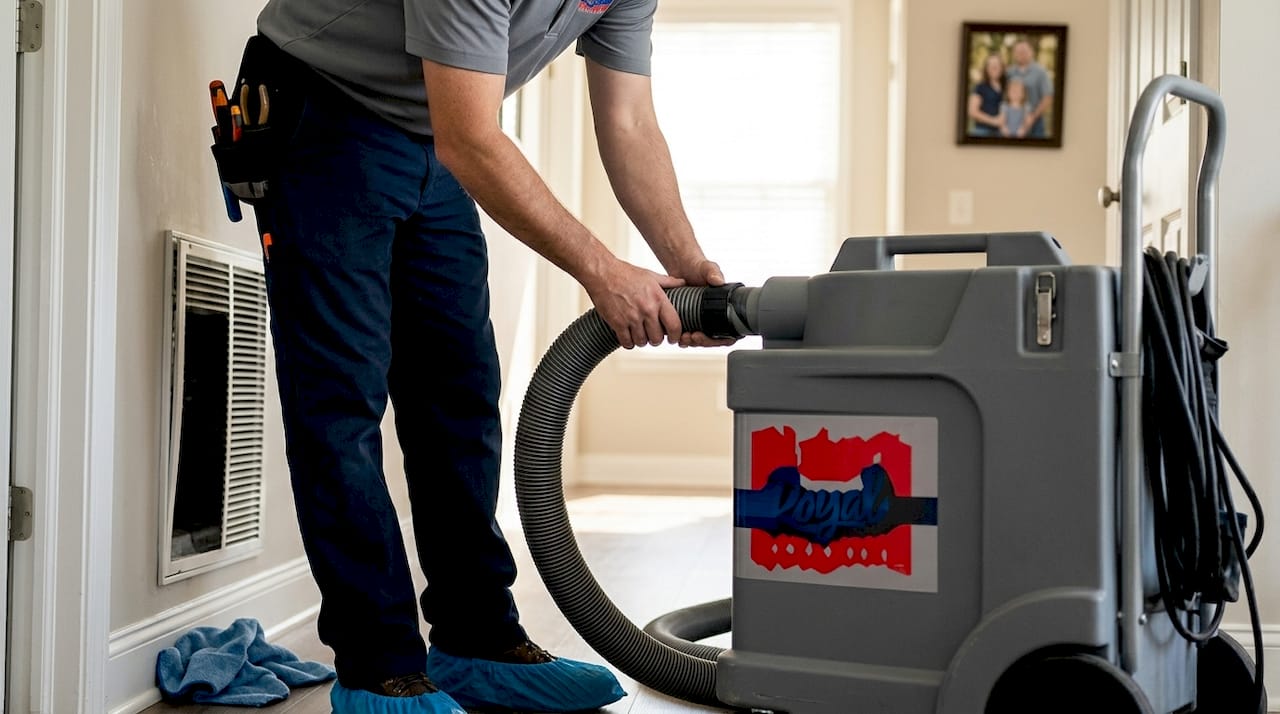
Flexible ducts require especially gentle handling since their thin plastic inner liner tears easily. Rotating brush systems must use soft bristles at controlled speeds to avoid puncturing the material. Insulated ducts present another challenge because excessive force can separate the insulation from the duct surface, reducing thermal efficiency and creating hidden spaces for contamination.
Improper technique releases dangerous particles into your breathing air. Fiberglass insulation contains tiny glass fibers that become airborne when disturbed aggressively. These particles irritate lungs and aggravate respiratory conditions. Professional technicians use specialized vacuum equipment with HEPA filtration to capture these irritants before they escape into your home. The vacuum maintains negative pressure at the cleaning point, pulling debris directly into containment.
Technicians should assess your duct materials before selecting tools and methods. Spiral metal ducts tolerate more aggressive cleaning than flexible plastic. Fiberglass duct board requires different approaches than sheet metal with external insulation. This material-specific strategy prevents damage while ensuring thorough contaminant removal. Your professional air duct cleaning guide explains proper equipment selection for different duct types.
Best practices for safe, effective duct cleaning:
- Match brush stiffness and rotation speed to duct material
- Use HEPA-filtered vacuum systems to capture released particles
- Maintain negative pressure at cleaning point to prevent escape
- Inspect ducts before cleaning to identify vulnerable areas
- Adapt techniques based on duct construction and condition
Best practices during duct cleaning to protect your home environment
One of the most damaging mistakes is cleaning ducts while your HVAC system continues running. The system creates negative pressure that pulls loosened debris into living spaces instead of allowing it to be captured by vacuum equipment. Every time the blower cycles on, clouds of stirred-up dust, mold spores, and allergens get distributed through your supply vents into rooms throughout your home.
This operational error transforms a cleaning service into a contamination event. The very pollutants you paid to remove end up coating your furniture, carpets, and breathing air. Children and pets playing on floors absorb these particles. Family members with asthma or allergies experience immediate symptom flare-ups. The negative health impacts can persist for weeks after improper cleaning.
Professional technicians always verify system shutdown before beginning work. They locate your thermostat and breaker panel to ensure no automatic cycling occurs during the cleaning process. Some services install temporary blocks at registers to prevent accidental air movement. This careful preparation allows vacuum equipment to capture debris at the source rather than chasing it through your ductwork.
Pro Tip: Before your scheduled cleaning appointment, confirm with the technician that they will shut down your HVAC system completely. This simple question reveals whether they follow proper protocols.
Comparing HVAC operation during cleaning:
| Factor | HVAC Running | HVAC Off |
|---|---|---|
| Debris control | Spreads throughout home | Captured by vacuum equipment |
| Air quality impact | Immediate contamination | Protected living spaces |
| Cleaning effectiveness | Reduced by 60-70% | Complete removal possible |
| Health risk | High exposure to allergens | Minimal particle release |
Steps professionals take to protect your environment:
- Verify complete HVAC shutdown at thermostat and breaker
- Seal supply registers in occupied areas during work
- Use negative air machines to maintain controlled airflow
- Cover nearby furniture and flooring in work areas
- Test air quality before and after cleaning when requested
How Albuquerque’s environment affects cleaning frequency and methods
Albuquerque’s desert climate creates unique challenges for maintaining clean ductwork. The region receives only 9 inches of annual rainfall, creating constant airborne dust that infiltrates homes through every opening. Spring winds regularly exceed 30 mph, carrying fine particles from surrounding desert and construction sites. These environmental factors accelerate contamination faster than in humid climates where particles settle more quickly.
Local homeowners typically need duct cleaning every 2 to 5 years depending on household factors. Homes with multiple pets require more frequent service since animal dander and hair accumulate rapidly in ductwork. Households with smokers should consider annual cleaning because tobacco residue coats duct surfaces and releases odors continuously. Recent renovations generate construction dust that overwhelms filters and deposits throughout your system.
High-efficiency filters provide your first defense against Albuquerque’s dusty conditions. MERV 11 to 13 filters capture particles as small as 1 micron, including pollen, mold spores, and fine dust. These filters require monthly inspection and replacement every 60 to 90 days in local conditions. The upfront cost saves money by extending time between professional cleanings and reducing system wear.
Simple household habits significantly reduce contamination between cleanings. Removing shoes at entry points prevents outdoor dust from circulating through your home. Regular pet bathing reduces dander and hair that would otherwise collect in ducts. Running bathroom and kitchen exhaust fans during moisture-generating activities prevents humidity from creating mold-friendly conditions in ductwork. These preventive measures work together to maintain the benefits of professional air duct cleaning in Albuquerque.
Steps to maintain clean ducts in Albuquerque’s environment:
- Install MERV 11-13 filters and check them monthly for dust accumulation
- Replace filters every 60-90 days or when visibly loaded with debris
- Remove shoes at entry points to prevent outdoor dust tracking
- Bathe pets weekly to reduce dander and hair in your home
- Run exhaust fans during cooking and showering to control moisture
- Schedule professional inspection every 2-3 years to assess contamination levels
- Clean more frequently if you notice musty odors or visible dust from vents
Professional duct cleaning services for Albuquerque homeowners
Protecting your home’s air quality requires expertise that goes beyond basic cleaning knowledge. NADCA-certified professionals follow rigorous standards that ensure safe, effective service without damaging your ductwork or releasing contaminants into living spaces. These technicians understand how Albuquerque’s unique climate accelerates contamination and adapt their methods to address local challenges. Their specialized equipment and training deliver results that DIY attempts simply cannot match.
Our team brings years of experience serving Albuquerque homeowners who prioritize healthy indoor environments. We recognize that every home presents different challenges based on age, construction, occupancy, and maintenance history. Our comprehensive approach addresses all system components, from supply ducts to return vents to the air handling unit. We use material-specific tools and techniques that protect your investment while removing accumulated debris and allergens.
Pro Tip: Schedule a professional inspection every 2-3 years even if you don’t notice problems. Early detection of contamination prevents expensive repairs and health issues down the road.
We offer transparent pricing and detailed explanations of our process so you understand exactly what you’re receiving. Our professional air duct cleaning guide walks you through each step of our proven workflow. Visit our resources for homeowners who clean air ducts to learn more about maintaining your system between professional services. Contact us today to schedule your consultation and breathe easier knowing your home’s air quality is protected by local experts who understand your specific needs.
FAQ
What are the most common duct cleaning mistakes homeowners make?
The biggest errors include attempting DIY cleaning with inadequate equipment, cleaning only visible ducts while ignoring returns and the air handling unit, using tools that damage flexible or insulated ductwork, and running the HVAC system during cleaning which spreads debris throughout the home. These mistakes reduce cleaning effectiveness by 60-70% and often worsen indoor air quality instead of improving it.
How often should I have my air ducts cleaned in Albuquerque?
Most Albuquerque homes need professional duct cleaning every 2-5 years depending on household factors. Homes with pets, smokers, or recent renovations require more frequent service, potentially annually. Albuquerque’s dry climate and frequent dust storms accelerate contamination faster than humid regions, making regular maintenance especially important for protecting indoor air quality.
Why should I hire a NADCA-certified professional?
NADCA certification ensures technicians follow strict industry standards for safe, effective cleaning that protects your ductwork and indoor air quality. Certified professionals use proper tools and techniques for different duct materials, maintain negative pressure to prevent contamination spread, and verify complete system cleaning. Their training and equipment deliver results that DIY methods cannot achieve while avoiding the damage that improper cleaning causes.
What are some ways to reduce how often I need duct cleaning?
Install MERV 11-13 filters and replace them every 60-90 days to capture fine particles before they enter your ductwork. Remove shoes at entry points, bathe pets weekly, and run exhaust fans during cooking and showering to minimize indoor pollutants. These preventive measures significantly extend time between professional cleanings while maintaining healthier indoor air in Albuquerque’s dusty environment.