(505) 280-5216
Workflow for air duct sanitation: 90% contaminant removal
New Mexico’s arid climate creates a constant battle against dust infiltrating your home, and your HVAC system’s air ducts become a reservoir for allergens and contaminants. Many homeowners don’t realize dirty ducts contribute significantly to respiratory irritation and poor indoor air quality. Understanding the professional sanitation workflow helps you recognize effective service and protect your family’s health through proven cleaning methods that remove up to 90% of contaminants.
Table of Contents
- Introduction To Air Duct Sanitation And Its Importance
- Prerequisites And Homeowner Preparation
- Professional Air Duct Sanitation Workflow
- Safety And Health Considerations During Sanitation
- Common Mistakes And Troubleshooting Tips
- Expected Timelines, Costs, And Outcomes
- Alternative Sanitation Methods And Their Tradeoffs
- Summary And Next Steps For Homeowners
- Get Expert Air Duct Sanitation With Royal Cleaning New Mexico
- Frequently Asked Questions About Air Duct Sanitation
Key takeaways
| Point | Details |
|---|---|
| Professional cleaning effectiveness | Mechanical agitation with HEPA vacuuming removes up to 90% of contaminants from air ducts. |
| Essential preparation | Clear all vent access areas and document your HVAC system details before scheduling service. |
| Safety protocols matter | Proper dust containment and eco-friendly disinfectants protect both residents and technicians during cleaning. |
| Measurable outcomes | Most homes experience 60-85% reduction in airborne dust within one week after professional service. |
| Common pitfalls to avoid | Insufficient sealing and inadequate vacuuming lead to poor results and wasted investment. |
Introduction to air duct sanitation and its importance
New Mexico’s high desert environment means dust constantly invades your home, and your HVAC ducts collect this debris over months and years. The arid climate accelerates dust accumulation compared to humid regions, creating perfect conditions for allergen buildup. When your heating or cooling system runs, it circulates these contaminants throughout every room.
Dirty air ducts harbor more than just dust. Pollen, pet dander, mold spores, and even rodent droppings can accumulate inside ductwork where you never see them. These contaminants trigger allergies, aggravate asthma, and cause general respiratory irritation for your family. Children and elderly household members face heightened sensitivity to poor indoor air quality.
Professional sanitation follows a systematic workflow designed for New Mexico homeowners that addresses the unique challenges of our climate. The process combines mechanical agitation to dislodge stuck particles with powerful HEPA filtration to capture and remove them safely. Mechanical agitation combined with HEPA vacuuming removes up to 90% of dust and allergens, providing significant health benefits.
Key benefits of professional air duct sanitation include:
- Dramatic reduction in airborne dust circulating through your home
- Removal of allergens that trigger respiratory symptoms
- Elimination of musty odors caused by accumulated debris
- Improved HVAC efficiency when airflow isn’t restricted by buildup
- Peace of mind knowing your indoor air is cleaner and healthier
The difference between amateur attempts and professional service lies in specialized equipment and proven techniques. Standard household vacuums lack the filtration and power to remove embedded contaminants without releasing them back into your air. Professional technicians use truck-mounted or portable systems with true HEPA filters rated to capture particles as small as 0.3 microns.
Prerequisites and homeowner preparation
Successful air duct sanitation starts before the technicians arrive at your door. Your preparation directly impacts how efficiently the service team can work and how thoroughly they can clean your system. Taking these steps ensures you get maximum value from your investment in cleaner indoor air.
Clear access to every register and vent in your home allows technicians to reach all sections of your ductwork. Move furniture, storage boxes, and decorative items away from floor and wall vents. Don’t forget ceiling vents, which often get overlooked but need equal attention during cleaning.
Documenting your HVAC system details helps technicians plan the appropriate approach for your home. Note your system’s age, any recent repairs or modifications, and whether you’ve noticed specific problem areas with poor airflow or unusual odors. This information guides the inspection process.
Essential preparation steps for homeowners:
- Remove or secure pets in a separate area away from work zones
- Inform all household members about the scheduled service and any temporary restrictions
- Clear pathways from entry points to your HVAC system and all vent locations
- List any concerns or questions you want to discuss with the technicians
- Confirm someone will be home for the duration of service to answer questions
Pro Tip: Take photos of your vents before cleaning so you can document the visible difference in dust and debris accumulation after service. This visual proof helps you track maintenance intervals for future cleanings.
Communication with your service provider before the appointment prevents misunderstandings. Ask about their specific process, what equipment they’ll use, and whether they offer eco-friendly disinfectant options. Reputable companies welcome these questions and provide detailed answers about their preparation and cleaning methodology.
Understanding what to expect during service reduces anxiety and helps you recognize quality work. Professional teams typically spend 2 to 4 hours depending on your home’s size and ductwork complexity. They’ll work systematically through each section rather than rushing through a superficial cleaning.
Professional air duct sanitation workflow
The professional cleaning process follows a systematic approach that ensures thorough contaminant removal without spreading dust throughout your home. Each step builds on the previous one to achieve comprehensive sanitation results. Understanding this workflow helps you verify your service provider follows industry best practices.
Initial inspection and assessment form the foundation of effective cleaning. Technicians examine your ductwork configuration, identify problem areas with heavy buildup, and check for damage or disconnected sections that need repair. They use cameras or mirrors to view inside ducts where direct observation isn’t possible.
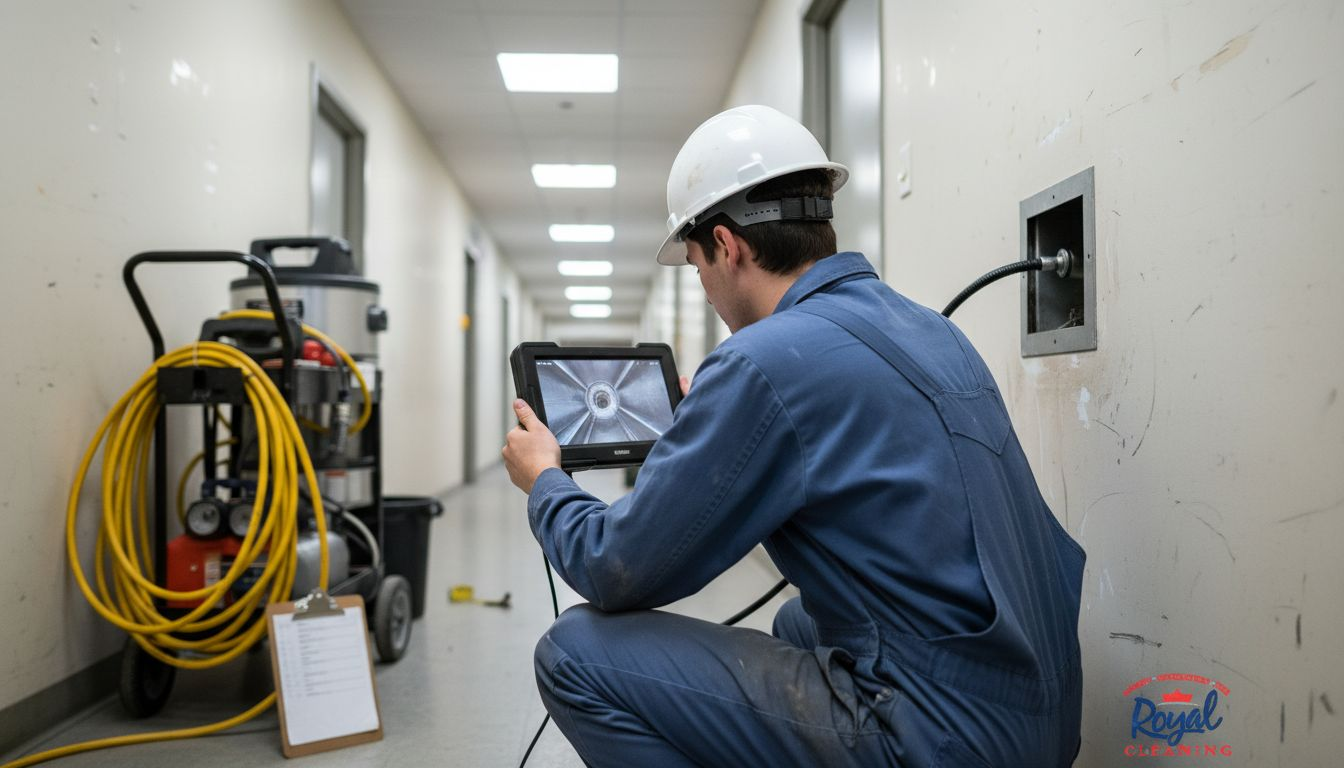
Sealing and containment prevent the cleaning process from contaminating your living spaces. Technicians seal registers with adhesive covers and create negative air pressure within the duct system. This containment ensures dislodged dust gets captured by vacuums rather than blown into rooms.
The core cleaning sequence includes:
- Connect powerful HEPA-filtered vacuum to main trunk line
- Seal all branch ducts except the section being cleaned
- Insert rotating brush or compressed air whip into each duct segment
- Mechanically agitate surfaces to break loose embedded contaminants
- Vacuum captures dislodged particles immediately through sealed system
- Progress systematically through all supply and return ducts
| Workflow Stage | Duration | Key Actions | Equipment Used |
|---|---|---|---|
| Inspection | 15-30 min | Visual assessment, camera inspection | Borescope, flashlight |
| Sealing | 10-20 min | Cover registers, create containment | Adhesive covers, tape |
| Mechanical cleaning | 90-150 min | Agitation, vacuuming each duct section | Rotary brushes, HEPA vacuum |
| Disinfection | 20-30 min | Apply eco-friendly antimicrobial treatment | Fogger or spray applicator |
| Final inspection | 15-20 min | Verify cleanliness, reassemble vents | Camera, tools |
Mechanical agitation combined with HEPA-filtered vacuuming removes up to 90% of contaminants from ductwork when performed correctly. The agitation step is critical because dust and debris adhere to duct surfaces through static electricity and moisture. Simply vacuuming without agitation leaves most buildup in place.
Application of eco-friendly disinfectants provides an extra layer of protection against microbial growth. These EPA-approved solutions kill bacteria, mold spores, and viruses without introducing harsh chemicals into your air. The disinfectant gets applied as a fine mist that coats all interior duct surfaces.
Final inspection confirms the cleaning met quality standards before technicians pack up equipment. They’ll often show you the debris collection container so you can see exactly what was removed from your ducts. Professional teams following this proven workflow deliver consistent results for New Mexico homeowners.
Pro Tip: Ask your technician to show you before and after photos using their inspection camera. This visual verification confirms they cleaned thoroughly rather than just running equipment through ducts superficially.
Safety and health considerations during sanitation
Protecting occupants and technicians during air duct cleaning requires strict adherence to safety protocols throughout the service. Dust containment ranks as the highest priority because the mechanical agitation process temporarily increases airborne particle concentrations within the sealed duct system. Proper negative pressure and filtration prevent these particles from escaping into living areas.
Harsh chemical disinfectants pose unnecessary health risks when eco-friendly alternatives provide equal antimicrobial effectiveness. EPA-approved botanical disinfectants kill bacteria and mold without leaving toxic residues that continue off-gassing after service. Families with children, pets, or members with chemical sensitivities especially benefit from these safer options.
Ventilation management during and after cleaning helps clear any residual dust from the process. Technicians typically recommend running your HVAC system continuously for several hours after cleaning with fresh air intake open. This purge cycle replaces any disturbed air with clean, filtered air.
Critical safety measures include:
- HEPA filtration on all vacuum equipment to prevent particle release
- Personal protective equipment for technicians including respirators and coveralls
- Sealed containment barriers at all register locations during agitation
- Proper disposal of collected debris according to local regulations
- Post-service air quality verification before releasing work areas
“Professional air duct sanitation done correctly poses minimal risk to occupants when technicians follow established safety protocols and use appropriate containment and filtration equipment.”
Technician training and certification ensure workers understand proper safety procedures and equipment operation. Reputable companies invest in ongoing education for their teams about the latest techniques and safety standards. This training directly benefits homeowners through reduced risk and better outcomes.
Homeowners should receive clear guidance about post-service expectations for air quality improvement. Most families notice reduced dust accumulation on surfaces within 24 to 48 hours after cleaning. Allergy and respiratory symptoms typically improve gradually over the following week as the home’s overall particle load decreases.
Common mistakes and troubleshooting tips
Even professional services sometimes fall short when technicians skip crucial steps or use inadequate equipment. Recognizing these common pitfalls helps you select a quality provider and verify they deliver thorough cleaning. Understanding what can go wrong empowers you to ask the right questions before hiring a service.
Insufficient sealing creates the most frequent problem during duct cleaning. When registers aren’t properly covered or sealed, the powerful vacuum pressure pulls dust and debris out through openings into your rooms. You’ll notice fine dust coating furniture and floors near vents if this occurs. Quality providers use heavy-duty adhesive covers specifically designed for this application.
Inadequate vacuuming power or filtration leaves contaminants behind even after agitation. Some companies use shop vacuums or underpowered equipment that can’t generate sufficient negative pressure to capture dislodged particles. The vacuum system must maintain strong suction throughout the entire duct network simultaneously.
Frequent service shortcomings to watch for:
- Skipping mechanical agitation and only using vacuum suction
- Cleaning only easily accessible main trunk lines while ignoring branch ducts
- Using non-HEPA filtration that releases fine particles back into your home
- Applying harsh chemical disinfectants that create lingering odors or health concerns
- Rushing through service without proper inspection or verification
Overuse of chemical treatments sometimes masks inadequate mechanical cleaning. Technicians who rely heavily on sprays and foggers without thorough agitation and vacuuming leave most contaminants in place. The chemicals create a temporary fresh scent while dust and allergens remain embedded in duct surfaces.
Pro Tip: Request documentation of the equipment specifications including HEPA filter ratings and vacuum CFM (cubic feet per minute) capacity. Professional-grade systems typically operate at 3,000 to 5,000 CFM minimum for residential applications.
Lack of communication between service providers and homeowners creates confusion about what was done and what results to expect. Reputable companies provide detailed service reports showing which ducts were cleaned, what was found during inspection, and recommendations for maintenance. This documentation helps you understand the value received and avoid common cleaning mistakes.
Verifying your service included all components means checking that technicians cleaned supply ducts, return ducts, main trunk lines, and the air handler or furnace cabinet interior. Some companies only clean supply ducts and skip returns, which leaves half the contamination problem unaddressed.
Expected timelines, costs, and outcomes
Understanding realistic expectations for professional air duct sanitation helps you budget appropriately and recognize value when evaluating service providers. Time requirements vary based on your home’s size, ductwork complexity, and contamination levels discovered during initial inspection. Most residential services in New Mexico fall within predictable ranges.
Typical service duration spans 2 to 4 hours for average single-family homes between 1,500 and 2,500 square feet. Larger homes with multiple HVAC zones or complex ductwork configurations may require 5 to 6 hours. Technicians working faster than these benchmarks likely skip important steps, while those taking significantly longer may lack efficiency.
Cost factors for New Mexico homeowners:
- Home square footage and number of vents to be cleaned
- Ductwork accessibility and configuration complexity
- Level of contamination requiring extra attention
- Optional services like sanitizer application or dryer vent cleaning
- Geographic location within the service area
| Home Size | Typical Duration | Average Cost Range | Number of Vents |
|---|---|---|---|
| 1,000-1,500 sq ft | 2-3 hours | $300-$450 | 8-12 vents |
| 1,500-2,500 sq ft | 3-4 hours | $450-$650 | 12-18 vents |
| 2,500-3,500 sq ft | 4-5 hours | $650-$900 | 18-25 vents |
| 3,500+ sq ft | 5-7 hours | $900-$1,400 | 25+ vents |
Measurable outcomes provide the most meaningful way to evaluate service effectiveness. Professional air duct sanitation results in 60-85% reduction in airborne dust particles and measurable air quality improvements within one week. You can verify these results through reduced dust accumulation on furniture and improved HVAC airflow.
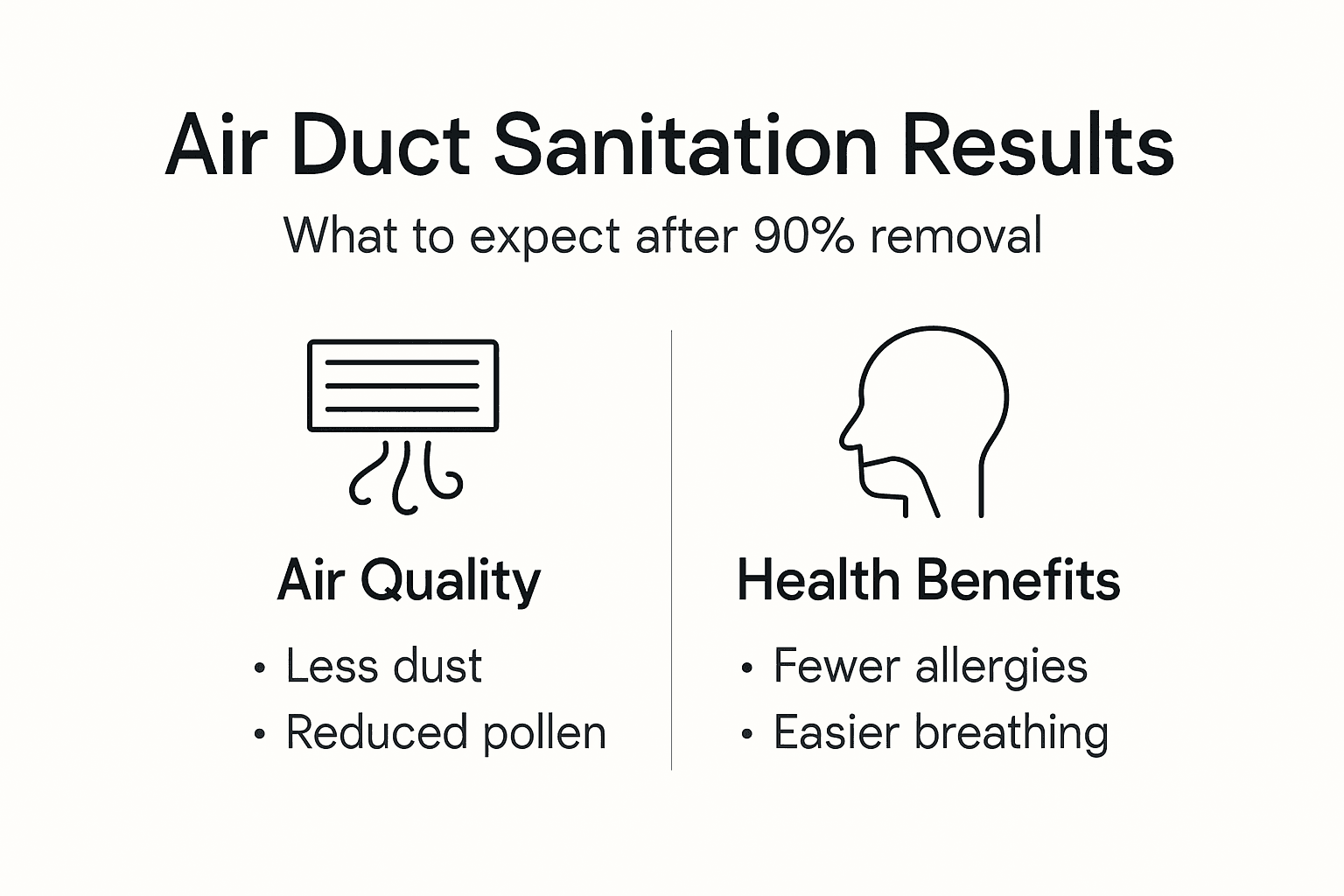
Indoor air quality improvements manifest through several observable changes. Reduced allergy symptoms, less frequent dusting requirements, elimination of musty odors, and improved airflow from vents all indicate successful cleaning. Most homeowners report noticing differences within 24 to 48 hours after service completion.
Health benefits extend beyond immediate symptom relief. Cleaner indoor air reduces long-term respiratory irritation, potentially decreases illness frequency, and creates a more comfortable living environment. These advantages prove especially valuable for households with young children, elderly members, or anyone with compromised respiratory function.
Realistic timeline and cost expectations for New Mexico residents help you identify fair pricing and avoid both overpriced services and suspiciously cheap offers. Companies charging significantly below market rates often cut corners on equipment, training, or thoroughness.
Alternative sanitation methods and their tradeoffs
Comparing different cleaning approaches helps you make informed decisions about which method best suits your situation, budget, and health priorities. Professional mechanical cleaning with HEPA vacuuming represents the gold standard, but understanding alternatives clarifies why this approach delivers superior results. Each method offers distinct advantages and limitations worth considering.
DIY vacuuming using household equipment removes less than 50% of contaminants and risks spreading dust throughout your home. Standard vacuums lack the suction power to extract embedded debris and typically use inadequate filtration that releases fine particles back into your air. The mechanical agitation component proves nearly impossible to replicate without specialized tools.
Ultraviolet germicidal irradiation (UVGI) systems kill microorganisms using UV-C light but don’t remove dust, pollen, or other particulate matter. These systems require permanent installation within ductwork and ongoing maintenance. UVGI works best as a supplemental measure combined with periodic mechanical cleaning rather than a standalone solution.
| Method | Effectiveness | Cost | Pros | Cons |
|---|---|---|---|---|
| Professional mechanical + HEPA | 85-90% removal | $450-$900 | Most thorough, removes all contaminant types | Higher upfront cost |
| DIY vacuum cleaning | 30-50% removal | $50-$100 | Low cost, immediate action | Poor results, risks spreading dust |
| UVGI installation | 60-80% microbial kill | $600-$1,200 | Continuous protection, kills germs | Doesn’t remove dust, requires installation |
| Chemical fogging only | 40-60% surface treatment | $200-$400 | Quick application, fresh scent | Leaves debris in place, chemical exposure |
| Rotary brush only (no vacuum) | 20-40% removal | $250-$450 | Lower cost than full service | Dust settles back, incomplete removal |
Chemical disinfectant overuse without proper mechanical cleaning creates false confidence about duct cleanliness. Sprays and foggers coat surfaces but don’t remove the underlying dust and debris harboring contaminants. The temporary fresh scent masks persistent air quality problems.
Alternative method considerations:
- Budget constraints may favor DIY as a stopgap until professional service becomes affordable
- Severe microbial contamination cases benefit from combining mechanical cleaning with UVGI
- Mild maintenance needs between professional cleanings might suit careful DIY approaches
- Health sensitivities to airborne particles demand professional HEPA-filtered methods
- Chronic moisture problems require addressing the underlying issue before any cleaning method succeeds
Selecting the right approach depends on your specific situation, health concerns, and available budget. Most New Mexico homeowners achieve best results through professional mechanical cleaning every 3 to 5 years, with basic DIY maintenance between services. This balanced strategy provides optimal air quality without excessive cost.
Summary and next steps for homeowners
Protecting your family’s health through clean indoor air requires understanding and verifying the professional sanitation workflow delivers thorough results. The systematic approach combining mechanical agitation, powerful HEPA vacuuming, and eco-friendly disinfection removes up to 90% of contaminants when executed properly. Your preparation and provider selection directly impact the outcome quality.
Homeowner responsibilities extend beyond simply scheduling service. Clearing access to all vents, documenting HVAC system details, and communicating concerns help technicians work efficiently. Asking informed questions about equipment specifications, safety protocols, and expected outcomes demonstrates you understand quality standards.
Verification checklist for quality service:
- Confirm provider uses truck-mounted or commercial HEPA-filtered vacuum systems
- Verify they perform mechanical agitation in all duct sections, not just main lines
- Ask about eco-friendly disinfectant options approved by EPA standards
- Request before and after documentation using inspection cameras
- Ensure service includes both supply and return ducts plus air handler cleaning
Communication with technicians throughout the process ensures your concerns get addressed and you understand what was accomplished. Professional teams welcome questions and provide detailed explanations about their methods. They should show you collected debris and explain findings from their inspection.
Maintaining results after professional cleaning involves regular filter changes, prompt attention to moisture issues, and monitoring for signs that cleaning is needed again. Most homes benefit from professional sanitation every 3 to 5 years depending on dust exposure, pets, and occupant sensitivities.
Connecting with experienced local providers who understand New Mexico’s unique dust challenges ensures appropriate service for your situation. Companies familiar with regional conditions adapt their approach to address high desert environmental factors. They recognize how our climate accelerates dust accumulation compared to other regions.
Taking action to improve your indoor air quality starts with understanding proven sanitation benefits and selecting qualified professionals who follow established best practices. Your family’s respiratory health and daily comfort depend on the air circulating through your home every moment.
Get expert air duct sanitation with Royal Cleaning New Mexico
You’ve learned how professional air duct sanitation protects your family’s health through systematic contaminant removal. Now it’s time to experience these benefits in your own home with certified professionals who follow the proven workflow you’ve just discovered.
Royal Cleaning New Mexico brings specialized expertise in addressing the unique dust and allergen challenges facing homeowners throughout Albuquerque and surrounding communities. Our technicians use commercial-grade HEPA-filtered equipment and follow the comprehensive cleaning methodology detailed in our professional guide to ensure thorough results. We offer eco-friendly disinfectant options that protect your family while eliminating microbial contaminants.
Scheduling fits your family’s needs with flexible appointment times and clear communication throughout the process. Our team documents the work performed and provides visual verification of the debris removed from your ductwork. Experience the proven benefits of professional air duct cleaning backed by our commitment to customer satisfaction and transparent service.
New Mexico homeowners trust Royal Cleaning New Mexico for reliable indoor air quality improvements that make a noticeable difference in daily comfort and respiratory health.
Frequently asked questions about air duct sanitation
How often should I schedule air duct sanitation?
Most homes benefit from professional cleaning every 3 to 5 years under normal conditions. New Mexico’s dusty climate may require more frequent service every 2 to 3 years, especially if you have pets, allergies, or notice visible dust buildup around vents.
Can I stay home during the cleaning?
Yes, you can remain home during air duct cleaning service. Proper containment and HEPA filtration prevent dust from spreading into living areas. Many homeowners prefer staying available to answer technician questions and observe the process.
Are eco-friendly disinfectants safe for my family?
EPA-approved botanical disinfectants used by professional services are safe for homes with children and pets. These solutions provide effective antimicrobial protection without harsh chemical residues or lingering toxic fumes that traditional disinfectants create.
What signs indicate I need a duct cleaning?
Visible dust blowing from vents, musty odors when HVAC runs, increased allergy symptoms indoors, and excessive dust accumulation on furniture all signal dirty ductwork. Recent renovations or pest infestations also necessitate professional cleaning regardless of timing.
How soon will I notice improved air quality?
Most homeowners observe reduced dust accumulation within 24 to 48 hours after professional service. Respiratory symptom improvements typically become noticeable within one week as airborne particle concentrations decrease throughout your home.