(505) 280-5216
Air duct filter replacement guide for Albuquerque homes
Neglecting your air duct filter can quietly sabotage your home’s comfort and your wallet. Dirty filters force your HVAC system to work harder, driving up energy bills while circulating dust, pollen, and allergens throughout your living space. In Albuquerque’s dusty climate, where seasonal winds and dry air compound these challenges, maintaining clean filters becomes even more critical. This guide walks you through everything you need to know about selecting, replacing, and maintaining air duct filters to protect your indoor air quality and extend your HVAC system’s lifespan.
Table of Contents
- Understanding Air Duct Filters And MERV Ratings
- When And How To Replace Your Air Duct Filter
- Common Mistakes And Troubleshooting Air Duct Filter Replacement
- Benefits Of Regular Air Duct Filter Replacement For Albuquerque Homes
- Keep Your Albuquerque Home Clean With Royal Carpet Cleaning
- Frequently Asked Questions
Key takeaways
| Point | Details |
|---|---|
| Regular replacement saves money | Replacing filters every 60 to 90 days reduces energy consumption by up to 15 percent and prevents costly HVAC repairs. |
| MERV ratings matter | Filters rated MERV 8 to 13 balance effective particle capture with proper airflow for most Albuquerque homes. |
| Local conditions affect frequency | Dust storms, pollen seasons, and pets require more frequent filter changes in the Albuquerque area. |
| Correct installation is crucial | Installing filters backward or using wrong sizes reduces filtration efficiency and can damage your system. |
| Professional cleaning complements filters | While filters trap airborne particles, periodic duct cleaning removes accumulated debris filters cannot reach. |
Understanding air duct filters and MERV ratings
Air duct filters serve as your HVAC system’s first line of defense against airborne contaminants. These barriers trap dust, pollen, pet dander, and other particles before they circulate through your home or damage sensitive equipment components. Without effective filtration, your system works harder and your family breathes lower quality air.
MERV ratings measure filtration capability, ranging from 1 to 20 based on particle size capture. Lower ratings like MERV 1 to 4 catch only large particles such as carpet fibers and dust mites. Mid range filters rated MERV 8 to 13 capture smaller particles including mold spores, pollen, and fine dust. High efficiency filters above MERV 13 trap bacteria and smoke particles but may restrict airflow in residential systems not designed for them.
Choosing the right MERV rating requires balancing filtration effectiveness with your HVAC system’s capabilities. Most homes benefit from MERV 8 to 13 pleated filters for optimal performance. These ratings provide excellent particle capture without overworking your equipment. Higher MERV filters improve air quality but can restrict airflow, forcing your system to consume more energy and potentially shortening its lifespan.
Albuquerque’s unique environmental factors influence your ideal filter choice. Consider these local conditions:
- Spring pollen from juniper, cottonwood, and elm trees peaks March through May
- Dust storms occur frequently during dry, windy periods
- Low humidity year round allows particles to remain airborne longer
- Wildfire smoke occasionally affects air quality during summer months
Pro Tip: Check your HVAC manufacturer’s specifications before upgrading to higher MERV ratings. Systems designed for basic filters may struggle with denser materials, leading to reduced efficiency and potential damage. Your owner’s manual or the label inside your air handler will specify compatible filter ratings.
Understanding benefits of air duct cleaning helps you see how filters work alongside professional maintenance. While filters catch particles in real time, they cannot remove buildup already coating your ductwork. Regular filter replacement prevents new contamination while professional cleaning addresses existing deposits. Learning homeowners clean air ducts reveals the complete picture of maintaining healthy indoor air.
When and how to replace your air duct filter
Recognizing replacement timing prevents air quality problems before they start. Watch for these warning signs:
- Visible dirt coating the filter surface or clogging the pleats
- Reduced airflow from vents compared to normal operation
- Increased dust accumulation on furniture and surfaces
- Higher energy bills without changes in usage patterns
- Unusual sounds from your HVAC system during operation
Replacing your filter follows a straightforward process that takes less than ten minutes. Follow these steps for safe, effective replacement:
- Turn off your HVAC system at the thermostat to prevent the fan from running during replacement
- Locate your filter slot, typically in the return air duct or air handler cabinet
- Remove the access panel or grille covering the filter compartment
- Slide out the old filter, noting the airflow direction arrow on the frame
- Check the filter size printed on the frame, usually in length x width x depth format
- Remove the new filter from packaging and locate the airflow direction arrow
- Insert the new filter with arrows pointing toward the furnace or air handler
- Replace the access panel securely to prevent air leaks
- Turn your HVAC system back on and verify normal operation
Gather these items before starting your replacement:
- Disposable gloves to avoid contact with accumulated dust and allergens
- Flashlight for viewing inside dark filter compartments
- Replacement filter matching your system’s exact dimensions
- Trash bag for disposing of the old filter immediately
Replacement frequency varies based on your household characteristics and Albuquerque’s environmental conditions. This table shows recommended intervals:
| Household Type | Replacement Frequency | Key Factors |
|---|---|---|
| Standard occupancy, no pets | Every 90 days | Basic dust and seasonal pollen |
| Pets in home | Every 60 days | Pet dander and hair accelerate clogging |
| Allergies or asthma | Every 30 to 45 days | More frequent changes reduce triggers |
| Vacation or rarely occupied | Every 6 months | Minimal use generates less particle load |
Replacing filters every 60 to 90 days, or monthly with pets and allergies, maintains optimal performance. Albuquerque’s dust and pollen may require more frequent changes during peak seasons. Monitor your filter monthly to determine your home’s specific needs.
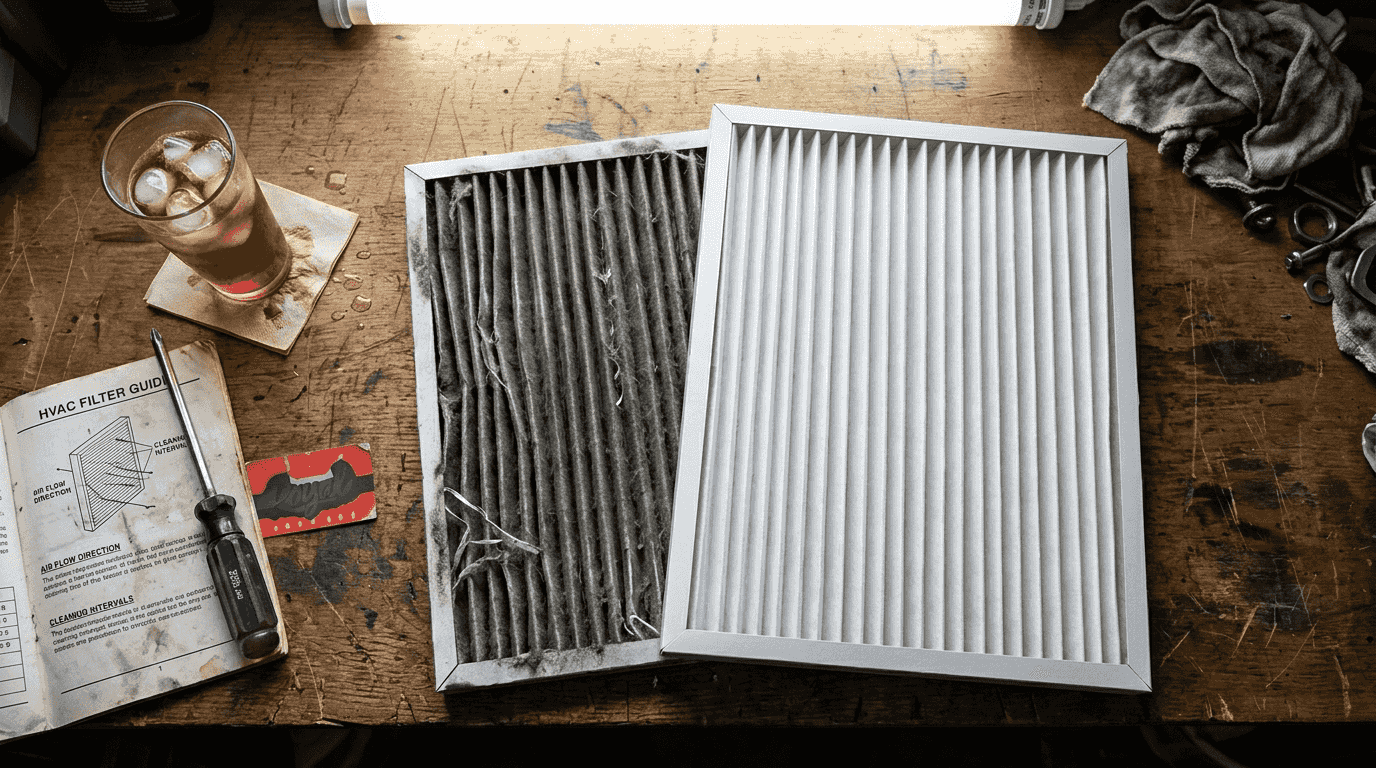
Pro Tip: Take a photo of your old filter before removing it, capturing the airflow arrow direction clearly. This reference eliminates guesswork during installation and ensures correct orientation every time. Store the photo in your phone for quick access during future replacements.
Exploring air duct cleaning tips provides additional strategies for maintaining clean air distribution. Understanding your home’s air ducts and health reveals how filter maintenance connects to broader wellness goals for your family.
Common mistakes and troubleshooting air duct filter replacement
Avoiding common errors ensures your filter replacement delivers expected benefits. These frequent mistakes undermine filtration effectiveness:
- Installing filters backward, blocking airflow and reducing particle capture
- Using incorrect filter sizes that allow air to bypass the media
- Neglecting replacement schedules, allowing filters to become completely clogged
- Ignoring reduced airflow signs that indicate problems requiring attention
- Choosing MERV ratings incompatible with your HVAC system design
Wrong size filters create air leaks around the edges, allowing unfiltered air to circulate through your home. Gaps as small as one eighth inch significantly reduce filtration efficiency. Always verify dimensions match your system exactly, measuring the filter slot if the old filter frame is damaged or missing size information.
Clogged or ill fitting filters create multiple problems beyond poor air quality. Restricted airflow forces your HVAC blower motor to work harder, increasing energy consumption and wear. Your system may cycle on and off more frequently, struggle to maintain temperature, or shut down completely due to overheating protection.
Clogged filters increase energy consumption by up to 25 percent and may cause HVAC systems to overheat, leading to costly repairs or premature equipment failure.
Pro Tip: Mark your calendar or set smartphone reminders for filter replacement dates based on your household’s schedule. Include the filter size in the reminder so you can purchase replacements in advance. Buying filters in bulk saves money and ensures you always have spares available.
Troubleshoot these common issues after filter replacement:
- Weak airflow from vents may indicate backward installation or a filter MERV rating too high for your system
- Whistling sounds near the filter compartment suggest air leaks around an improperly sized filter
- No improvement in dust levels could mean ductwork contamination requiring professional cleaning
- Increased energy bills after replacement may point to a clogged condensate drain or other system issues
Discovering energy savings from cleaning filters demonstrates the financial impact of proper maintenance. Learning to understand duct contamination in homes helps you recognize when filter replacement alone cannot solve air quality problems.
Benefits of regular air duct filter replacement for Albuquerque homes
Consistent filter maintenance delivers multiple advantages tailored to Albuquerque’s challenging environment. Regular changes reduce dust, pollen, and pet dander circulation, which matters especially during spring pollen season and frequent dust storms. Clean filters allow your HVAC system to distribute conditioned air efficiently without working against restricted airflow.
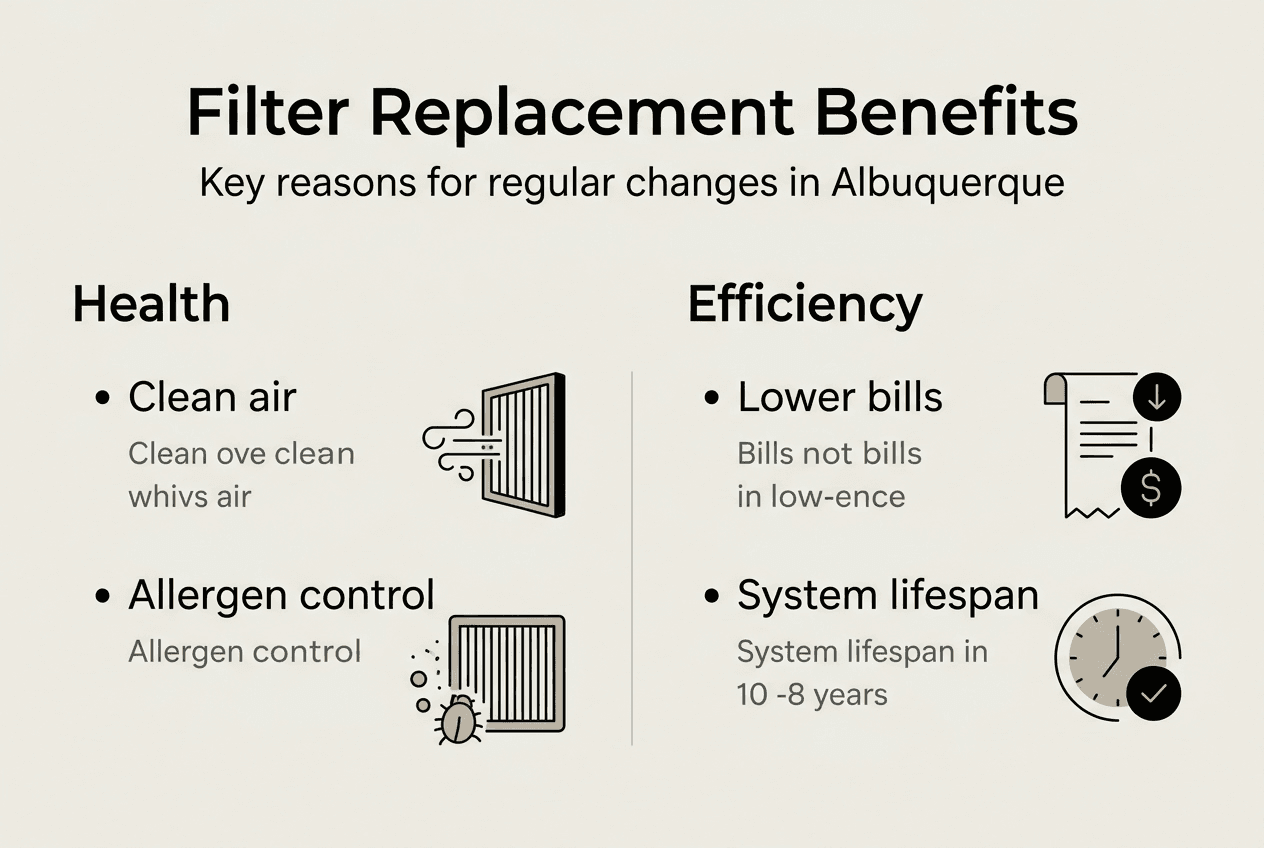
Regular replacement significantly improves indoor air quality by reducing airborne particles, allergens, and pollutants. Your family breathes cleaner air, potentially reducing allergy symptoms, asthma triggers, and respiratory irritation. This benefit compounds in Albuquerque’s dry climate, where airborne particles remain suspended longer than in humid regions.
Key benefits of maintaining clean filters include:
- Better breathing comfort with fewer airborne irritants circulating through living spaces
- Reduced allergy and asthma symptoms from lower pollen and dust concentrations
- Extended HVAC equipment lifespan by preventing dust buildup on sensitive components
- Lower monthly utility bills through improved system efficiency and airflow
- Cleaner home surfaces requiring less frequent dusting and cleaning
Replacing filters regularly reduces HVAC energy consumption by 10 to 15 percent compared to operating with dirty filters. This efficiency gain translates directly to lower electricity bills, with savings accumulating month after month. Over your system’s lifetime, proper filter maintenance can save hundreds of dollars while preventing expensive repairs.
This comparison illustrates the difference between consistent and neglected filter maintenance:
| Factor | Regular Replacement | Irregular Replacement |
|---|---|---|
| Indoor air quality | Consistently clean with minimal particles | Poor with high dust and allergen levels |
| Energy consumption | Optimal efficiency, lower bills | 15 to 25 percent higher costs |
| HVAC lifespan | 15 to 20 years typical | 10 to 12 years due to strain |
| Repair frequency | Minimal preventive maintenance | Frequent breakdowns and part failures |
Beyond personal benefits, regular filter maintenance supports environmental responsibility. Reduced energy consumption lowers your home’s carbon footprint and decreases demand on power generation resources. This small action contributes to broader sustainability goals while protecting your investment in home comfort equipment.
Filter replacement works best as part of comprehensive indoor air quality management. While filters capture particles in transit, they cannot address contamination already coating your ductwork. Professional air duct cleaning complements filter maintenance by removing accumulated debris, mold growth, and other pollutants filters alone cannot eliminate.
Exploring home allergen reduction strategies reveals how filter maintenance fits into broader health initiatives. Understanding the importance of home cleaning shows how air quality connects to overall household wellness and comfort.
Keep your Albuquerque home clean with Royal Carpet Cleaning
While regular filter replacement protects your air quality, professional air duct cleaning takes your indoor environment to the next level. Royal Carpet Cleaning specializes in thorough duct cleaning services throughout Albuquerque, removing years of accumulated dust, pollen, and contaminants that filters cannot reach. Our multi step process uses advanced equipment to restore your ductwork to like new condition, complementing your filter maintenance efforts perfectly.
Our experienced technicians understand Albuquerque’s unique air quality challenges, from spring pollen invasions to summer dust storms. We tailor our cleaning approach to your home’s specific needs, ensuring every vent and duct section receives proper attention. Combined with your regular filter replacement routine, professional duct cleaning creates the healthiest possible indoor environment for your family.
Discover the benefits of air duct cleaning and how it enhances your filter maintenance efforts. Review our air duct cleaning tips for maximizing results, and learn why homeowners clean air ducts as part of comprehensive home care. Contact Royal Carpet Cleaning today for expert service that keeps your Albuquerque home’s air fresh and your HVAC system running efficiently.
Frequently asked questions
How often should I replace my air duct filter in Albuquerque?
Replace filters every 60 to 90 days for standard homes, but adjust based on specific conditions. Homes with pets need monthly changes due to hair and dander accumulation. If anyone has allergies or asthma, replace every 30 to 45 days to minimize triggers. During Albuquerque’s peak pollen season in spring or after dust storms, check filters more frequently and replace when visibly dirty regardless of schedule.
Can using a high MERV rating filter harm my HVAC system?
Yes, higher MERV ratings can restrict airflow and increase energy consumption if your HVAC system was not designed for them. Dense filter media forces your blower motor to work harder, potentially causing overheating and premature failure. Always verify your manufacturer’s recommended MERV range before upgrading. Most residential systems perform best with MERV 8 to 13 filters that balance filtration with proper airflow.
What signs indicate my air duct filter needs replacement?
Visible dirt or discoloration on the filter surface signals immediate replacement needs. Reduced airflow from vents or increased dust accumulation on furniture indicates clogging. Rising energy bills without usage changes suggest your system is working harder due to restricted airflow. Unusual noises from your HVAC unit, especially during startup, may point to strain from a blocked filter requiring attention.
Is professional air duct cleaning necessary if I regularly replace filters?
Regular filter replacement prevents new contamination but cannot remove accumulated dust, mold, and debris already coating your ductwork interior. Filters only capture particles passing through them, leaving existing buildup untouched. Professional cleaning complements filter maintenance by addressing contamination filters miss, improving air quality and HVAC efficiency beyond what filter replacement alone achieves. Learn more about the benefits of air duct cleaning for comprehensive indoor air quality management.