(505) 280-5216
8 Clear Signs Your Home Needs Professional Cleaning Now
TL;DR:
- Most homes need professional cleaning when recurring symptoms and hidden buildup are present.
- Signs like mold, musty odors, and inconsistent airflow indicate advanced indoor air quality issues.
- Early professional intervention saves money and promotes healthier indoor environments.
Most homeowners in Albuquerque assume a weekly vacuum and a quick wipe-down of surfaces is enough to keep their home clean and healthy. But many warning signs that point to serious air quality or contamination problems are easy to overlook until they start affecting your health and comfort. Recognizing these signs early, and knowing when to call in certified professionals, can save you from costly repairs, persistent allergy symptoms, and preventable exposure to indoor pollutants. This guide walks you through exactly what to watch for and why acting sooner rather than later matters.
Table of Contents
- Key criteria: How to recognize when DIY isn’t enough
- The 8 signs your home needs professional cleaning
- Professional cleaning methods vs. DIY: What’s the difference?
- How often to schedule professional cleaning for your home
- The uncomfortable truth: Most homes wait too long
- Choose the right professionals to protect your home’s air
- Frequently asked questions
Key Takeaways
| Point | Details |
|---|---|
| Watch for hidden warning signs | Mold, odors, and recurring symptoms are strong indicators that basic cleaning may not be enough. |
| DIY has limits | Untrained cleaning can stir up allergens or worsen air quality instead of fixing it. |
| Follow expert guidelines | Schedule professional deep cleaning every few years, more often with allergies or pets. |
| Inspections prevent waste | A professional inspection confirms what needs cleaning, saving you money and time. |
Key criteria: How to recognize when DIY isn’t enough
After understanding the importance of timely action, let’s break down the most common signs that point to a need for professional cleaning.
Many homeowners rely on visual cleanliness as the main measure of a clean home. If surfaces look tidy, the assumption is that the air and environment are safe. That assumption can be costly. Indoor air quality issues often develop long before you see or smell anything obvious, and by the time symptoms appear, the problem has usually been building for months.
“Indoor air can be 2 to 5 times more polluted than outdoor air, and most people spend about 90% of their time indoors.”
— U.S. Environmental Protection Agency
This matters because pollutants like dust mites, mold spores, pet dander, and volatile organic compounds (VOCs) accumulate in carpets, upholstery, air ducts, and tile grout over time. Standard DIY cleaning methods, such as vacuuming with a standard bag vacuum or wiping surfaces with chemical sprays, often move these contaminants around rather than remove them. Understanding why regular home cleaning matters is the first step toward protecting your family.
Here are the core criteria that separate a home that needs routine upkeep from one that genuinely needs professional intervention:
- Symptoms are recurring, not just occasional. One sneezing fit is not an alarm. Consistent allergy flare-ups, repeated headaches, or ongoing fatigue that correlates with time spent indoors is a signal worth taking seriously.
- DIY cleaning provides only short-term relief. If odors return within days of cleaning or dust reappears on surfaces within hours, the source has not been addressed.
- Visible or detectable buildup exists in hidden areas. Vents, ducts, carpet backing, and upholstery cushions trap contaminants that surface cleaning simply does not reach.
- Recent events have introduced new pollutants. Renovations, flooding, pet additions, or smoke exposure all introduce contaminants that standard cleaning cannot fully remove.
Understanding these criteria helps you evaluate your situation honestly before deciding your next step. If your home checks any of these boxes, you may have deep cleaning needs that go beyond what a mop and bucket can address.
Pro Tip: Before scheduling any professional cleaning service, do a walk-through of your home and note which areas feel stuffy, look dusty within days of cleaning, or have visible discoloration near vents or baseboards. This inspection data helps professionals prioritize the right service for your situation.
The 8 signs your home needs professional cleaning
With criteria in mind, let’s walk through the clear signals of when to call in a professional.
Understanding cleaning and health connections makes it much easier to interpret what your home is telling you. Here are the eight most reliable warning signs:
1. Visible mold or mildew around vents, walls, or grout
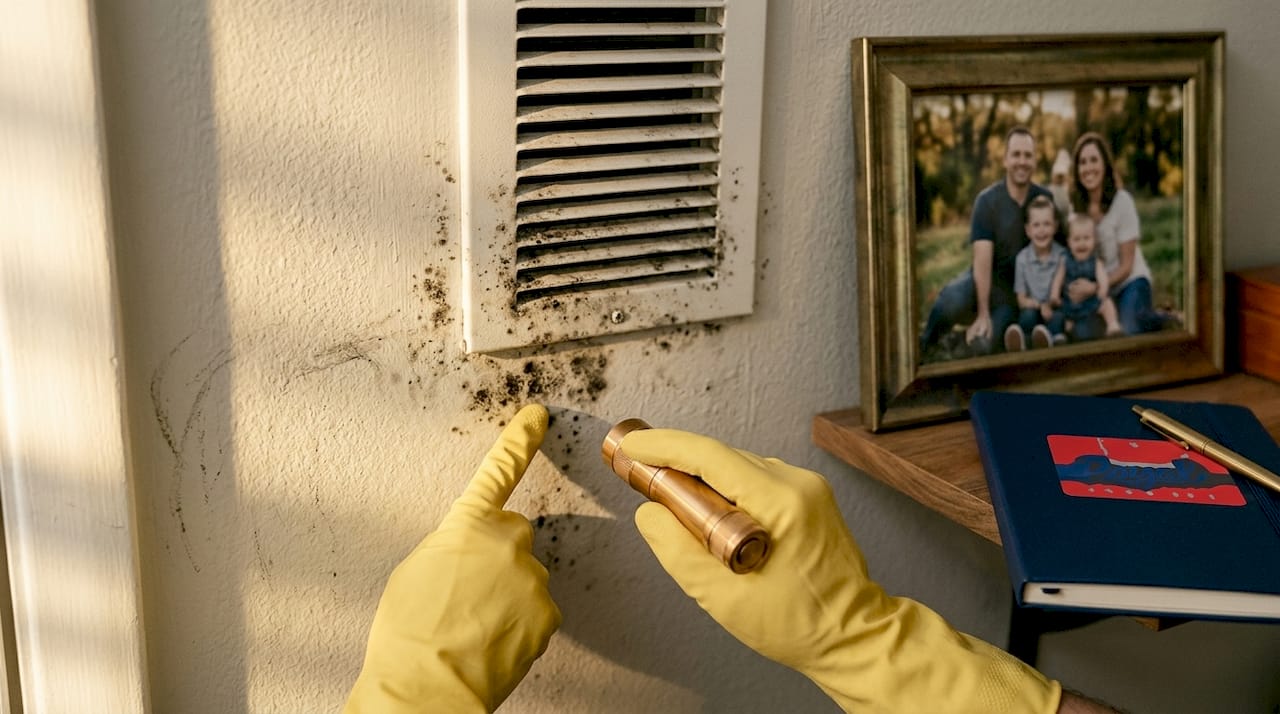
Mold and mildew that appear as dark spots, fuzzy patches, or discoloration near vents, in bathrooms, or on tile grout are not just cosmetic issues. Visible mold around vents or in ducts indicates active moisture problems requiring professional remediation, not just surface scrubbing.
2. Persistent musty or stale odors
If your home smells musty even after opening windows and airing out rooms, organic matter is likely trapped in carpet fibers, ductwork, or upholstery. Odors that return within 24 to 48 hours of cleaning point to a source that surface-level products cannot neutralize.
3. Increased or worsening allergy symptoms indoors
When family members experience runny noses, itchy eyes, coughing, or congestion primarily when at home, indoor allergens are likely the cause. Pet dander, dust mites, and mold spores are the most common culprits, and all of them accumulate in soft surfaces and air systems over time. Learning about air quality improvement methods can clarify exactly what is triggering these reactions.
4. Uneven airflow or inconsistent room temperatures
Weak or uneven airflow from vents, or rooms that feel noticeably warmer or cooler than others, can indicate restricted ducts. Dust and debris buildup inside duct systems reduces the efficiency of your HVAC system and distributes allergens throughout your home each time it runs.
5. Dust that reappears within hours or days of cleaning
Surfaces that collect visible dust within a short time after cleaning suggest a high particle load in the air. This is often tied to dirty air filters, clogged ducts, or heavily contaminated carpets that are releasing particles back into the environment continuously.
6. Pet hair and dander accumulation in hard-to-reach areas
Pet hair that collects under furniture, in vent grilles, or embedded in carpet fibers carries dander, which is one of the most potent indoor allergens. Regular vacuuming rarely reaches the depth of carpet pile where dander accumulates, and it does not address what gets pulled into your duct system every time the HVAC runs.
7. Recurring stains on carpets or upholstery
Stains that return after cleaning, especially on carpet and upholstery, usually indicate that the source material was not fully extracted. Residual moisture, soap residue, or organic matter trapped deep in the fibers allows stains to wick back to the surface. A regular cleaning schedule with professional extraction prevents this cycle from repeating.
8. Post-renovation dust and debris
Home renovations release drywall dust, VOCs from new paint, and construction debris into your air system and surfaces. These particles are finer than typical household dust and can remain airborne for weeks. Professional cleaning with HEPA (High Efficiency Particulate Air) filtration equipment is the only reliable method for capturing particles this small.
Pro Tip: If your home has been recently renovated or you have moved into a new property, schedule a professional inspection before assuming the space is clean. Newly installed materials can off-gas VOCs for months, and construction dust settles into ducts and carpets quickly.
Professional cleaning methods vs. DIY: What’s the difference?
Recognizing the signs helps, but knowing what professionals do differently is just as important.
The gap between DIY cleaning and professional cleaning is not just about equipment. It is about approach and outcome. DIY cleaning can stir up dust and allergens into the air rather than removing them, especially when using conventional vacuum cleaners without sealed HEPA filtration. Professionals use source control methods, which means capturing and removing contaminants at the point of contact without redistributing them into the air.
Here is a direct comparison of what each approach typically delivers:
| Factor | DIY cleaning | Professional cleaning |
|---|---|---|
| Equipment | Standard vacuum, mop, sprays | Truck-mounted extractors, HEPA vacuums, commercial steamers |
| Allergen removal | Partial, often redistributed | Source-controlled extraction |
| Product safety | Often VOC-heavy chemical cleaners | Low-VOC, EPA Safer Choice certified options |
| Reach | Surface level only | Deep fibers, duct interiors, grout lines |
| Air handling | No ventilation controls | Controlled containment and ventilation |
| Results duration | Days to weeks | Months with proper maintenance |
Chemical cleaners commonly release VOCs that worsen indoor air quality, which is the opposite of the goal. This is especially problematic in enclosed spaces like bathrooms, laundry rooms, and basements with limited air circulation.
Common risks with DIY cleaning include:
- Spreading allergens from room to room on cleaning equipment
- Leaving moisture in carpets or grout that promotes mold growth
- Using products that release VOCs without proper ventilation
- Missing duct interiors, behind appliances, and inside vents
Understanding professional duct cleaning insights reveals just how specialized this work is. From negative pressure containment to rotary brush systems, the tools professionals use are designed specifically for source removal, not just surface appearance. Avoiding common duct cleaning mistakes is much easier when you understand why the process requires certified equipment and technique.
Pro Tip: When hiring a professional cleaning company, ask whether they use EPA Safer Choice certified products. These products are evaluated for both cleaning effectiveness and reduced chemical risk, which is especially important in homes with children, elderly residents, or allergy sufferers.
How often to schedule professional cleaning for your home
Even after spotting warning signs, it helps to know how often professionals recommend you schedule cleaning.
Frequency depends heavily on your household’s specific situation. NADCA recommends professional duct cleaning every 3 to 5 years under normal conditions, with more frequent cleaning for homes with pets, allergy sufferers, or recent renovations. Carpets and upholstery typically benefit from professional cleaning every 12 to 18 months, while tile and grout in high-traffic areas like kitchens and bathrooms may need attention every 6 to 12 months.
Here is a practical frequency guide based on household factors:
| Household scenario | Recommended cleaning frequency |
|---|---|
| No pets, no allergies, 1-2 people | Deep clean annually, ducts every 4-5 years |
| Pets present | Deep clean every 6 months, ducts every 2-3 years |
| Allergy or asthma sufferers | Deep clean quarterly, ducts every 2 years |
| Young children under 5 | Deep clean every 6 months, quarterly vent checks |
| Recent renovation or construction | Immediate professional cleaning post-renovation |
| Smokers in the home | Deep clean every 3-4 months, ducts annually |
Not every warning sign guarantees cleaning is needed, which is why NADCA and EPA both recommend an inspection first to confirm actual buildup before committing to a full service. This saves you money and ensures the service matches the actual need.
Follow these steps to evaluate whether a professional inspection is your right first move:
- Walk through your home and document visible dust, discoloration near vents, or soft surfaces that feel gritty or look dull.
- Note any health symptoms that improve when family members leave the home for extended periods.
- Check air filters in your HVAC system. If they are heavily clogged within 30 days of replacement, duct buildup is likely.
- Smell each room with windows closed. Persistent musty or chemical odors that do not clear with ventilation warrant a closer look.
Following a multi-step cleaning routine between professional visits, and maintaining a consistent home maintenance cleaning schedule, extends the results of professional service and keeps your home at a healthier baseline.
The uncomfortable truth: Most homes wait too long
Pulling together all the signs and guidelines, here is what we see as the biggest mistake most people make.
Most homeowners contact us only after symptoms have become impossible to ignore. Severe allergy flare-ups, HVAC systems running inefficiently, or carpet stains that have returned three or four times. At that point, the buildup is significant, the remediation is more intensive, and the cost is higher than it would have been with earlier action.
The honest truth is that indoor air quality decline is gradual. Your nose adapts to odors over time. Your body adjusts to low-level allergen exposure, which does not mean it stops responding. It means the response becomes your new normal. By the time you notice that family members are getting sick more often or that breathing feels effortful inside your own home, the problem has usually been developing for a year or more.
We have seen this pattern consistently. A family with two dogs contacts us after years of carpet cleaning without professional extraction, wondering why the odors keep coming back. Or a homeowner who renovated their kitchen calls after months of headaches that no one connected to VOC off-gassing from new cabinetry. In each case, earlier action would have shortened the problem significantly.
The investment in regular cleaning for safer air is genuinely small compared to the cost of managing the health consequences of poor indoor air quality over years. We are not just talking about cleaning for aesthetics. We are talking about protecting the quality of every hour your family spends at home.
The most practical change any homeowner can make is treating professional cleaning as routine maintenance, the same way you treat HVAC servicing or gutter clearing, rather than an emergency response to a problem that has already grown.
Choose the right professionals to protect your home’s air
Now that you know the signs, here is how to connect with local experts who can help ensure your home stays safe and healthy.
At Royal Cleaning New Mexico, we serve homeowners across Albuquerque, Rio Rancho, and surrounding communities with certified, thorough cleaning services designed to address the root causes of indoor air quality problems.
Whether you need upholstery cleaning in Albuquerque to remove embedded allergens from sofas and chairs, or professional air duct cleaning in Albuquerque to address years of buildup inside your HVAC system, our team uses advanced equipment and EPA Safer Choice certified products to deliver results you can feel. We also recommend learning about the specific benefits of air duct cleaning before your appointment so you know exactly what to expect and what questions to ask. Contact us today to schedule an inspection and take the first step toward a cleaner, healthier home.
Frequently asked questions
What are the health risks of ignoring professional cleaning signs?
Neglecting professional cleaning can worsen allergies, breathing problems, and even long-term respiratory conditions because indoor air pollutants can be 2 to 5 times higher than outdoor levels in unmanaged homes. Source control through professional cleaning is one of the most effective ways to reduce this risk.
How do I know if mold or mildew must be handled by professionals?
If you see discoloration around vents or ducts, or you notice persistent musty smells that do not clear with ventilation, professional remediation is typically required rather than surface-level DIY treatment.
Is it safe to use regular chemical cleaners at home?
Many standard chemical cleaners release VOCs that worsen air quality, especially in poorly ventilated spaces. Choosing low-VOC or EPA Safer Choice certified products and opening windows during cleaning significantly reduces this risk.
Should I get an inspection before scheduling cleaning?
Yes. NADCA and EPA both recommend confirming actual buildup through inspection before booking a full cleaning service, to ensure you are investing in the right service for your specific situation.